What Was It Like in Ancient Times?
Many things that are now considered Islamic or even European influence actually have much older roots – maybe Turkic, maybe universal. Yet the symbolism familiar to us in the nomadic world often carried meanings very different from what we understand today.
A Tengri wedding is not a romantic story, but a serious initiatory procedure. Many of its details show that in ancient times marriage was understood by Turkic peoples as a deadly ritual transition, when the fate of clans uniting through the marriage of two people was decided.
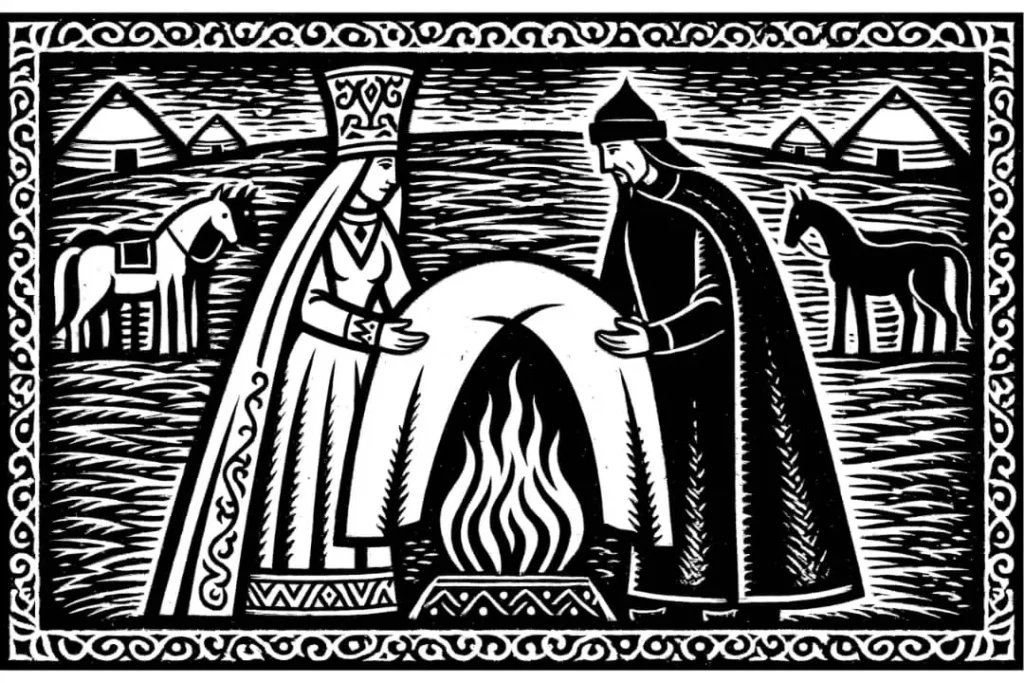
In Tengriism, the bride was dressed in white. But this did not symbolize purity and innocence. White was the color of death, and the girl was metaphorically dressed not in a festive outfit but in a shroud, because she was dying in her former role for the whole community.
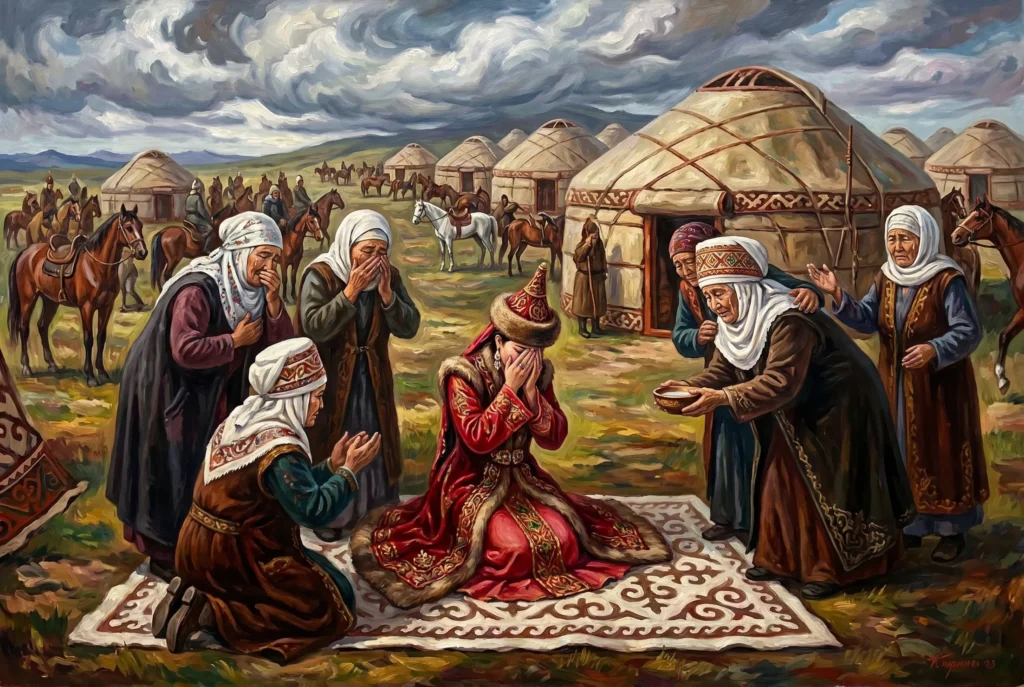
This also explains the traditional tears of the bride and her friends. Today we tend to see it as a sentimental farewell to youth, but for ancient Turks it was ritual mourning for the dead. The bride, together with her close ones, had to mourn herself with full grief so that the spirits of her clan would understand: she was gone for them, no longer under their protection, and would not return.
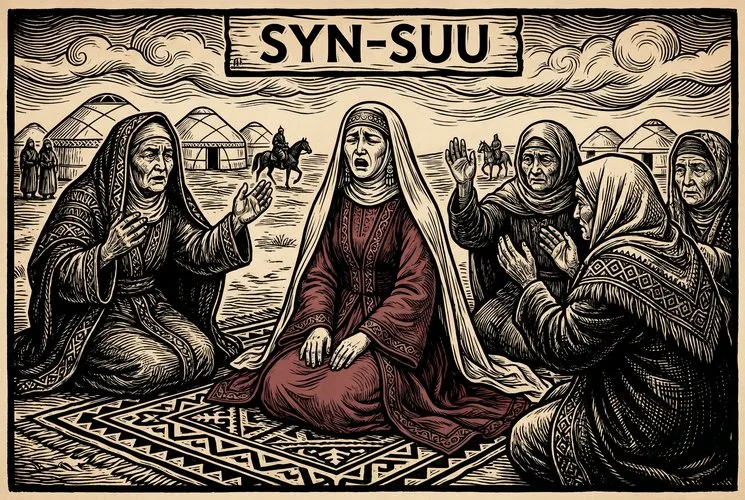
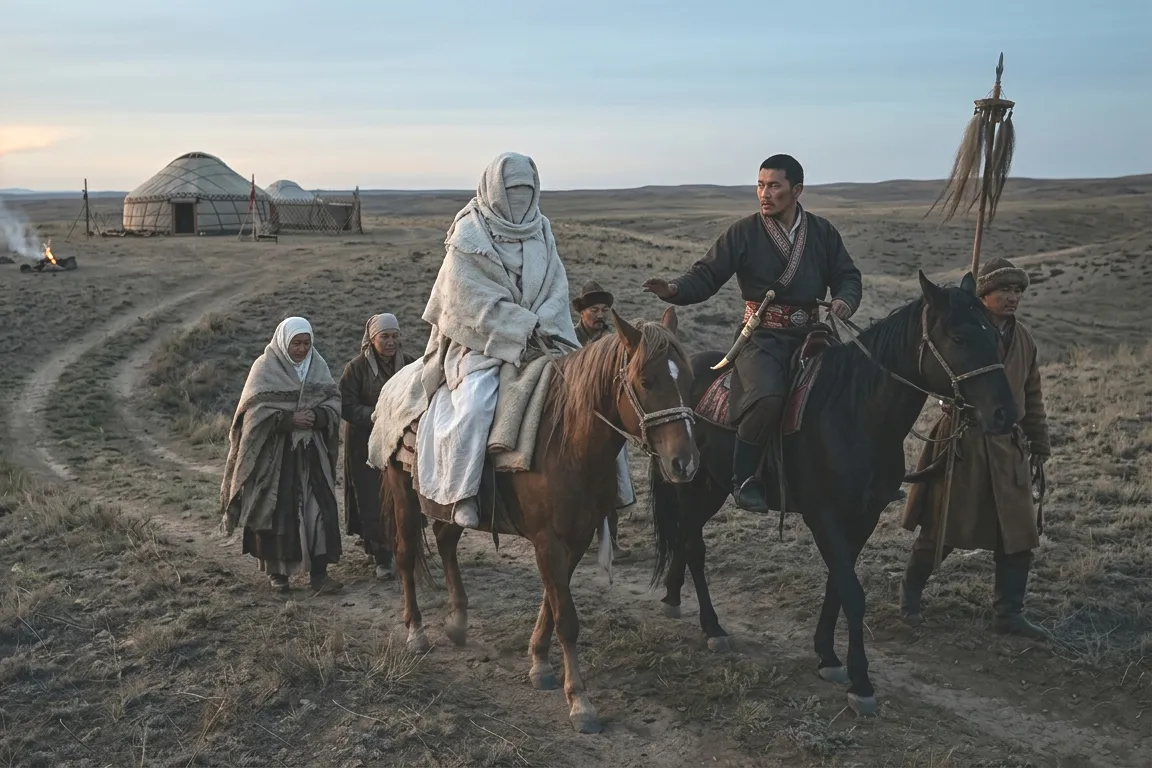
At that moment of transition, the girl completely lost clan protection, and until she reached her husband’s house, her soul was considered fully vulnerable. The bride was the easiest and most desired prey for Albasty – a cunning demon who hunts female energy. To deceive evil spirits, she was taken to the groom’s house in strict secrecy, along confusing paths. She was wrapped in several layers of fabric, turned into a faceless bundle, and forbidden to speak. It was believed that in this way the demon, unable to recognize her as human, would pass by. This ritual silence mattered far more than festive dances and songs.
At the same time, the groom faced no less difficult a task. He had to protect his male power and “capture” luck for the future family. Magical objects helped him – a belt and a dagger.
The wedding ritual included elements of a symbolic battle for “kut” – life force, which the groom with his friends had to seize from hostile forces and secure for himself and his wife. In the end, both bride and groom, each in their own sphere, held their shared sky: she from within, and he from outside.
The culmination of the Tengri wedding ritual was the bride crossing the threshold of the new home, a point of no return. In later European tradition, brides were often carried over the threshold, but here she walked on her own, following strict rules believed to shape the family’s fate.
It was believed that spirits lived under the threshold – guardians of the house and the clan – and therefore it was forbidden to step on it. Any contact would be a grave insult and could bring a curse. The bride had to step over the threshold with her right foot without touching the sole. If she stumbled or touched the threshold or the door, it was considered a catastrophe and the wedding could be stopped.
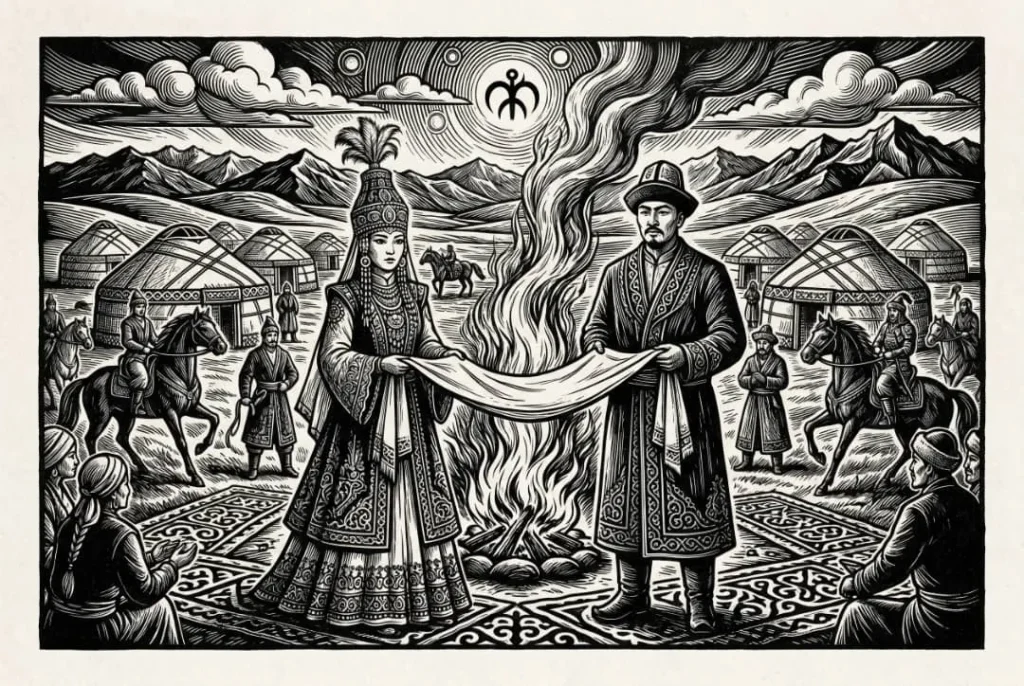
Since ancient times, the Turkic marriage ritual has included offering to the fire. Upon entering the husband’s house, the bride would pour oil into the hearth. If the flame rose bright and without smoke, it meant the clan spirits had accepted her into the family. If the fire went out or began to smoke, it was a bad sign, and the bride had to be urgently cleansed with archa.
And in some regions of Kyrgyzstan, another unusual pagan tradition has been preserved. During the celebration, relatives from the groom’s side slaughter a live goat, take out its lungs, and while still warm, begin to whip the newlyweds with them. It is believed that this ritual protects the couple from family quarrels, the evil eye, and the influence of harmful spirits.
Tengriism, like nomadic life itself, lacked any sense of nuance. Even from the small fragments of information that remain, we can see that the wedding ritual of nomads, in both scale and meaning, resembled a battle with Eternity for the right of the clan not to disappear in the steppe dust. Against this background, it becomes especially clear how far the modern idea of a wedding as a joyful celebration of love is from its ancient sacred meaning.
Text by Yulia Zemtsova