The Lost God of Central Asia
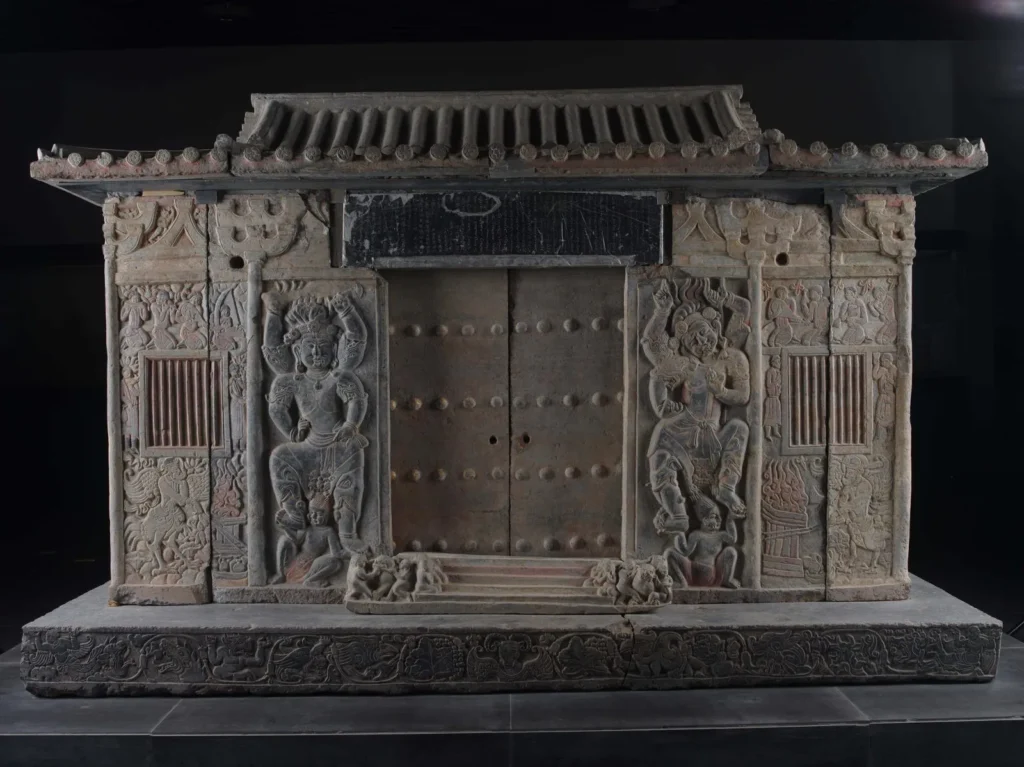
There are no sacred texts left from the cult of Veshparkar – no prayers, no hymns, no myths. We only know about this deity from fragments of frescoes in Tajikistan, pieces of statuettes from Uzbekistan, and reliefs from tombs found in China.
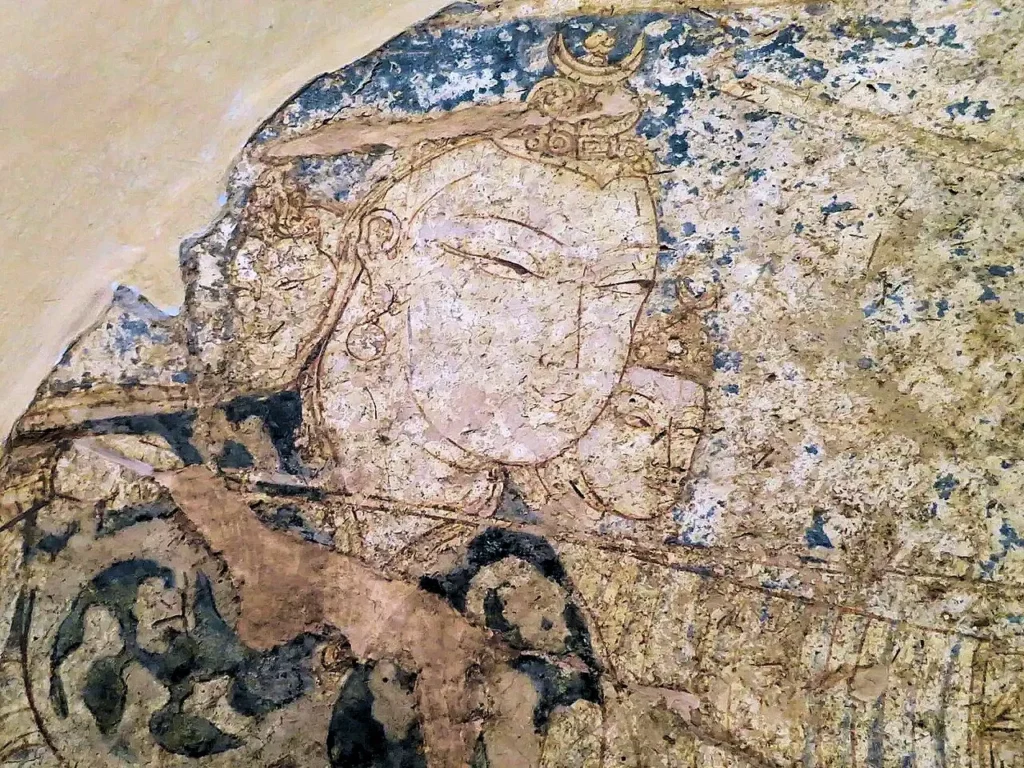
In these images, Veshparkar appears as a force connected with order and the transition between worlds. Let’s try to bring all the information together and see him – the Sogdian god of wind and a cosmic protector.
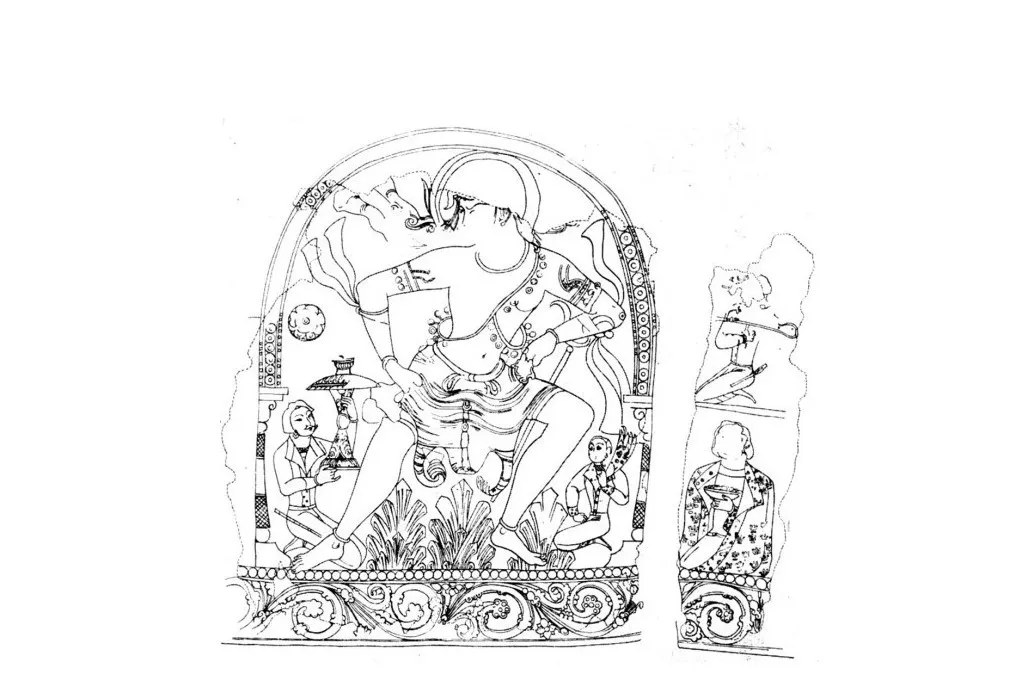
Veshparkar looks monumental and dynamic. He is a half-naked three-headed man with six arms, wearing a tiger skin on his hips. His body is painted blue. On his chest he has a cord with small bells, and flowing ribbons come from the bands on his arms. His heads are surrounded by a halo, and flames come out from his shoulders.
The three faces of Veshparkar show different aspects of his power. The central face is male, the right one is female (and it blows a horn that creates wind), and the left one is demonic. Each of them has a third eye.
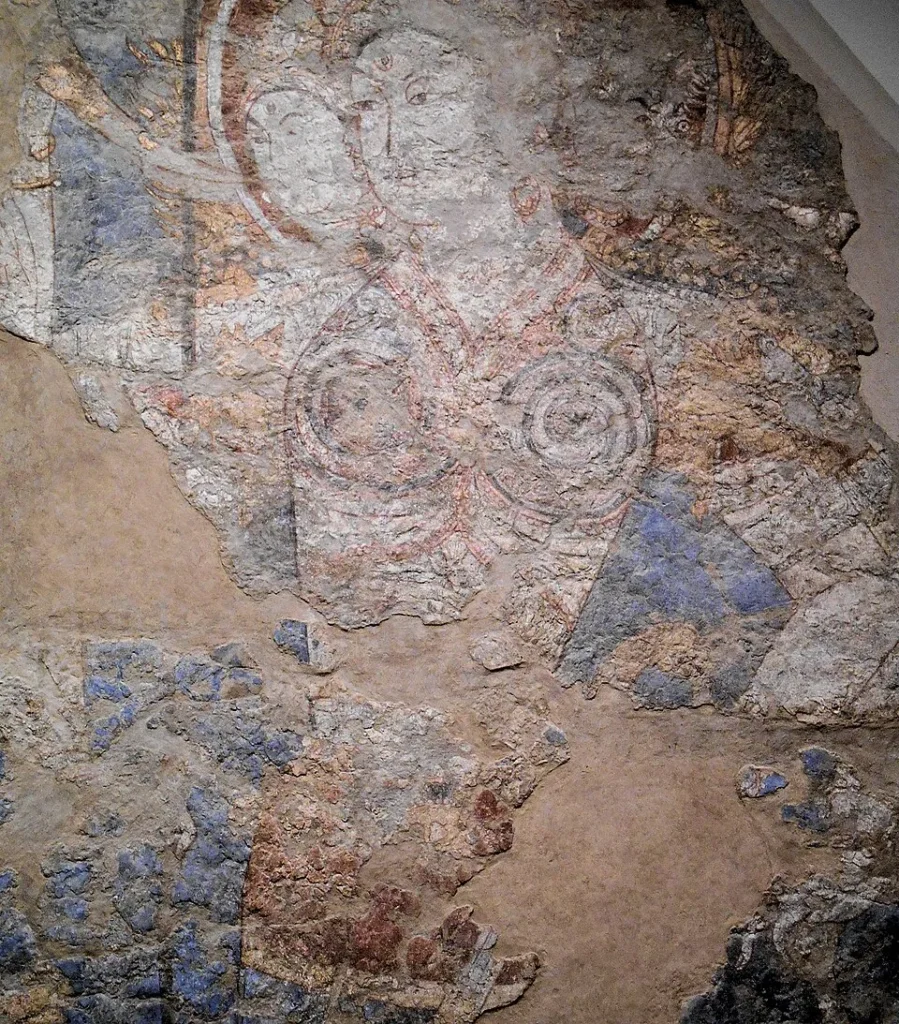
Most often this god is shown in violent movement, like an archer’s pose or a ritual dance. But sometimes he sits calmly on a throne of two bulls, holding symbols of the sun and the moon, a vajra, and a fruit.
At first sight, much of this looks like the Hindu Shiva – a many-faced creator and destroyer of the universe. But researchers are sure that these gods should not be identified with each other. Sogdian artists simply used a universal visual language without borrowing mythology. Many-faced forms in Central Asian art are a way to show a non-human cosmic power and a sign that this is not a person or a hero, but a powerful all-present deity.
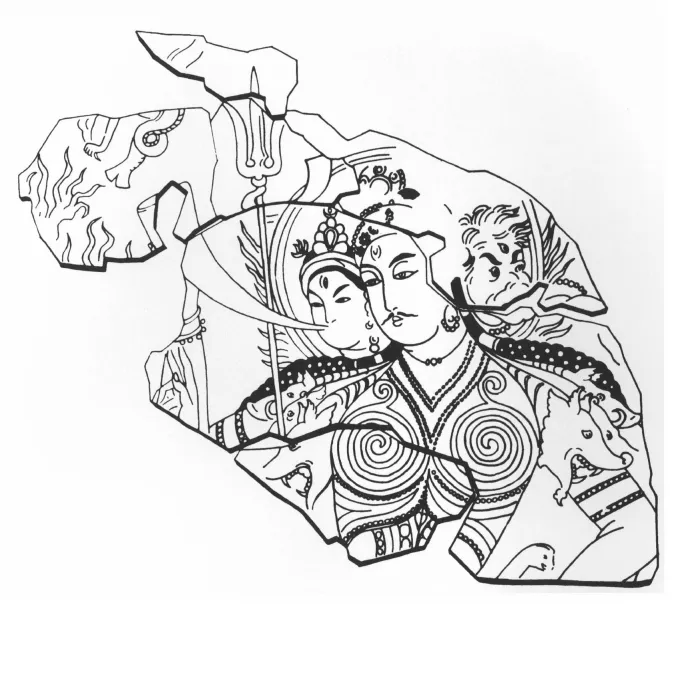
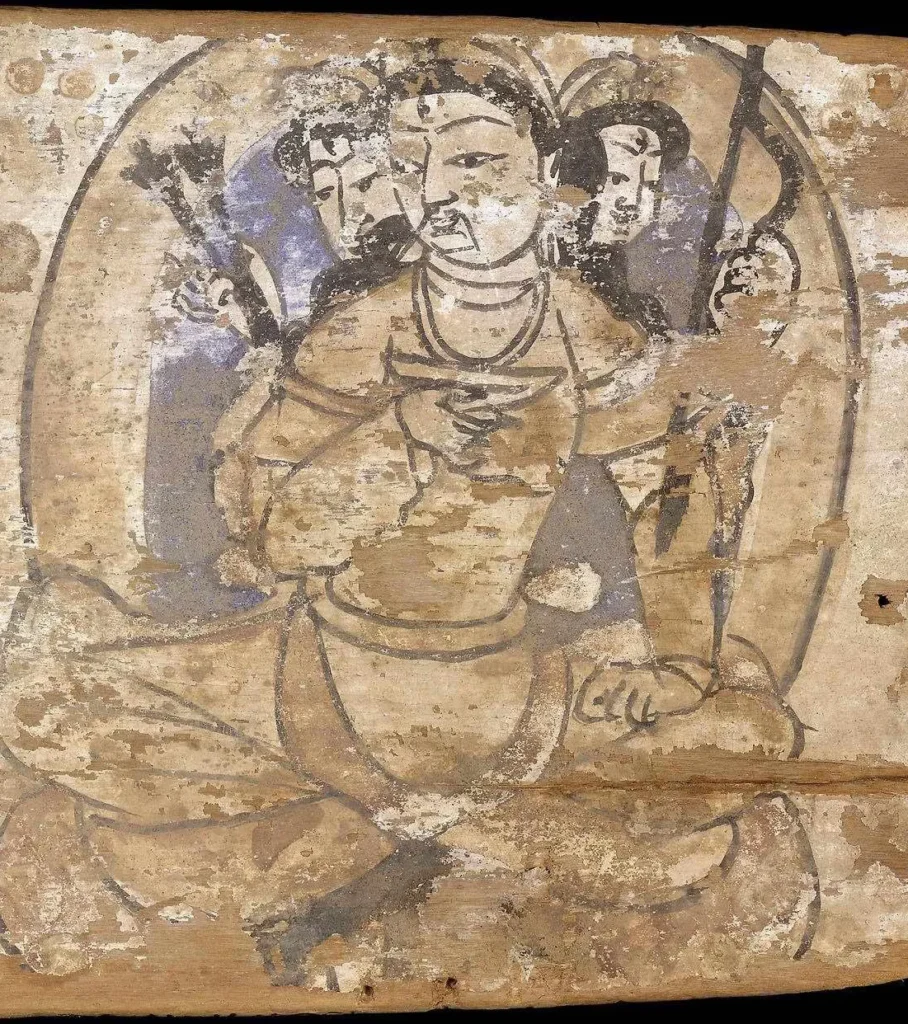
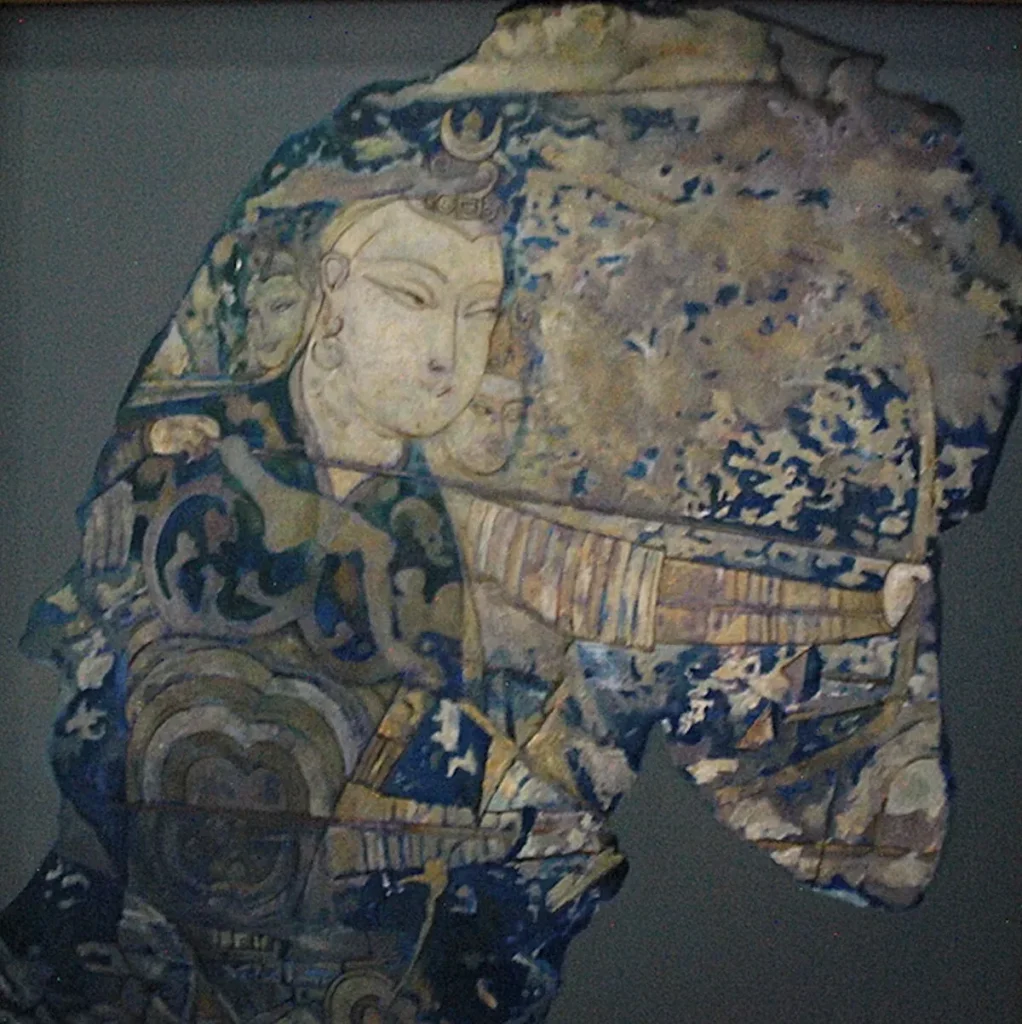
Rare images found by archaeologists suggest that Veshparkar was honored in at least three forms.
First, he is the god of wind. Wind is a very strong force that cannot be resisted. It blows in all directions, it cannot be caught, limited, or controlled. In Central Asia this element is ambivalent: it can bring both long-awaited cool air and death from storms or sandstorms. Veshparkar also reflects this duality: he is neither good nor evil.
Second, Veshparkar is a divine builder who orders the structure of the world. In frescoes he leads a huge army fighting demons, acting as a cosmic regulator that protects order from chaos. Based on the scale and placement of the images, scholars believe that Veshparkar may have been one of the supreme gods of the Sogdian pantheon. There is even a theory that his name means “creator of everything”.
Third, he is also connected with the underworld. His torso has been found on the lintel of a burial chamber. And on a 6th-century Sogdian sarcophagus, Veshparkar is shown above the Chinvat Bridge, which in Asian mythology is the boundary between the world of the living and the dead. Souls pass over this bridge, and Veshparkar is one of the gods who protects this passage – a guide between worlds.
In the end, this is all the knowledge we currently have about Veshparkar. All that remains is to try to interpret it ourselves and build our own hypotheses about his cult and myth.
Pre-Islamic Central Asian history is still not widely popularized, and research in this field develops quite slowly. But the more attention this topic receives, the more likely it is that new expeditions will one day go to the Asian steppes. And one day they will surely find scrolls with stories of ancient gods. And we will tell you about them.
Text by Yulia Zemtsova
Images from Museum Collections