
Why is it so powerful?
In Kyrgyzstan, as in many other countries, the number 40 is considered special. According to one legend, the Kyrgyz are descended from 40 pure and beautiful maidens. One day, these girls went to the sea to bathe. While playing in the water, they jokingly licked sea foam – and became pregnant from it. That’s how the Kyrgyz people came into being. In fact, “kyrk kız” literally means “forty girls.”
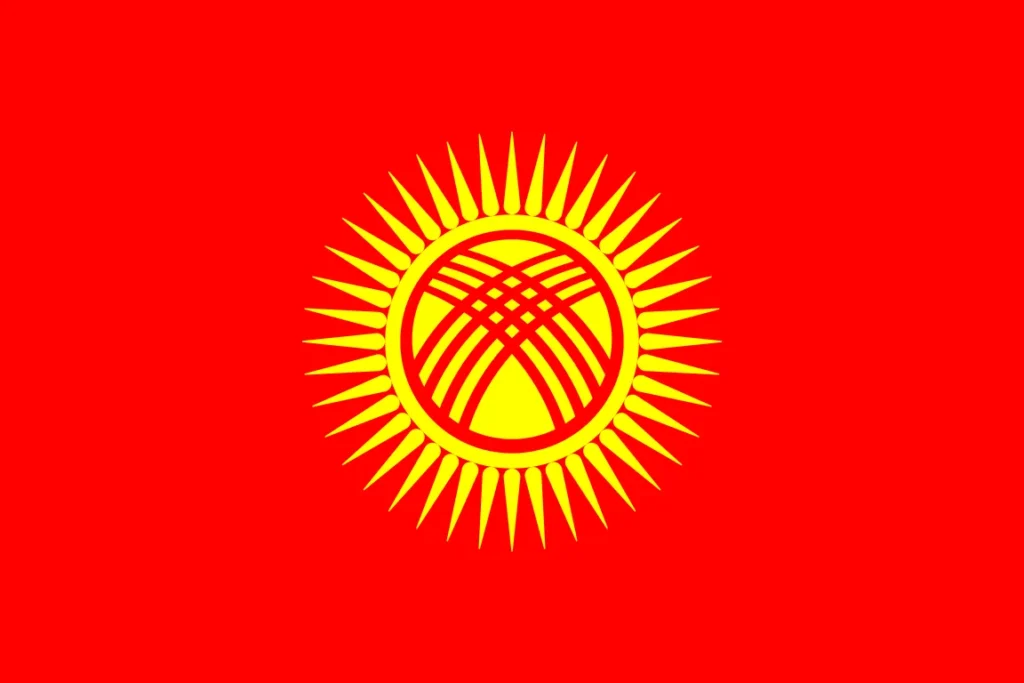
The number 40 is considered sacred in Kyrgyzstan. The 40 girls gave rise to 40 tribes, and this is even reflected in the national flag: the Kyrgyz flag shows the tunduk – the top part of a yurt’s dome (also a sacred symbol) – surrounded by 40 sun rays, representing the 40 tribes.

The main hero of the Kyrgyz epic, the warrior Manas, had 40 companions. Kyrgyz shamans also have the cult of the chilten – 40 unseen guardians who are believed to be present among people, influencing life events, guiding, and helping them. A skilled practitioner can even meet them: it is believed that chilten visit someone who spends 40 days in isolation, meditating in a special space called a childekan.
This number is also closely tied to magic. In Kyrgyz legends and epics, you can find 40 caravans escorting a hero returning from the underworld to the human world; 40 birds as the form taken by a monster’s soul; and a witch’s cauldron with 40 handles, containing 40 forces capable of destroying a person.
It is also said that Kydyr-Ata, the bringer of happiness and abundance, appears to a newborn child in 40 different forms over the first 40 days of life, eventually granting the child a guardian spirit. This is one of the reasons why, during the first 40 days, a baby is not shown to anyone except close family. On the 40th day after birth, the child is washed with warm water poured from 40 spoons, dressed in a new shirt sewn from 40 pieces of fabric, and 40 ritual flatbreads are baked and distributed to 40 children.

This number shows up across many religions, beliefs, myths, and superstitions, and that’s striking. But if you look closer, it can all be reduced to one common idea. Forty is the point where it becomes enough. It’s the moment when time, knowledge, size, or experience build up to form a solid base, a safety margin, a protective layer, or even a launch point.
In the Abrahamic religions, 40 is a number of trial and purification. It rained for 40 days during the Great Flood, and that was the time needed to wash away the sins of the old world. Moses led his people through the desert for 40 years so a new generation could rise and the mindset of slavery could fade away. Jesus fasted in the desert for 40 days before beginning his mission.
The Prophet Muhammad received his first revelation at the age of 40. In Sufi practice, there is a tradition called “chilla”, a 40-day period of deep solitude and meditation, seen as essential for spiritual growth.
For centuries, Jewish mystics believed that studying Kabbalah should only begin after the age of 40. It was thought that only by then a person becomes mature enough to understand higher wisdom.
For the Sumerians and Babylonians, the number 40 also had special meaning. The Pleiades disappeared from the sky for 40 days, and this was linked to the dry season. Their return was seen as the return of rain and life.
In alchemy, the process of creating the philosopher’s stone was often linked to 40-day cycles, during which matter went through stages of transformation.
In many cultures, there is a belief that the soul finally leaves the earthly world on the 40th day after death. Before that, the connection with the body is still present, but after that, the transition is considered complete.
Even the word “quarantine” comes from this number. The Italian word “quaranta” means forty and refers to the number of days ships had to stay in port during plague times to prove they were safe.

In monastic and ascetic traditions, a 40-day fast is seen as a deep psychological reset. By the end of this period, a person is believed to enter a different state of mind, with access to visions and insights.
But why 40, again and again?
In numerology, 40 can be seen as a stronger form of four. Four stands for the Earth, the material world, the four directions, and stability. It is like a box that holds our reality. Ten represents order and completion. When you multiply earthly stability by divine completeness, you get a fully realized form in the material world.
Biology also shows that in many cases, 40 is a meaningful time frame. In moderate conditions, around 40 days can be enough for soft tissues to break down. It marks a point of no return for organic processes.
The same applies to the immune response: without pharmaceutical intervention, many diseases tend to follow a cycle of about 40 days from infection to the outcome (recovery or death).
Pregnancy lasts about 40 weeks. And the body often needs around 40 days to recover after childbirth.
Deep psychological change, like adapting to loss or shifting your way of thinking, can also take about 40 days. A period of deprivation or change of this length can reshape neural patterns and create a sense of renewal.
In agricultural societies, 40 days was a basic planning unit. It could be the time from planting a seed to stable growth, or the shift between seasonal phases.
So the magic of the number 40 may come from human observation. People noticed these patterns in nature and life, and gave them a symbolic meaning of transition and completion. And its sacredness is not superstition, but one of the laws of the universe.
Text by Yulia Zemtsova
Cover photo by Jul L. G.