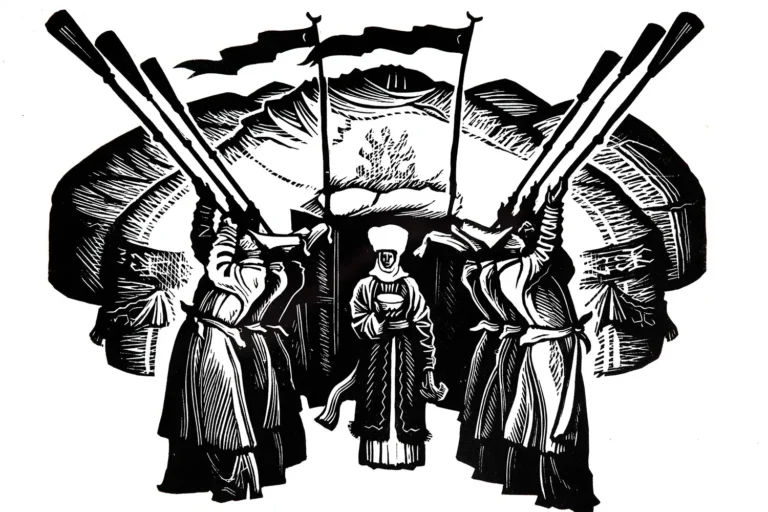
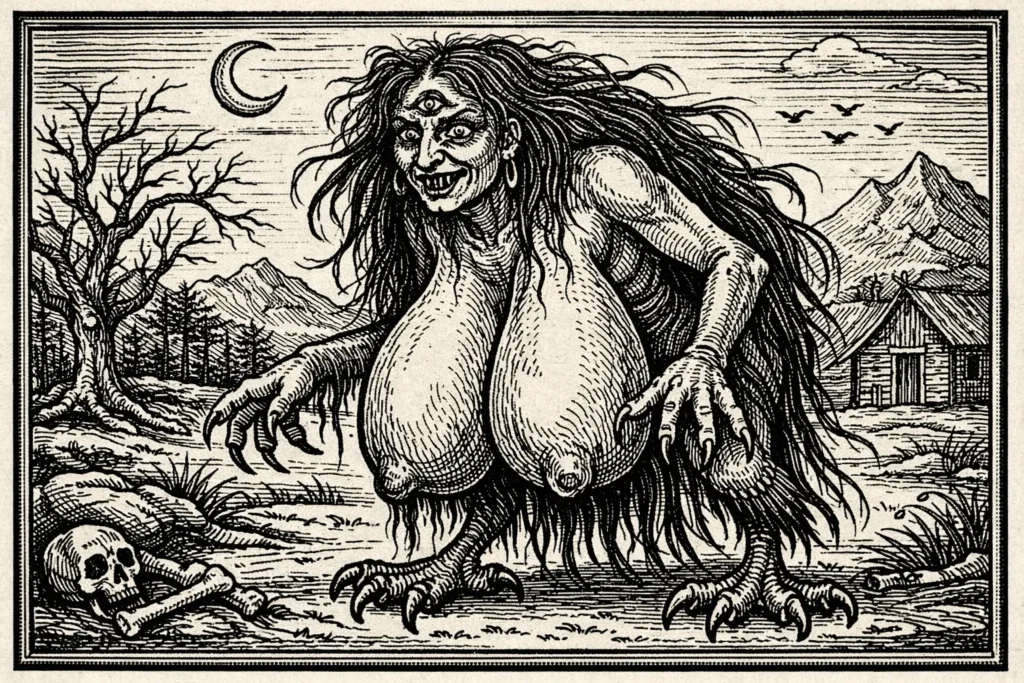
A three-eyed ugly woman with long tangled hair, completely naked, with animal or bird-like legs and huge breasts hanging almost to the ground – this is what one of the best-known demonic figures in Turkic folklore looks like.
Everyone knows her, both children and adults, from Siberia to Azerbaijan. Any Kyrgyz, Uzbek, or Kazakh learns her name before they learn how to speak. This is Albasty (or Albarsty, Albys, Lobasta).
She is a nightmare made flesh, waiting for any human at night. Albasty is the embodiment of disease and infant death, as well as the death of women in childbirth and pregnant women.
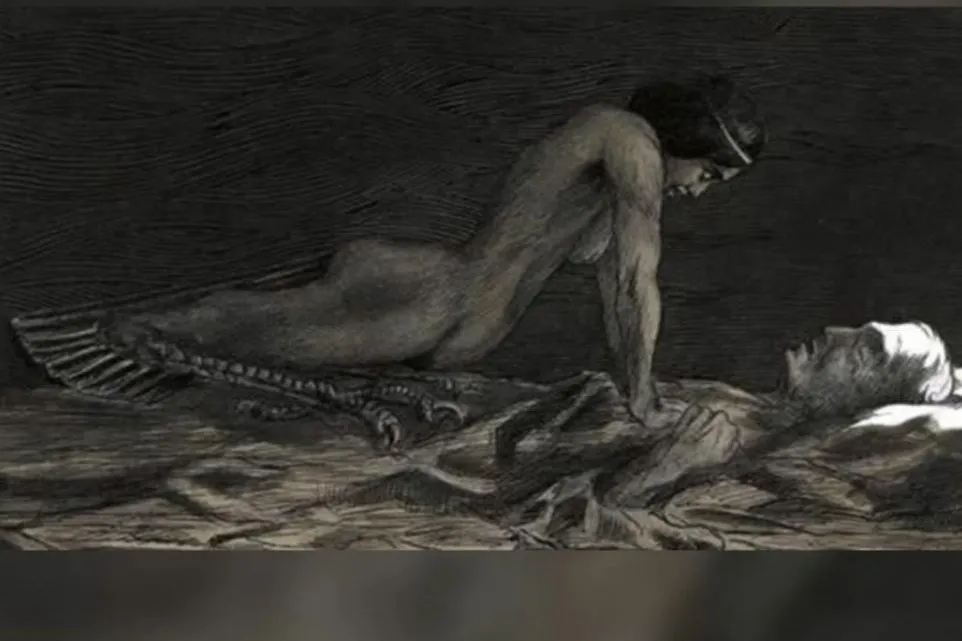
Her name is translated as “the one who presses,” and the most harmless thing you can expect from her is sleep paralysis, when a person feels they are suffocating in sleep under a heavy force that came from nowhere.
Appearing at night, Albasty jumps on a sleeping person, presses on their chest, and drains life energy. If the victim manages to wake up, she disappears. And if, upon waking, they manage to grab her, pull out a strand of her hair, or take away the comb she uses to brush her tangled hair, Albasty will grant any wish.
Albasty fears iron the most. A pin in clothing or a knife under the pillow can prevent her appearance and serve as a real weapon against her.
But should we fight her?
Many researchers of world folklore, studying the image of Albasty, conclude that the historical roots of this figure go back to Mesopotamia. According to them, the myth of Albasty dates back to Sumerian times, and she is considered one of the forms of Lilith. In later rabbinic interpretations of the Talmud, Lilith is described as the first wife of Adam, who left Paradise of her own will, refusing to obey her husband.
But most likely, this image is even older. Nakedness, exaggerated breasts (which, according to belief, Albasty can even use to kill a person), and her particular connection to childbirth and women in labor – all of this points to the image of the ancient Great Goddess and Great Mother, later demonized with the rise of patriarchy.
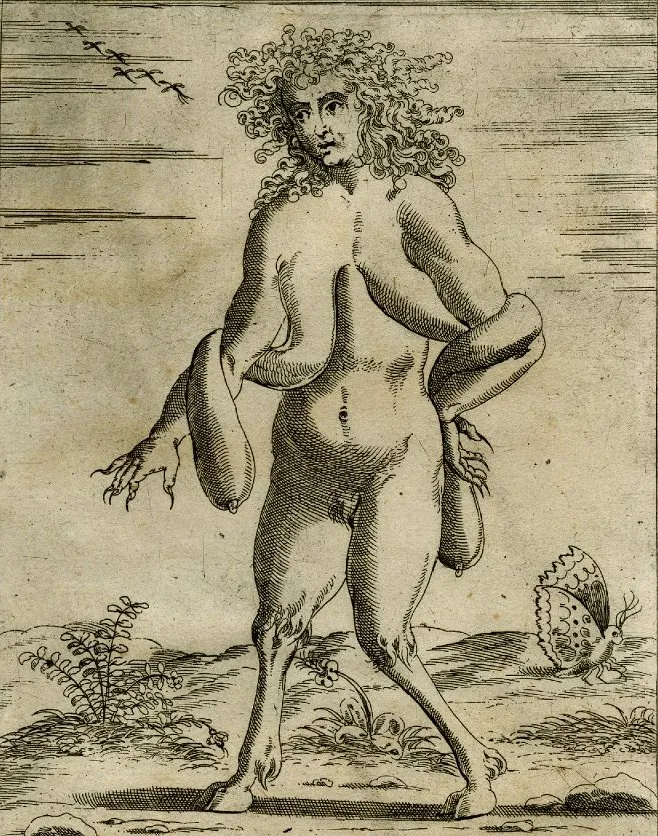
A naked female body with enormous breasts in the Paleolithic era was a symbol of absolute fertility and power over life and death. However, as Mircea Eliade noted, the gods of a defeated religion, once stripped of their status, inevitably turn into demons. And so, in almost all cultures, the Great Mother who once gave life became a terrifying demon associated with death.
But hidden in this knowledge is a key to interacting with such a being. Albasty is an ancient female deity who was exiled, slandered, and diminished. And if, when encountering her, you remind her of who she truly is, she may respond very differently.
As Carl Jung wrote, God needs a human being in order to become conscious of himself. Albasty is no exception. For thousands of years, she has been seen as an ugly monster. But what if she is simply waiting for someone who will not look away – someone who can see, behind the tangled hair, the original freedom of the Great Mother?
To see Albasty as an exiled goddess is to heal a fracture in human history itself. In the end, every encounter with a “monster” is an invitation to reconcile the world through love.
Text by Yulia Zemtsova