
A pagan festival that was never fully Christianized
Every year on the night from April 30 to May 1, one of the biggest festivals is celebrated, and like many others, it has been heavily demonized over the past two millennia. In the European pagan tradition it is called Beltane. In the Christian version it is Walpurgis Night.

Beltane is one of the key turning points of the year, a festival marking the final victory of light over darkness and the earth’s peak fertility. It is celebrated on the night from April 30 to May 1. But it began in those distant times when people did not yet have calendars, so it is better understood as a festive period that lasts about a week at the turn of the months.
According to one version, in ancient times this festival was dedicated to the god Belenus, who brings light and healing, and the name Beltaine comes from the Old Irish bel meaning “bright” and teine meaning “fire.” During these days, before driving cattle to the summer mountain pastures, the Celts performed magical rites and purification rituals so that the animals would not get sick and would give good offspring, and the coming year would be rich and generous.
What is needed for fertility? Of course, love. Physical, bodily — something of the material world. Without it, the continuation of life is impossible, which means it is sacred and blessed by the gods themselves.

In mythology, Beltane is when the King (the Sun), already strong after the spring equinox, marries the Queen (the Earth) and takes her to the marriage bed. That is why many attributes and rituals of this festival carry a sexual undertone.
With the coming of darkness, fires in the homes were put out, and large bonfires were lit on the highest hill. In honor of life and love, people held a night festival with contests, games, songs, dances, flirting, and of course the choosing of the May King and Queen.
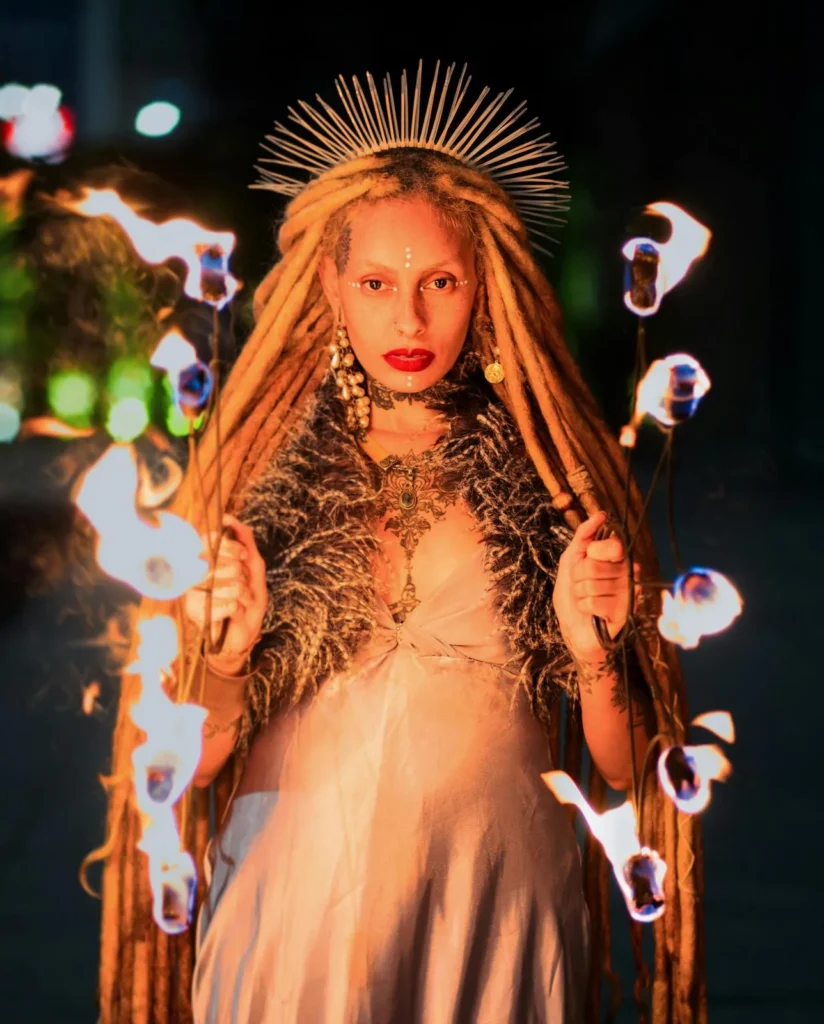
Cattle were driven between two huge fires, and people also walked between them. This was not only a ritual cleansing, but also a practical one, as the smoke killed parasites. It was believed that the fires of Beltane burn away all old illnesses and misfortunes, giving renewal and fresh strength.
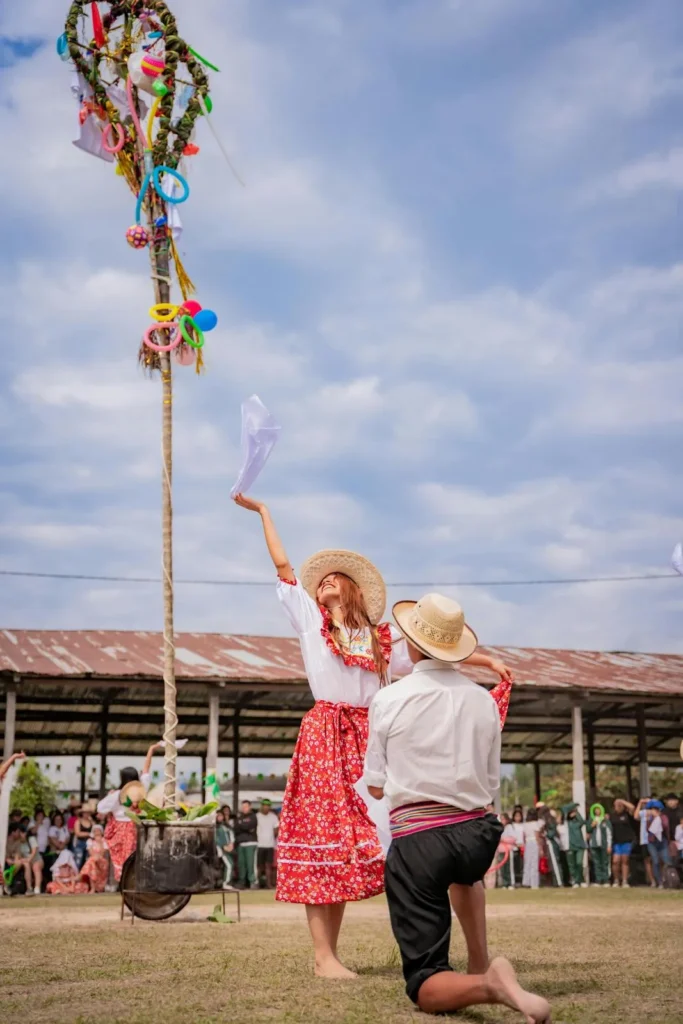
One of the main symbols of Beltane is the Maypole, decorated with colorful ribbons. It symbolized not only the Axis Mundi (the axis of the world), but also a phallic symbol of fertility. Because of these associations, the Christian church later strictly forbade setting up such poles and holding celebrations around them.
With the coming of Christianity, all major pagan holidays met the same fate. They could not be abolished or banned, so they were reinterpreted and Christianized by attaching new meanings that were similar, yet fundamentally different. Thus the quiet and serious Samhain, a time of remembering the dead and taking stock, turned into carnival-like Halloween, a time of costume parties meant to “scare away evil spirits”. And the bright Beltane, celebrating fertility and life, became the dark Walpurgis Night with the burning of effigies depicting witches.
Saint Walburga of Heidenheim is a historical figure, an English Benedictine nun and abbess who lived in the 8th century AD. During her lifetime she became known for miracles of calming storms, vicious dogs, and illnesses. After her canonization in the 9th century, she came to be seen as a protector in times of trouble, a helper during epidemics, famine, and crop failure, a patron saint of the sick, women in childbirth, and peasants, and above all a defender against witchcraft.
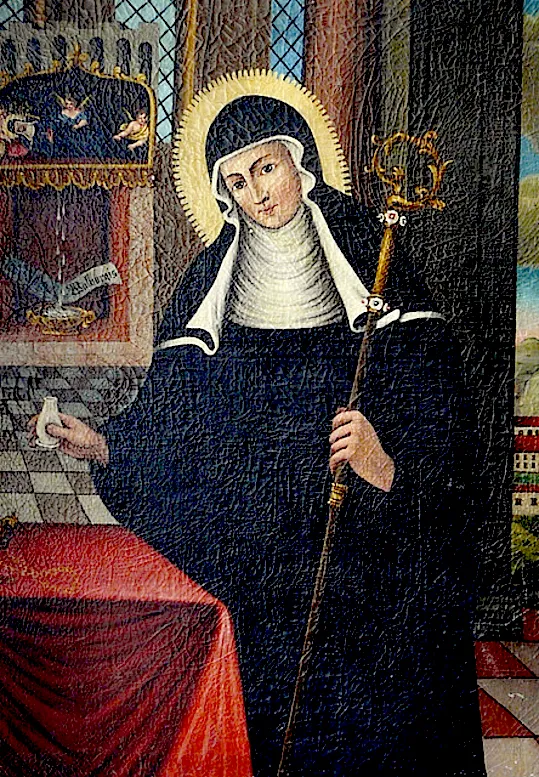
Photo from Wikipedia
The date of her commemoration was set as May 1, the very day the pagan world celebrated Beltane. And so gradually the celebration of earthly love and life turned into a night of the witches’ sabbath and the frenzy of evil forces, which had to be fought with fervent prayer.
It was believed that on Walpurgis Night all witches gathered with their demon lovers on Mount Brocken and told the devil how much evil they had done over the year. Because of this, all evil on earth became active, and good people had to light fires, ring bells, and pray intensely – only in this way could evil be driven away and prevented from uniting.
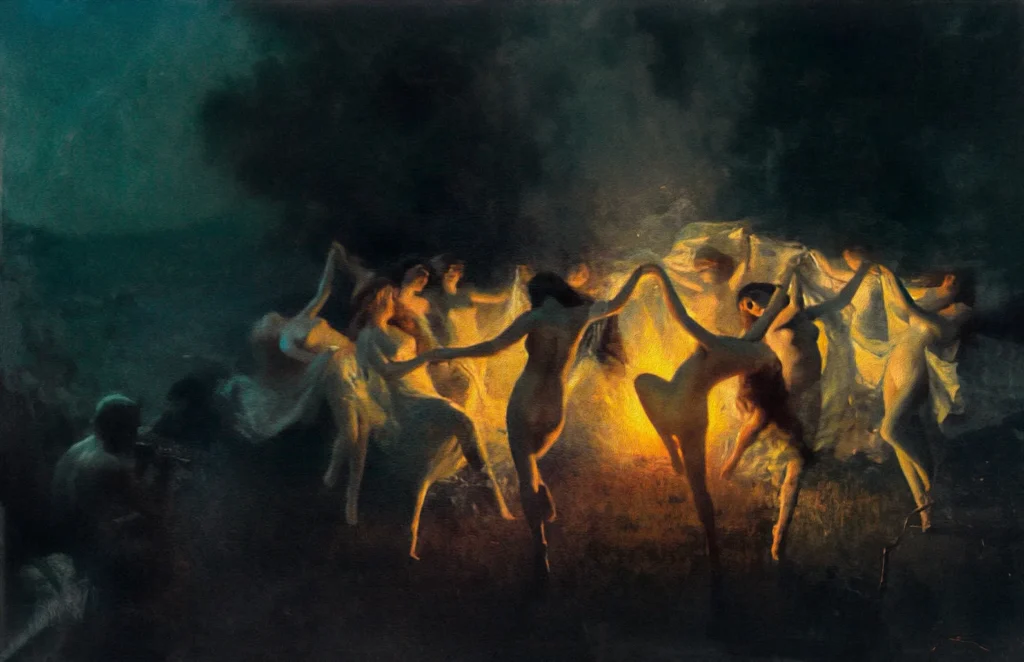
To protect themselves from witches’ tricks, people sprinkled barns with holy water, and for their own protection drew three crosses on the doors of their homes. A scythe or a knife was often placed under the threshold – it was believed that witches could not step over metal.
Cracks in windows and doorways were stuffed with bundles of thorny plants so they could not enter. And all brooms, of course, were hidden.
Gradually, superstitions began to multiply around this day. On the eve of Walpurgis Night and the following morning, nothing could be given out of the house. People were afraid even to share a pinch of salt with a neighbor – it was believed that anyone asking for something on this day would take away luck and pass it to dark forces. And if on the morning after Saint Walburga’s day a cow fell ill or milk turned sour, this could be seen as the doing of a neighbor who “surely flew to the mountain”. Such a coincidence was enough to justify a denunciation.
Then art also played its part, firmly linking this spring holiday with witches’ orgies and a parade of evil forces. Especially vivid was the image created in Goethe’s “Faust”, which inspired more than one generation of writers, composers, and artists.
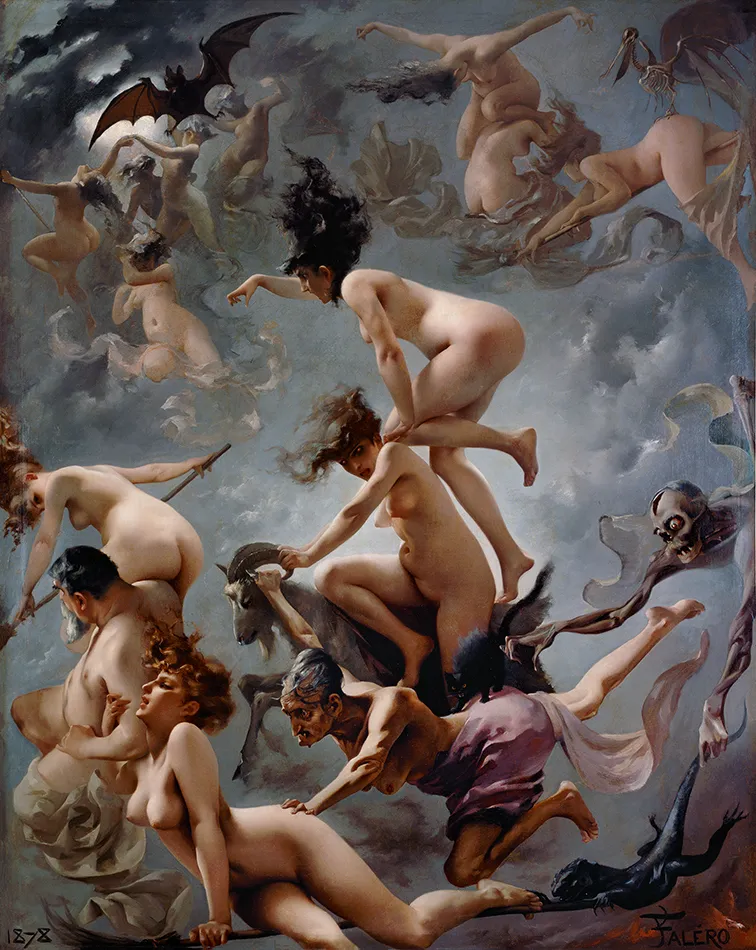
The way this night resonated so strongly in people’s souls shows how archetypally significant it was and still is. Traditionally, Beltane, whatever it is called in different pagan traditions, is also a time of lighting fires, but their flame is meant not to drive away, but to cleanse and illuminate the path. Originally, it was a period of the full awakening and blessing of life in all its forms, and at its center stood not evil forces, but life energy and the union of love.
Walpurgis Night asserts the absolute hostility of all spirits and subtle beings, while Beltane welcomes them as allies. And where paganism celebrates sacred union in the name of love, Christianity is dominated by fear of an uncontrollable and incomprehensible force.
The Church still marks the night of Saint Walburga with the ringing of bells, the lighting of torches, and prayer vigils. But the soul knows better. This holiday is still felt not as Satan’s ball filled with fear of darkness, but as the long-awaited triumph of light, sparkling with hope and love for life.
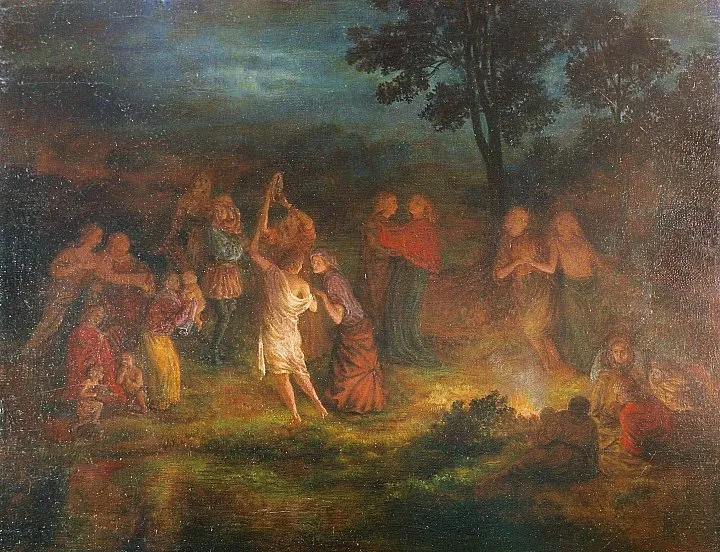
In 2026, Beltane coincides with the full moon, which makes it even more significant. The bright “masculine” flame of the fires, symbolizing the Sun, meets the soft “feminine” light of the full Moon. In this shining union, love is born, nourishing life in all its forms.
Now is the perfect moment to cast off old chains, spread your wings, and move toward your desired goal. May the fires of Beltane light your path, and may the flame of love never go out. Celebrate, love, shine, and be blessed!
Text by Yulia Zemtsova
Cover photo by Vitaly Gariev