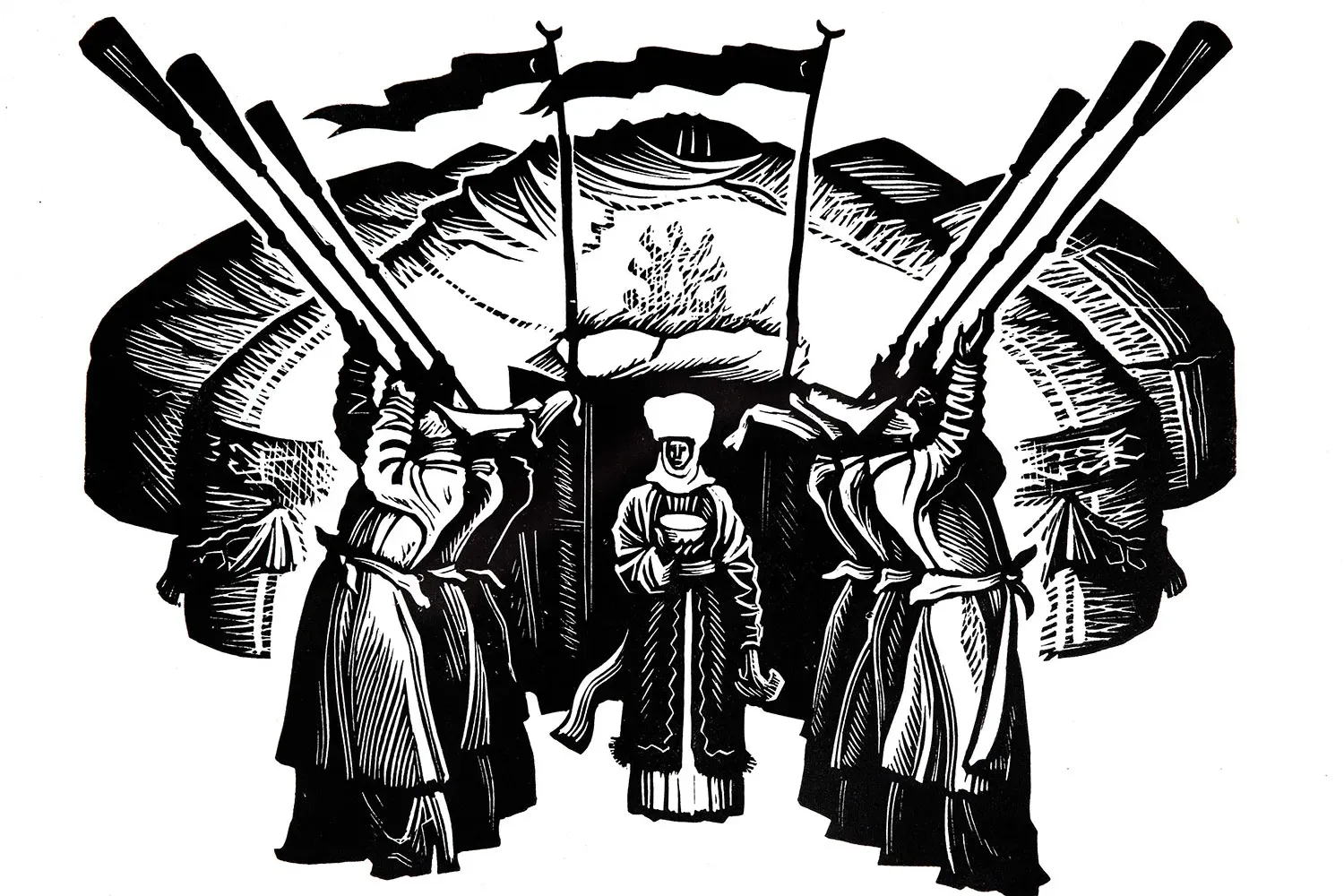
For centuries, the Epic of Manas was passed down orally and told not only of heroic deeds
Imagine an epic whose total length is more than half a million lines of verse. It is 18 times longer than the Iliad and the Odyssey combined and more than twice as long as the Indian Mahabharata. For a thousand years, this work existed only in oral form, and today it is listed in the Guinness Book of Records and studied in all schools and universities of Kyrgyzstan. This is Manas. The largest work in the oral tradition (!) in human history.
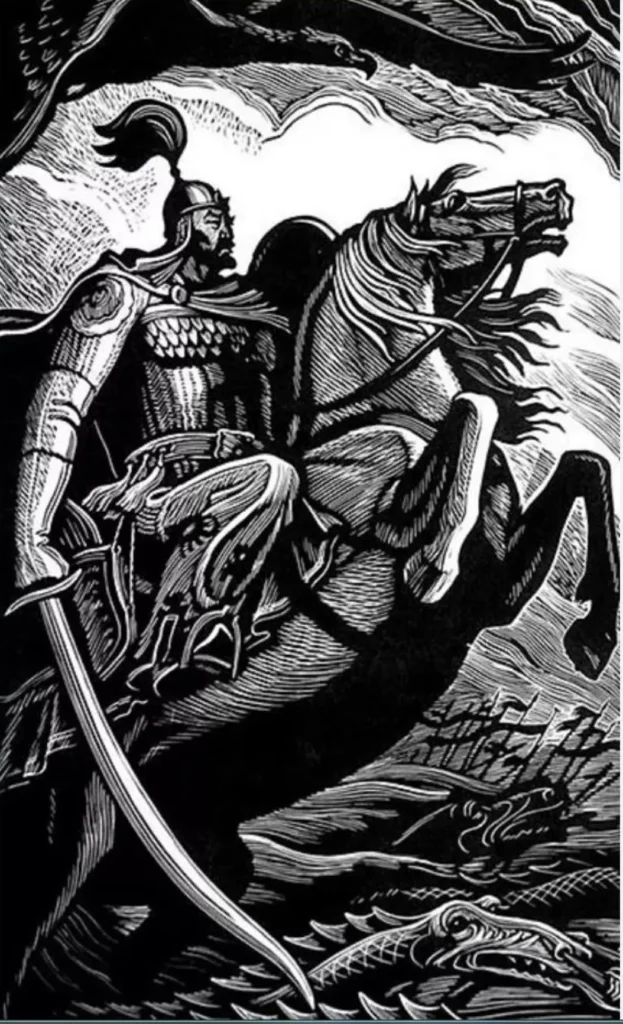
How could a text of this size exist for centuries without written records? Thanks to the manaschi, the people who know it by heart and pass it from generation to generation. We wrote about them in detail in one of our posts. Their ability to recite a work of this scale from memory without changing a single line is an unmatched feat of human memory. And this phenomenon still has no single clear scientific explanation.
The story of Manas in the epic begins with a classic sacred narrative. The future hero, like the biblical Isaac, was born to elderly parents who had already lost hope of having a child. In his right hand, the baby held a dark clot of blood, a sign that he was destined to become a great warrior. From a young age, Manas defended his people and eventually managed to unite forty scattered and hostile Kyrgyz tribes into one nation, returning them to their ancestral lands.
The epic describes routes from the Yenisei to the Caspian Sea with striking clarity, and their place names and landscapes are still easy to recognize today. Researchers who study the epic are impressed by its factual accuracy. It is not just a heroic tale. It is a detailed guide to medieval Eurasia.
Moreover, Manas is also an ancient medical manual, an archive of knowledge on survival in extreme high-altitude conditions. It describes methods of field surgery in detail, how to remove arrowheads, which herbs to use to disinfect wounds, and how to prepare complex ointments.
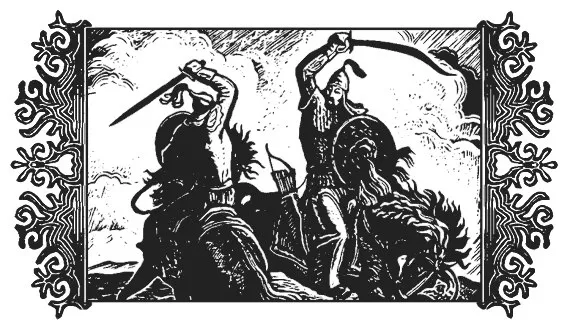
Of course, the main focus is on the hero himself, his warriors, and their feats. But was Manas a real historical person? So far, researchers have not found direct archaeological evidence. That is why most historians consider him a grand collective image that brings together traits of real heroes from different eras, starting from the 9th century.
But in the end, the question of whether Manas really existed is not that important. The impact of his life story on the history and formation of the Kyrgyz people matters much more than any artifacts.
For a nomadic culture that did not build cities, this epic became a real social and political force, a kind of mobile capital not tied to any fixed place but able to unite a whole nation. It was Manas that firmly established the territory, customs, and ethics of the Kyrgyz people so deeply that this foundation has lasted for a thousand years.
Half a million lines of verse turned out to be more reliable than stone fortresses and more powerful than an army. This text has united people for a thousand years. Knowledge of it is still considered essential for every citizen, and universities even have a separate subject called Manas studies. If you are interested in what exactly students study in this course today, let us know and we’ll tell you.
Text by Yulia Zemtsova
Illustrations by Theodor Herzen