A Journey Along the Côte d’Azur
The sea waves crash against the massive boulders with force, spraying fine droplets across the entire roadway. Ahead, the road is veiled in thick airborne foam whipped up by this unprecedented storm. Its large, dense clumps scatter along the shore, and it seems as though someone has poured a giant tank of shampoo into the raging sea. Suddenly, a wave, gathering momentum, easily leaps over the small fence along the cliff edge and drenches my car from top to bottom.
I slam on the brakes, veer sharply onto the shoulder, and, barely managing to push open the door resisting the wind, step outside. The gusty wind nearly knocks me off my feet; heavy rain mixed with sea spray lashes mercilessly across my face. The usually welcoming Mediterranean is angry and indignant today, hurling itself desperately at the coastal rocks, while the Côte d’Azur sinks into a grey, storm-tossed haze. A sight like this is impossible to pass by.
The forecast is discouraging: tomorrow will be even worse. The entire shoreline is littered with debris, the windows of seaside cafés have been shattered by the waves, and the road from Nice to Saint-Tropez has been closed by the police.
“Big waves are flooding the road! I’m not going there! It’s dangerous!” shouts the driver of an SUV parked nearby, waving his arms as he talks on the phone. He dashed out of his car to photograph the extraordinary storm and is now struggling in vain to shield his camera from the rain and spray by wrapping it in the flapping edges of his windbreaker. Weather like this is exotic even for the locals. With their jackets pulled over their heads, three young men stand right at the cliff’s edge, filming on their phones. And down below, the dark-grey sea tosses a large red ball on its waves — a reminder of the interrupted velvet season and the vacationers now long gone.
Early the next morning, I leave Nice and head toward Monaco. The roadside verges resemble rice fields: they are completely flooded, with only tall blades of grass protruding from the water. Occasionally the somber landscape is broken by lone palm trees standing “knee-deep” in water. Yet the road itself is nearly dry. The slope of the pavement — imperceptible to the human eye but crucial for drainage — allows the asphalt to shed water even during heavy downpours and to dry almost instantly.
Monaco is only twenty kilometers from Nice, yet it feels as though the city-state is independent from France even in terms of climate. The closer we get, the brighter the sky becomes, and the sea gradually regains its calm blue color. The road repeatedly slips into mountain tunnels. Emerging from them, one is met with breathtaking views: to the right, a green forested valley stretching all the way to the sea; to the left, clusters of tiny houses scattered along the mountain slopes. In the distance, a public bus can be seen slowly crawling toward one of them along the barely visible thread of a narrow serpentine road.
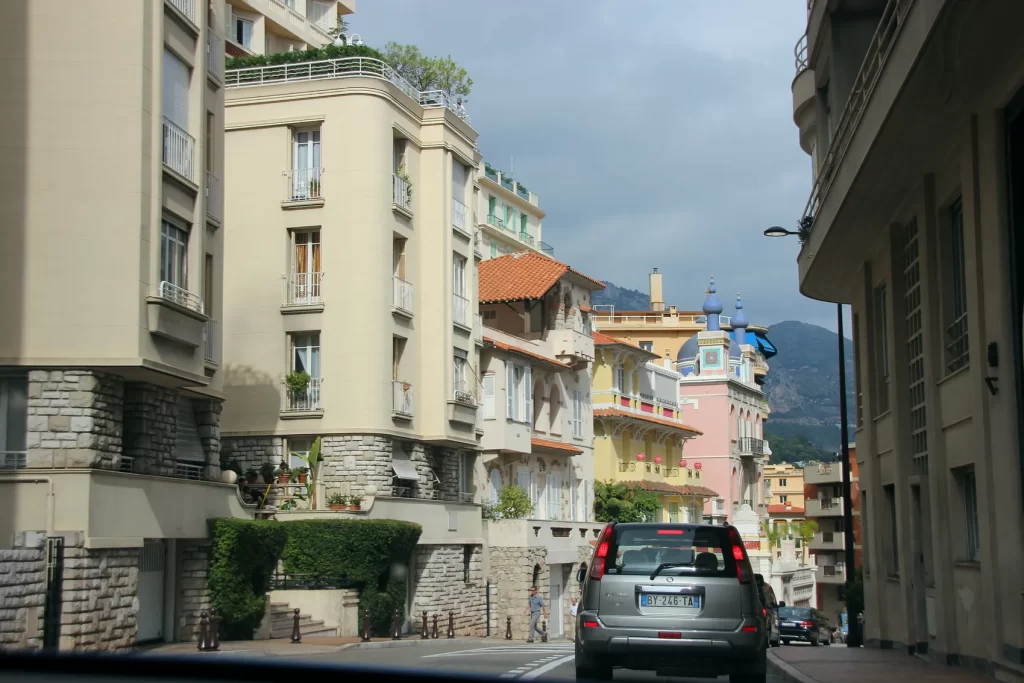
The streets of Monaco are lively and incredibly beautiful. Like an endless piece of lace, elegant buildings with stucco façades and intricate wrought-iron balconies stretch along the avenues. The paving stones of the sidewalks form elaborate patterns reminiscent of a carpet. Yet this abundance of small details and architectural nuances never feels excessive. On the contrary — as in a museum — one wants to stop and take in every detail.
In the very center, on the streets surrounding the Prince’s Palace, lampposts are decorated with red-and-white flags and the principality’s coat of arms. Even a cement mixer in a nearby courtyard is painted in red and white stripes.
When the Prince of Monaco, Albert II, leaves the palace, several intersections are closed for ten minutes so he can pass without stopping at red lights. And now, a few guards in immaculate white coats step out onto the parking area by the palace walls. Smiling politely, they ask visitors to vacate the square and explain why: the head of state will soon be leaving, and for security reasons no unauthorized vehicles may remain near the palace gates.

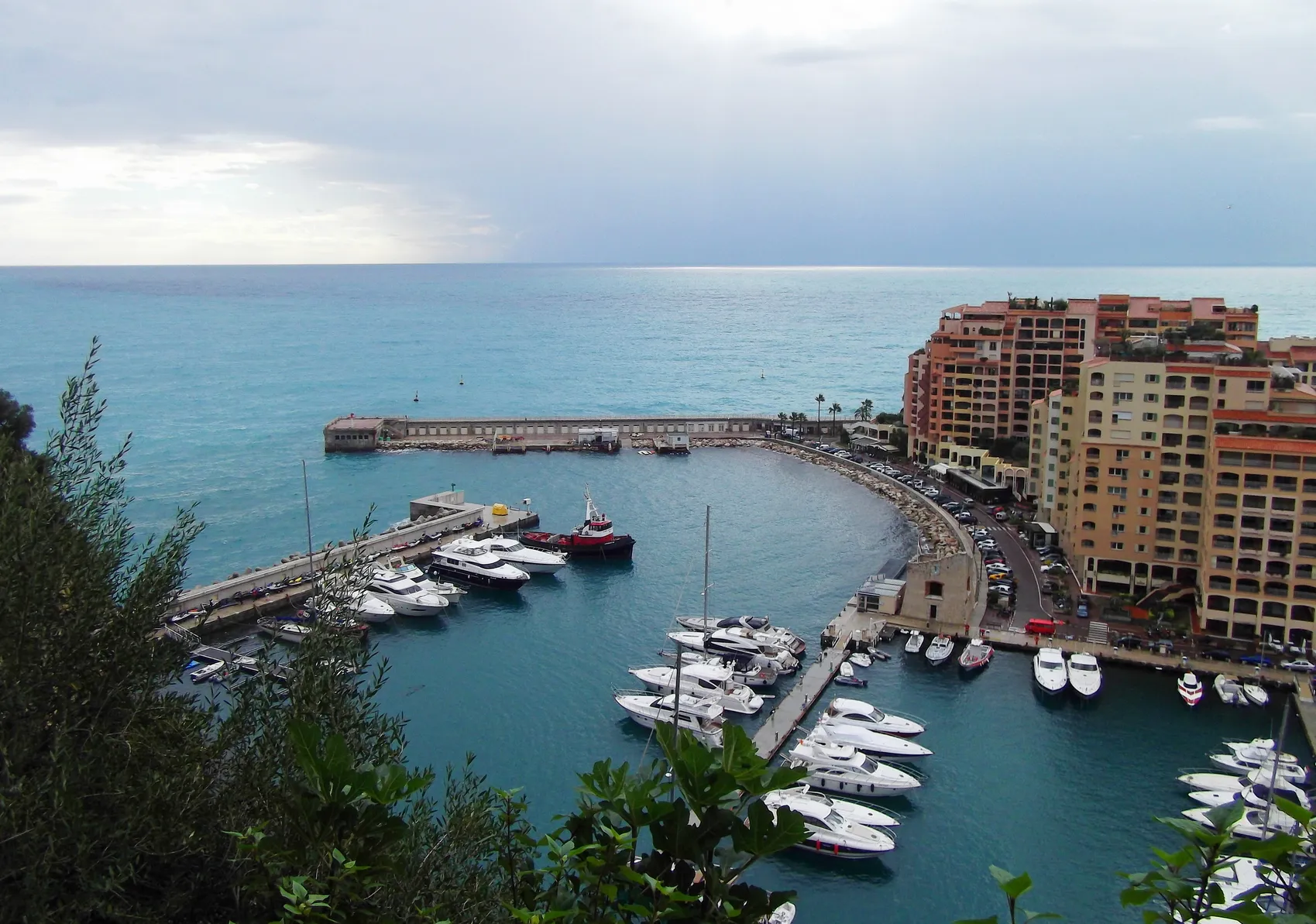
The square by the Prince’s Palace is one of the highest points in the city. From here, the entire country lies open as if on the palm of a hand. The houses standing right by the sea have small, P-shaped inlets instead of courtyards; yachts are moored along their edges exactly like cars parked around our apartment buildings. Nearly every house has a helipad on the roof. A helicopter can get you to Nice Airport in just a few minutes.
Throwing one last glance at the sunlit city and the gleaming, tranquil sea, I get into my car and drive off, hoping to clear the square before the princely motorcade appears. On these narrow, winding streets leading away from the palace, one of the most prestigious Formula 1 races — the Monaco Grand Prix — takes place. But on ordinary days, speeding is out of the question: the central roads are packed with parked cars and lumbering buses. Perhaps this is for the best. Where else, if not in traffic, does one find such a perfect chance to pause and look around?

My journey continues toward Grasse — the heart of the French perfume industry. Leaving the main highway, I turn onto a smaller road and then climb higher and higher into the mountains. Early in the morning, the narrow serpentine roads of the French Alps are almost empty of cars, yet one encounters countless cyclists fighting their way uphill. Passing them requires extreme caution, and from time to time my car’s cyclist- and pedestrian-detection system activates, projecting a flashing collision warning on the windshield.
Grasse is the birthplace of the world’s most famous fragrances. Its streets are filled with sweet floral aromas: the largest French perfume factories are located here, and in the nearby fields the main raw materials — jasmine, lavender, and roses — are grown.
The town’s narrow alleys are lined with parked cars, and finding a place to stop is no simple task. The German writer Patrick Süskind described these courtyards in his famous novel Perfume, but the bright, cozy Grasse of today has nothing in common with those dark images.
After wandering for a long while through the fragrant crossroads of this town, I head back toward Nice, to the shores of the Mediterranean. My snow-white crossover fits perfectly into the local scenery. Bright blue sky, deep-green mountains, the sea shimmering in the distance — every turn in the surroundings of Nice looks like a picture-perfect view.
However, the city itself this autumn looks far less picturesque. Construction sites appear at every turn, and traffic is diverted by protective netting or red-and-white barriers. Even the excellent soundproofing of the car cannot fully drown out the pervasive clatter of jackhammers. Such is life — Nice is preparing in full force for the new tourist season.
At exactly noon, a loud cannon shot shakes the city. This tradition is nearly 140 years old, and it recalls not military glory but simply the approach of lunchtime. According to legend, in the mid-19th century, Sir Thomas Coventry-More, a Scottish tourist vacationing on the Côte d’Azur, would fire a cannon to remind his absent-minded wife that it was time to go to the kitchen and start preparing the midday meal. The townspeople found this initiative quite witty, and in 1875 the government of Nice made the noon shot a daily city ritual.
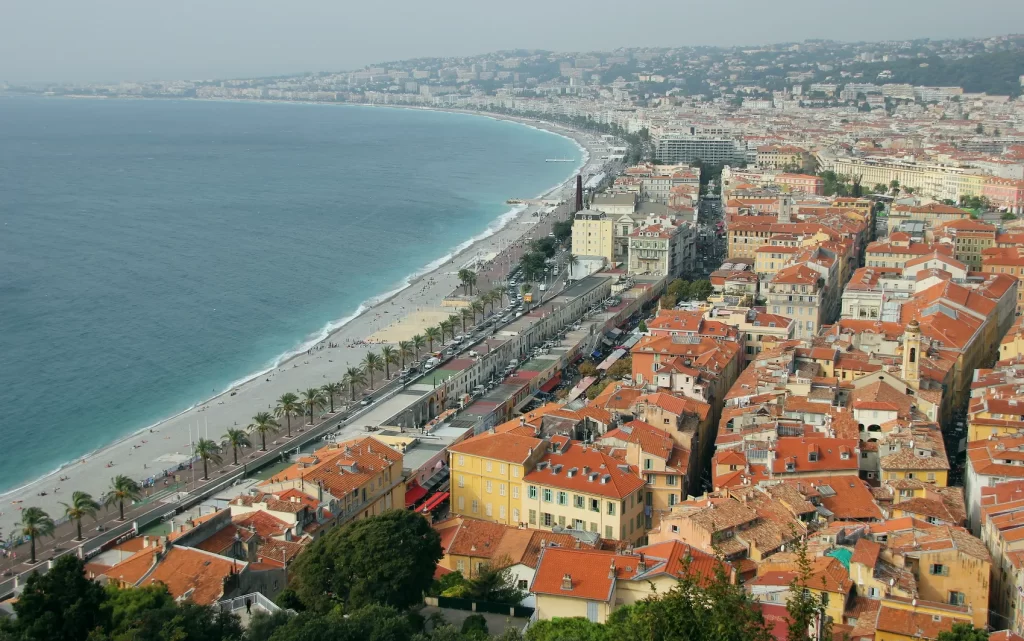
From Castle Hill, where the cannon stands, one has a magnificent view of the old town and the azure bay poetically named the Bay of Angels. Along its gentle curve stretches one of Europe’s most beautiful promenades — the Promenade des Anglais. On its seaward side stand elegant hotels, famous casinos, and gaming houses.
In the evenings, crowds of tourists and gamblers gather here, many of whom, hoping for luck, lose substantial sums. As in everyday life, everything depends on personal choice and on fortune, which may smile upon anyone. One of the players, hands pressed prayerfully to his tightly closed lips, is clearly calling upon her for favor. Yet he surely knows: she will come to each person on her own — whenever she decides.
Text and photos by Yulia Zemtsova
Translated from Russian by Sofia Zemtsova