A Journey Through Portugal – the Westernmost Country of the Eurasian Continent
Tiny Portugal feels endless and boundless. To the south and west, it has no land borders—only the vast Atlantic Ocean. It seems to be everywhere: around every bend in the road, a gray-blue ribbon glimmers here and there, stretching to the horizon. The Portuguese themselves simply call it “the sea,” but it is the powerful ocean waves and strong winds that draw windsurfing professionals and enthusiasts from all over the world. You can even spot them in winter, on the cold, deserted beaches.
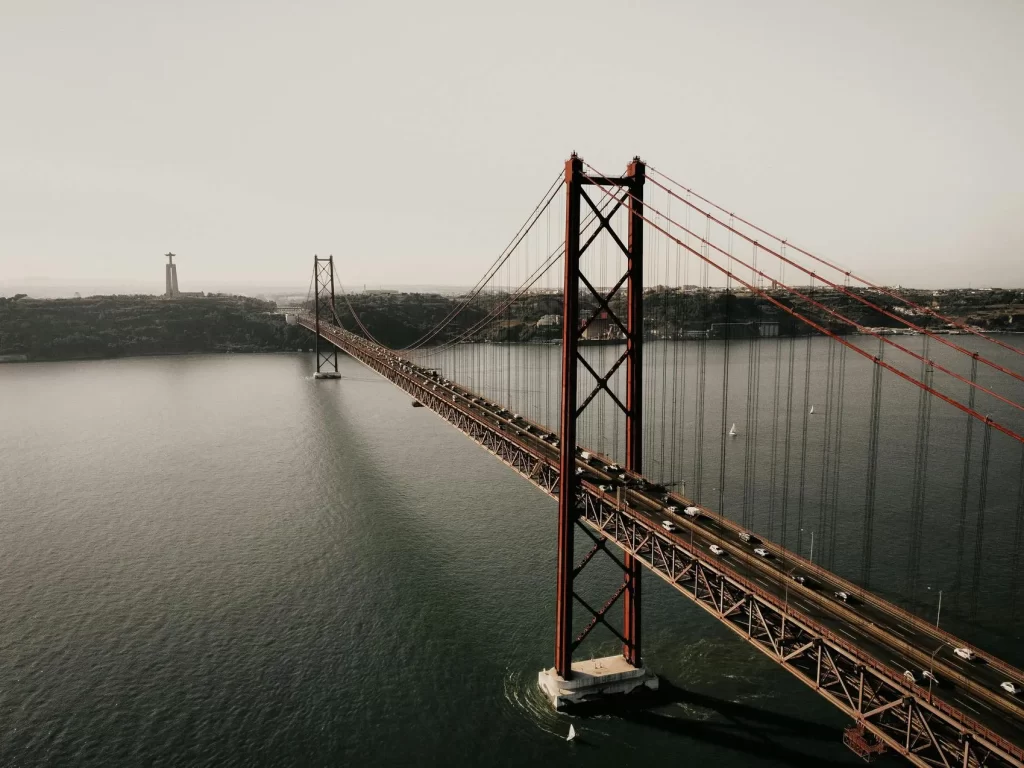
A road trip through the country naturally begins at the airport, which in Lisbon is located almost in the city center. Straight ahead rises the Vasco da Gama Bridge, one of the longest cable-stayed bridges in Europe, spanning over seventeen kilometers. It crosses the Tagus River, which here flows into the Atlantic Ocean.
Crossing the bridge out of the city is free, but returning to Lisbon costs a little over three euros. The speed limit on this six-lane road is 120 km/h, yet the strong ocean wind forces you to slow down and grip the wheel firmly.
Portugal is a land of explorers. Centuries ago, daring sailors set off from its shores to see what lay beyond the edge of the world. The spirit of distant voyages is present everywhere: in the fierce waves, the salty air, and the endless line of forts—maritime fortifications in the form of small, impregnable towers. This is the homeland of great navigators who expanded the boundaries of the Old World. From here sailed the ships of Vasco da Gama, Bartolomeu Dias, and Ferdinand Magellan.
Small towns around the Portuguese capital glide past the car window, their red-tiled roofs gleaming. Each one invites close attention, like a whimsical antique toy. City sidewalks are paved with multicolored cobblestones, house facades adorned with authentic ceramic tiles, and street staircases and old stone walls are veiled in dark green moss.
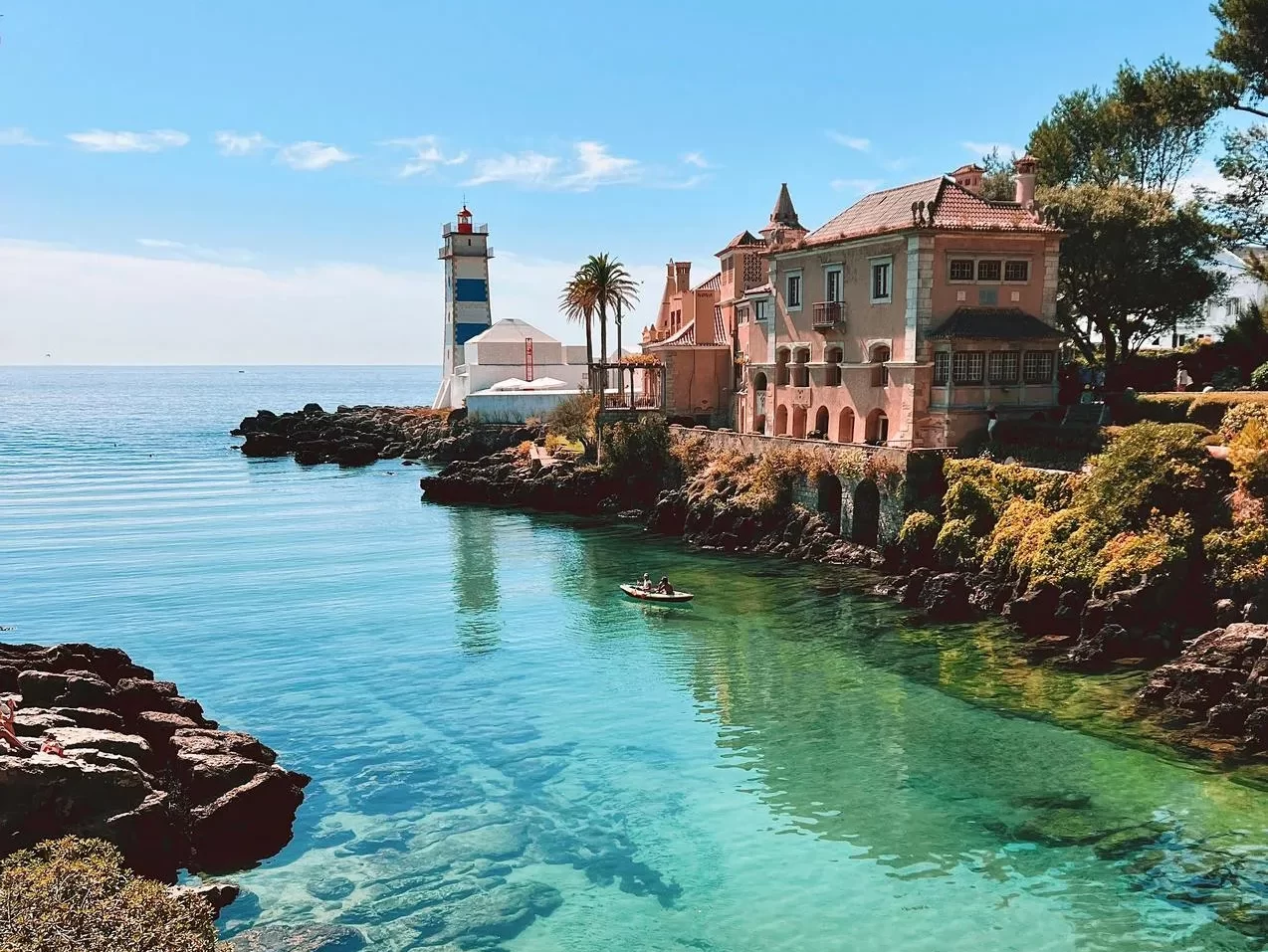
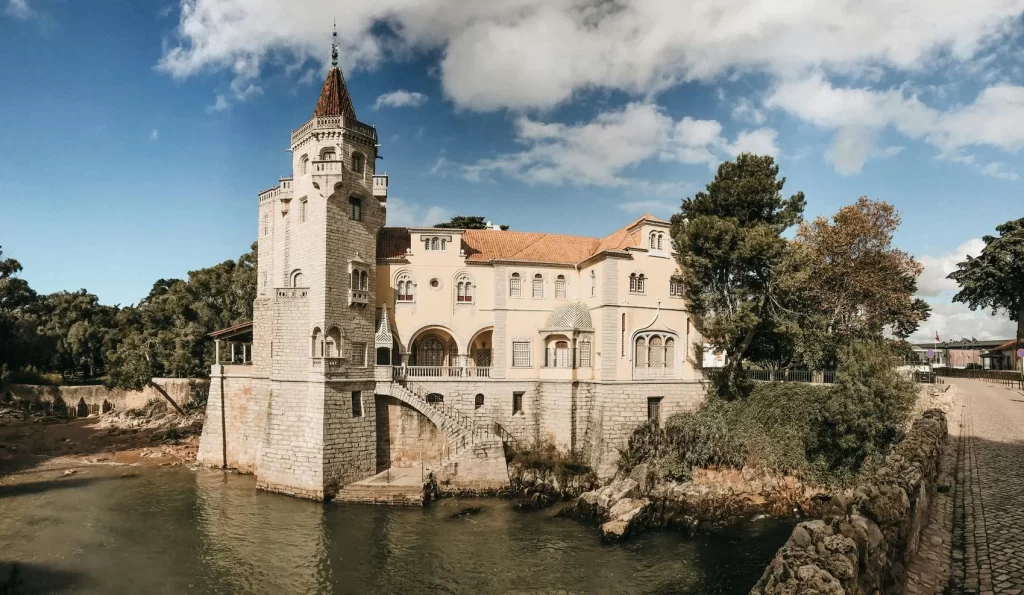
The coastal town of Cascais, once a resort for Portuguese royalty, bears little resemblance to a typical tourist hub. It is cozy, quiet, and sparsely populated. Low, elegant houses along the shore resemble miniature palaces. Pigeons and seagulls wander along the beach. Everything seems paused in anticipation of summer. Yet even in winter, the thermometer reads +14°C; the air is crisp and clear, palms and eucalyptus delight the eye with their greenery, and here and there, orange and lemon trees flash their bright yellow-orange fruits.
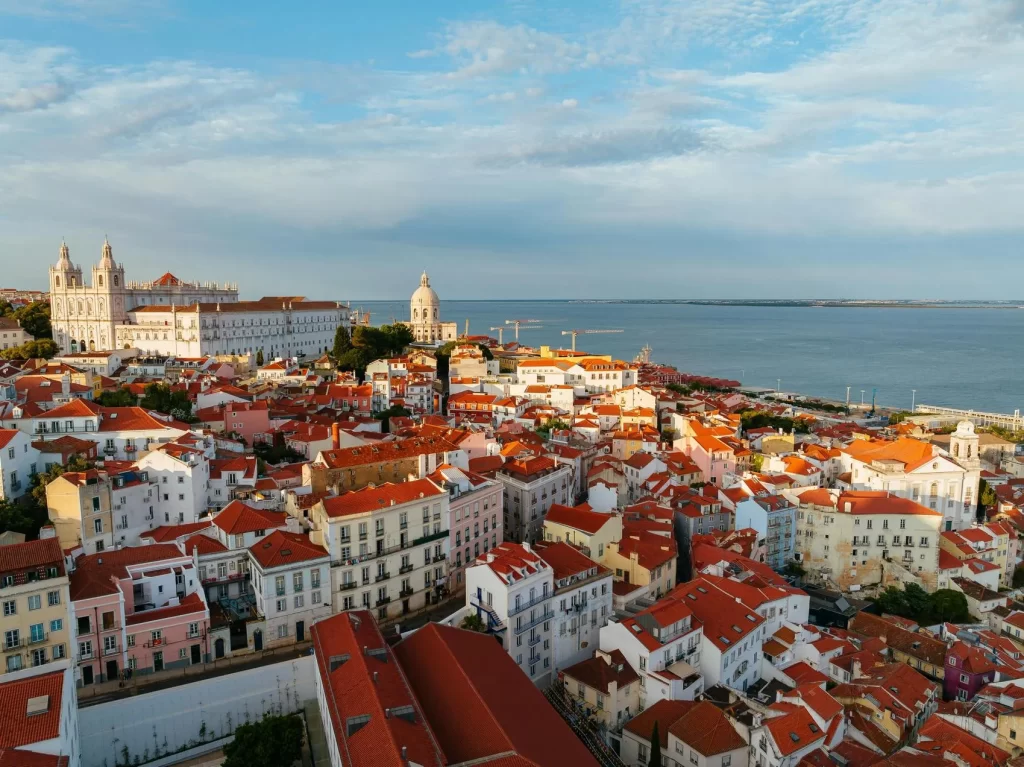
At the end of a long journey, we return to Lisbon to wander its crystal-clean streets. Even on a weekday evening, there is none of the bustle we are used to. A vagabond, who only minutes before was begging at the metro entrance, adjusts the collar of his worn jacket, strolls into a street café, and takes a seat for a glass of port. The other patrons pay him no attention. It seems most people’s thoughts are floating somewhere among the clouds. Perhaps this is saudade—that untranslatable, inexplicable Portuguese feeling, a mixture of love, longing, and sorrow for what cannot be or is irretrievably gone.
Everything about this country is remarkable. Its borders have remained unchanged for over eight centuries. It is one of the few European nations where the native population makes up 99% of residents. Strangely, there is no sense of standing at the edge of the land, at the border of Eurasia—the largest continent on Earth. Perhaps the locals are right when they say that in Portugal, Europe does not end. Here, it only begins.
Text by Yulia Zemtsova
Cover photo by Vincent Rivaud
Translated by Sofia Zemtsova