

Scientists Have Observed Only 0.001% of the Ocean Floor
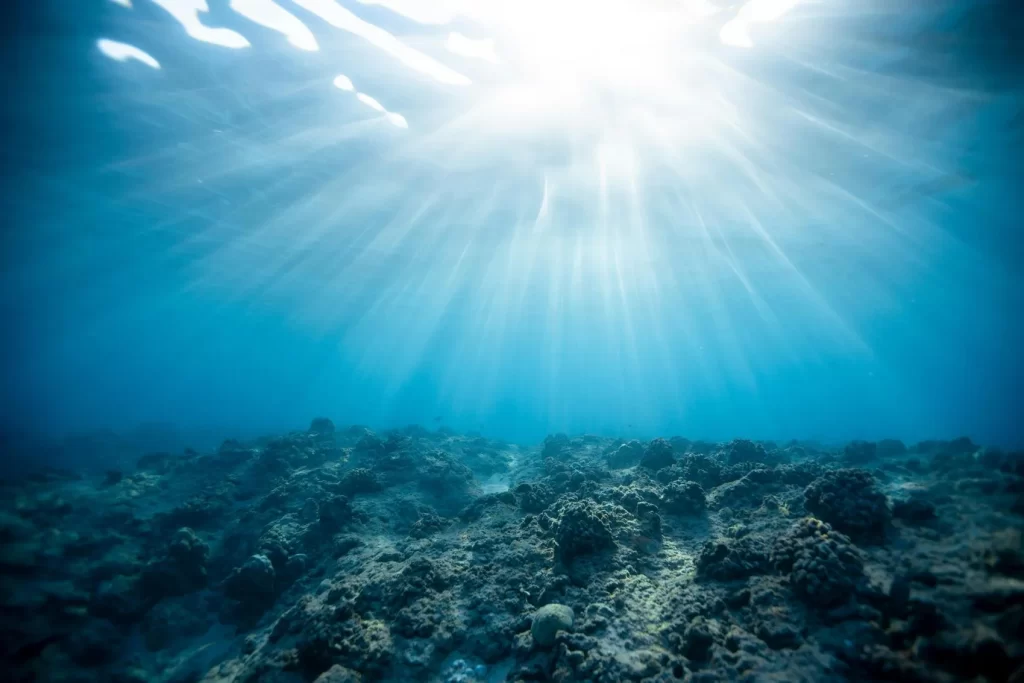
It’s astonishing: despite rapid technological progress and breakthroughs in space exploration, humanity still knows almost nothing about the depths of Earth’s oceans. To date, only a tiny fraction of the ocean floor has been explored — which means that 66% of our planet’s surface, the area covered by the world’s oceans, remains a complete mystery. Just think about it: more than half of the Earth is still unknown to us.
SciTechDaily.com, citing Science Advances, published a study conducted by researchers from the Ocean Discovery League. The results show that after decades of scientific work, humans have directly observed only one-thousandth of one percent of the deep-sea floor. For comparison, that’s an area roughly the size of Moscow — or only five times larger than Almaty.
In reality, processes occurring at depths below 200 meters are critically important for the planet as a whole. Oxygen production, climate regulation, and maintaining the Earth’s ecological balance — functions that modern humans cannot directly control — all take place hidden beneath vast layers of saltwater. Yet even recognizing the immense importance of studying the deep ocean has not significantly advanced scientific progress in this area.

Visual observation and imaging are key tools for exploring the ocean depths, alongside mapping and sample collection. However, nearly one-third of all documented visual records were made before 1980 and are often low-quality, black-and-white, static images. Furthermore, more than 65% of all deep-sea dives have been carried out within 200 nautical miles of just three countries: the United States, Japan, and New Zealand. Due to the high cost of such research, only a few nations invest in this work.
The undisputed leaders in this field are the United States, Japan, New Zealand, France, and Germany, which together account for 97% of all visual observations of the deep-sea floor. This imbalance — both in geographical coverage and national representation — forces the oceanographic community to base its understanding of deep-ocean ecosystems on a tiny, non-representative sample, according to the Ocean Discovery League.
The study notes that if scientists tried to draw conclusions about terrestrial ecosystems based on only 0.001% of the Earth’s land surface, they would be judging all life on land based on an area roughly the size of a single large city.
To address these challenges, researchers urge all nations to expand and coordinate efforts to explore the ocean depths. Modern technologies now allow the creation of compact, affordable deep-sea instruments, meaning that even low- and middle-income countries can participate in this global scientific mission.
“There is still so much unknown in the ocean!” exclaims Dr. Ian Miller, Head of Science and Innovation at the National Geographic Society. “Deep-ocean research is essential for understanding the planet’s largest ecosystem. The better we know the ocean, the more effectively we can protect and preserve it.”

Text by Yulia Zemtsova
Cover photo by Blaque X
Translated from Russian by Sofia Zemtsova