The Stone Chronicle of Siberia
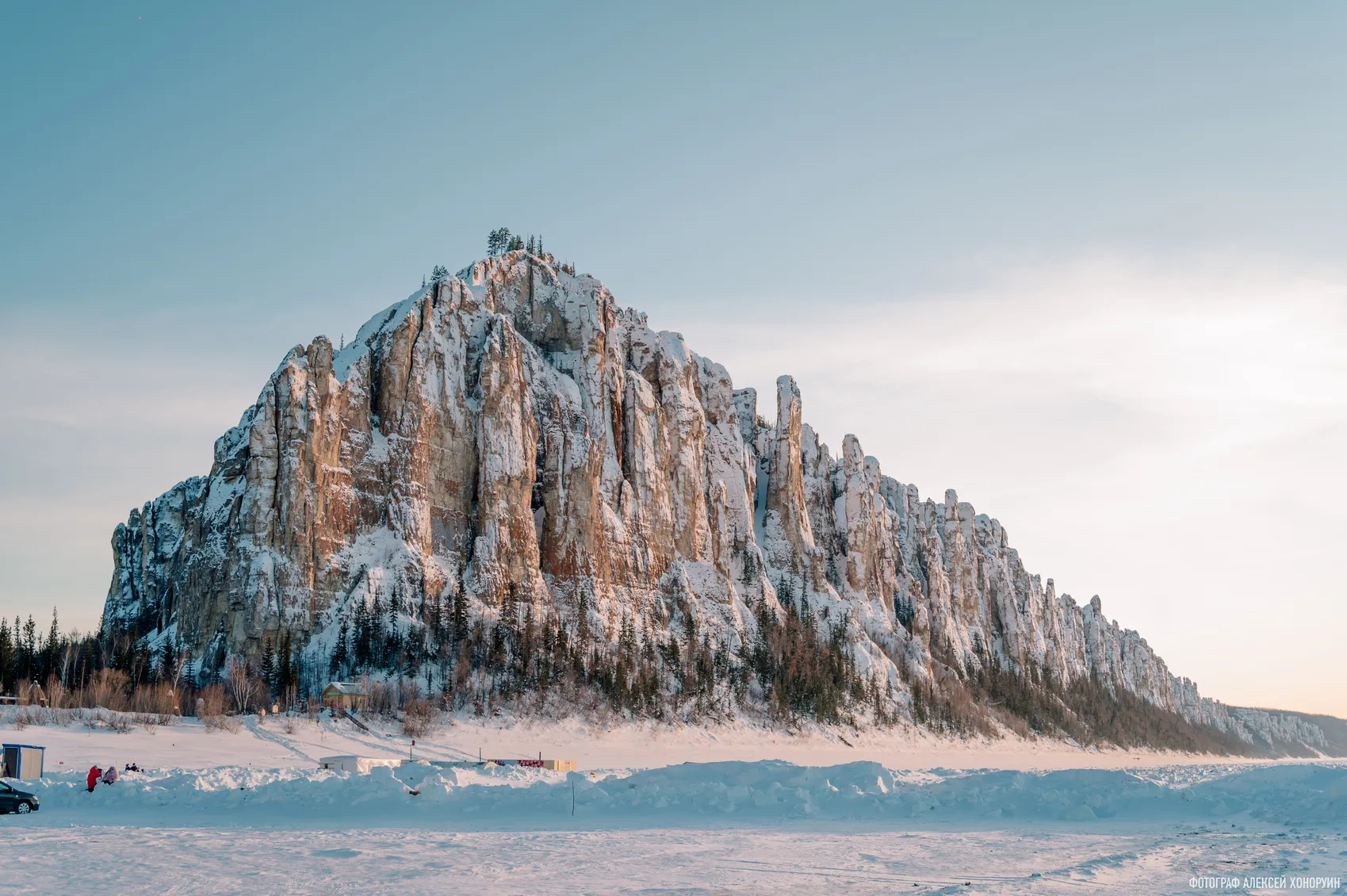
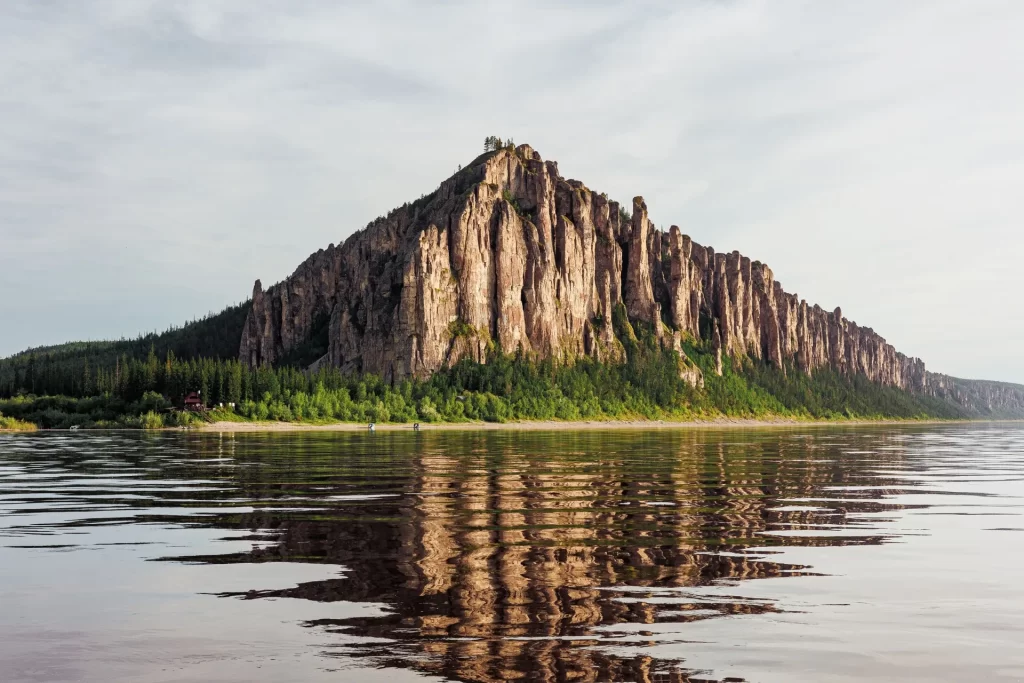
Along an eighty-kilometer stretch of the Lena River rise sheer cliffs. From a distance, they resemble a stone palisade, but the closer a boat draws to them, the more fantastical their frozen relief appears. In these natural sculptures, nearly half a million years old, one may discern the silhouette of an ancient castle ruin, the petrified heads of giant warriors, or the claws of a mythical dragon.
The bright sun mercilessly blinds, reflecting off both the water and the towering Lena Pillars. A sparse coniferous forest clings to the rocks, utterly still; not even birdsong breaks the silence, making the entire area seem lifeless. For the local peoples, these rocky shores were always regarded as sacred, forbidden to ordinary visitors. Folklore held that powerful spirits dwelled amid such extraordinary beauty and could easily be angered by an unwelcome guest. The Yakuts and Evenks believed that the unusually shaped cliffs had once been living people who, having trespassed—accidentally or deliberately—into this sacred realm, were turned to stone as punishment. Perhaps this is why guides leading tourists to the summit prefer not to linger and hurry back to the boat.
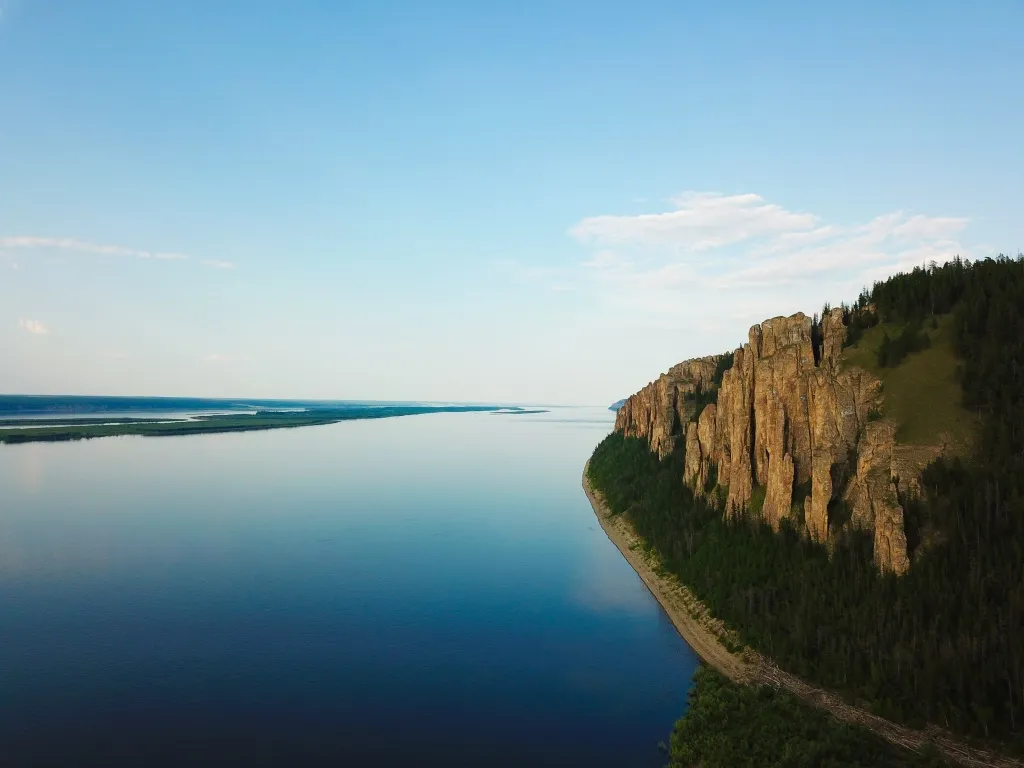
Climbing to the top usually takes about half an hour along a well-maintained ecological trail. From the viewing platform atop one of the cliffs opens a breathtaking panorama. The silent, boundless expanse of Eastern Siberia, framed by the graceful bends of the mighty Lena River, stretches “from sky to sky,” and human life feels insignificant — a mere speck of dust. “Some sacred silence lies upon this pristine creation, and the soul merges with wild yet majestic nature,” wrote Alexander Bestuzhev-Marlinsky, a Decembrist exiled here to Yakutia after the uprising of December 14, 1825.
Animals seldom appear along tourist routes. Yet the park is home to forty-two species of mammals and ninety-nine nesting bird species, nearly a third of which are listed in various Red Books. With luck, visitors might spot a whooper swan, peregrine falcon, gyrfalcon, white-tailed eagle, golden eagle, osprey, or Siberian crane. Rarer still would be an encounter with a Siberian roe deer, a small hornless musk deer, or a northern pika — an endearing rodent related to hares. Sables, brown bears, squirrels, moose, and chipmunks also inhabit the area.
Perhaps the rarest creature here is a human. The Lena Pillars lie 150 kilometers south of Yakutsk, and reaching them is no easy task. Only private riverboats travel to this protected area. A cruise departing from Yakutsk takes three days, with prices starting at 13,000 rubles per person. But the river journey is only a fraction of the total cost — getting to Yakutsk itself is expensive. For example, a round-trip flight from Moscow costs roughly 50,000 rubles.
The history of this natural monument stretches deep into the past and is generally divided by scientists into two stages. The first dates to the Early Cambrian period, approximately 540–560 million years ago. At that time, a shallow warm sea washed over the Oymuran barrier reef, where sediments accumulated on the seabed. Over time, these turned into solid rock — the brownish-gray thin layers that would eventually form these remarkable cliffs. Even today, the rocks contain fossils of some of the earliest Cambrian organisms, such as trilobites.
The second stage concerns the formation of the cliffs themselves. Geologists believe this process began about 400,000 years ago and continues to this day. Powerful tectonic shifts dramatically reshaped the landscape: the Siberian geological platform rose by 200 meters, creating deep faults in the Earth’s crust. Wide, full-flowing rivers carved through the area, and along their banks rose the fantastical stone pillars, woven from ancient marine sediments.
“In the geological structure of the Lena Pillars are preserved outstanding records of Earth’s development and its living inhabitants. The numerous fossils found here are unique evidence of a crucial stage in the history of life and of the Cambrian explosion. Remains of mammoth fauna have also been discovered here: mammoths (Mammuthus primigenius Blum), bison (Bison priscus Boj), woolly rhinoceroses (Coelodonta antiquitatis Blum), Lena horses (Equus lenensis Russ), and reindeer (Rangifer tarandus L),” write experts of the Heritage Conservation Foundation. This organization advocates for Russian natural sites to be recognized as of outstanding universal value and included in UNESCO’s World Heritage List, and it was largely thanks to their efforts that the Lena Pillars came to be acknowledged as one of nature’s greatest creations.
Despite its uniqueness, the reserve made it onto the prestigious global list only on the third attempt — fourteen years after the first nomination efforts began in 1998. Initially, Yakut specialists and local authorities submitted the documents to UNESCO without informing the Russian Foreign Ministry or the Ministry of Natural Resources, as required. The “storm of emotions” in Moscow that followed prompted the authors to withdraw the nomination. Six years later, the effort resumed, and after nearly three years of preparing all documents properly and following every formal procedure, the Lena Pillars were renominated in 2007.
International experts who visited Yakutia agreed that the site fully deserved World Heritage status due to its geological uniqueness. However, in early 2008, the nomination was unexpectedly rejected — reportedly due to behind-the-scenes political maneuvering. At the same time, another, similar site — the karst formations of southern China — was under review, and the chair of the evaluation commission happened to be a Chinese geologist. Whether this was decisive remains unknown.
A renewed attempt was made in 2012, and this time fortune was on their side. The UNESCO session that year was held in St. Petersburg, and the site’s formal inscription became a symbolic gift to Russia as the host. Interestingly, even after so many years of effort, the Lena Pillars remained the only natural UNESCO site in Russia without federal protected status until 2018.
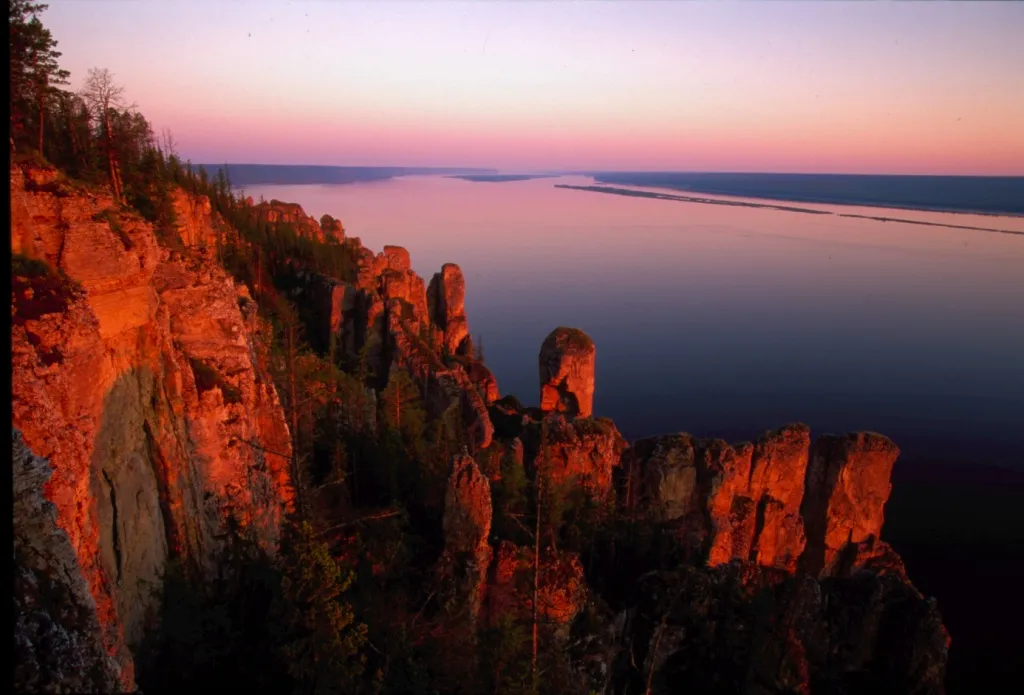
In 2024, Lena Pillars National Park in Yakutia welcomed a record 42,710 visitors — the highest number in its history. The magnificent panoramic views of the Lena River and the surrounding landscape leave an indelible impression. Yet what visitors most often remark upon is the extraordinary energy of the place and its atmosphere of solitude and harmony with nature — the very reasons a journey of such length is worthwhile.
Text by Yulia Zemtsova
Photos from https://lena-pillars.ru/
Translated from Russian by Sofia Zemtsova