
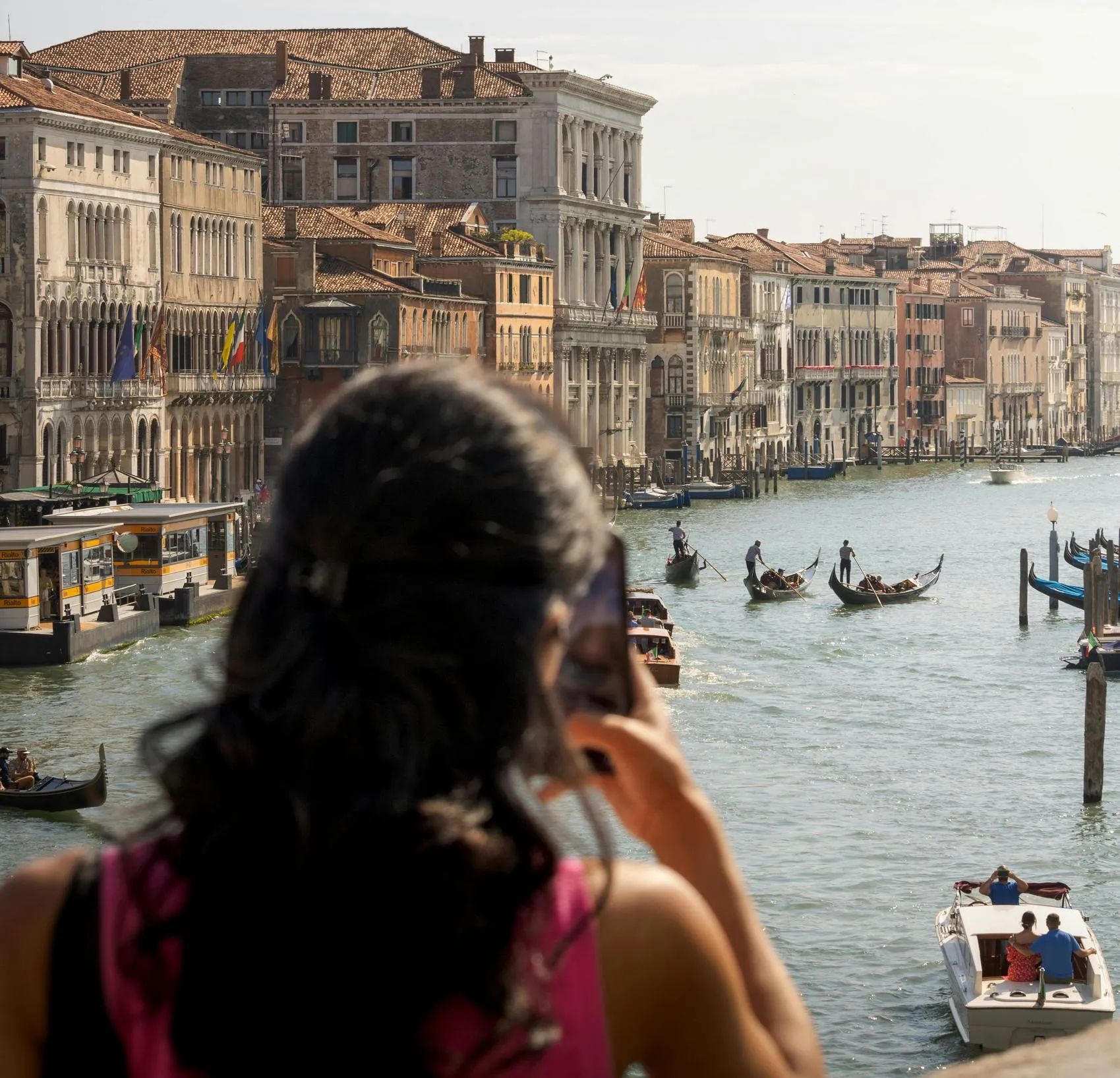
The sites tourists and travellers photograph the most
We analysed data collected from various platforms and sources (Popsa.com, Instagram hashtags, Flickr.com, and others) and compiled a consolidated ranking of the 20 most photographed landmarks on the planet. Interestingly, this list does not correspond at all to the ranking of the world’s most visited locations.
According to statistics, the site with the highest number of visitors is Times Square in New York — around 50 million people per year. In second place is Istanbul’s Grand Bazaar (20 million per year). However, the landmarks most frequently captured in tourists’ and travellers’ photos are quite different. Which ones? Read on.
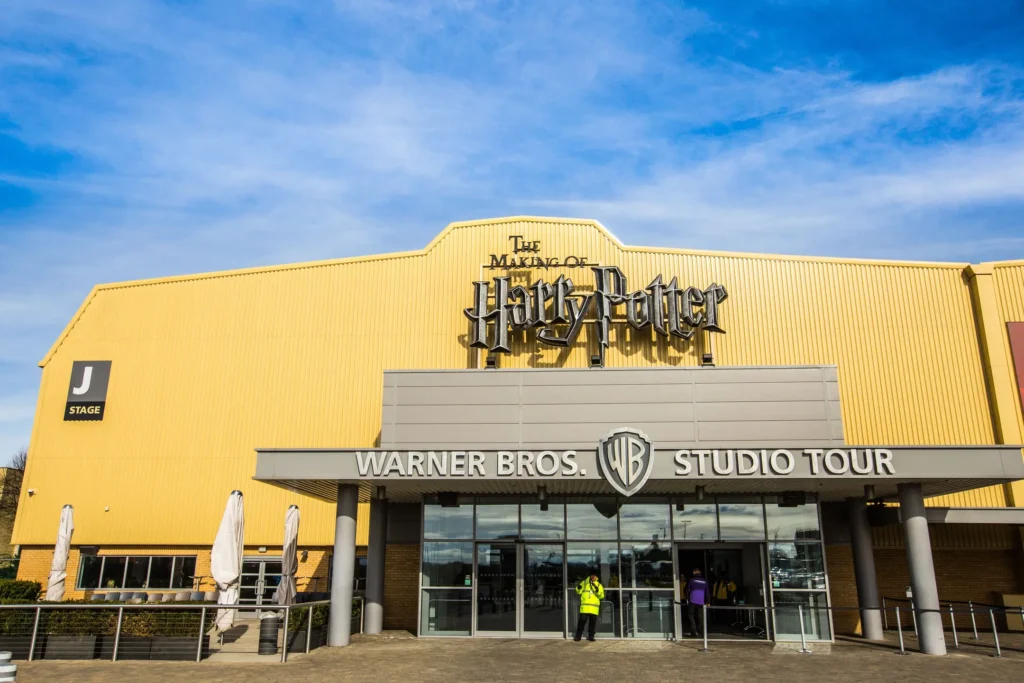
20th place. The Harry Potter Studio (United Kingdom)
The Harry Potter Studio in the UK takes the honourable twentieth spot among the world’s most photographed landmarks — a true pilgrimage destination for fans of the famous saga about the boy wizard. Located approximately 32 km northwest of central London, the studio features authentic film sets, an extensive collection of costumes, props, filming equipment, and various interactive attractions. The total area of the studio exceeds 14,000 square metres.
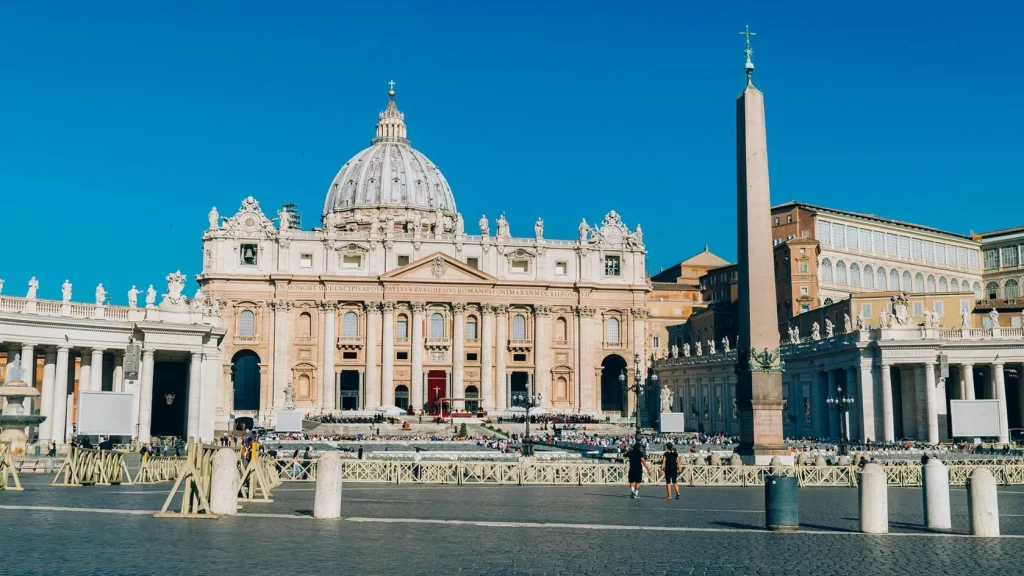
19th place. St. Peter’s Square and Basilica (Vatican City)
Nineteenth place is taken by St. Peter’s Square in front of St. Peter’s Basilica — the heart and symbolic centre of global Catholicism. The basilica is one of the largest churches in the world: it can accommodate around 20,000 people, and the square in front of it can hold another 60,000. Construction of the architectural ensemble lasted 120 years (1506–1626) and involved several generations of great masters: Bramante, Raphael, Michelangelo, Bernini, and Maderno. The basilica stands on the site of an ancient church built over the sarcophagus of the Apostle Peter.
18th place. The 9/11 Memorial (New York, USA)
The eighteenth-ranked site is connected to one of the greatest tragedies of the 21st century: the 9/11 Memorial in New York, located on the site where the Twin Towers of the World Trade Center once stood. On 11 September 2001, two hijacked planes crashed into the famous 110-storey skyscrapers — each over 400 metres tall — claiming 2,983 lives. All victims are commemorated by name at the memorial.

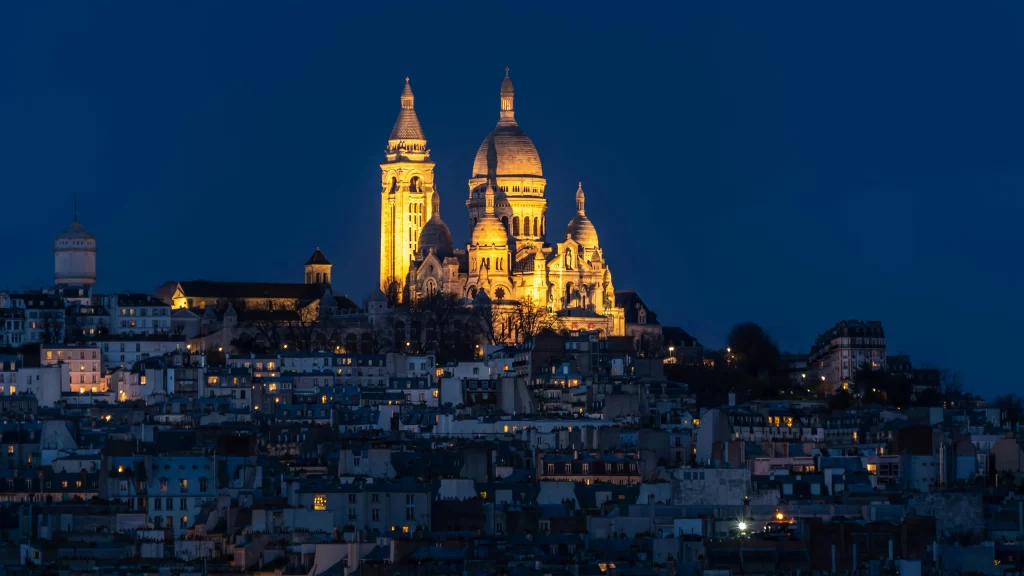
17th place. Sacré-Cœur Basilica (Paris, France)
Seventeenth place goes to the Sacré-Cœur Basilica — one of the most iconic landmarks of the French capital. Situated atop Montmartre, the basilica offers stunning panoramic views of Paris, which attracts photographers and tourists from all over the world. Around 11 million people visit annually, and Sacré-Cœur consistently ranks among France’s most popular tourist sites.
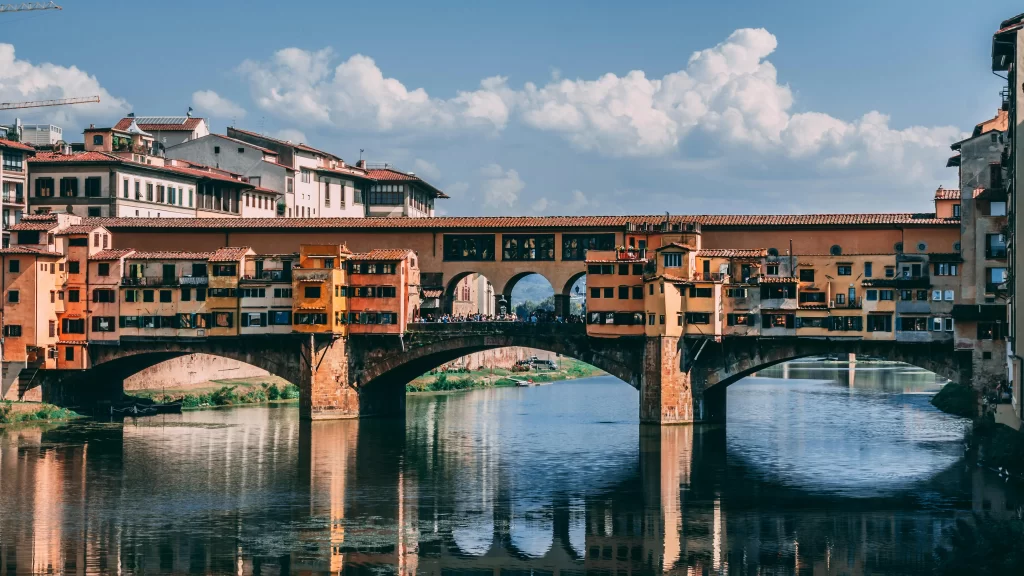
16th place. Ponte Vecchio (Florence, Italy)
Sixteenth place is occupied by Italy’s Ponte Vecchio — the oldest bridge in Florence, which has preserved its original appearance since the 14th century. It consists of three arches topped with houses and shops. In the 16th century, Cosimo I de’ Medici commissioned the construction of the Vasari Corridor above the bridge — a private passage allowing the ruler to move unseen. From this bridge, one can enjoy the best views of Florentine sunsets, and the warm golden sunlight reflecting in the jewellery shop windows makes it impossible not to photograph.
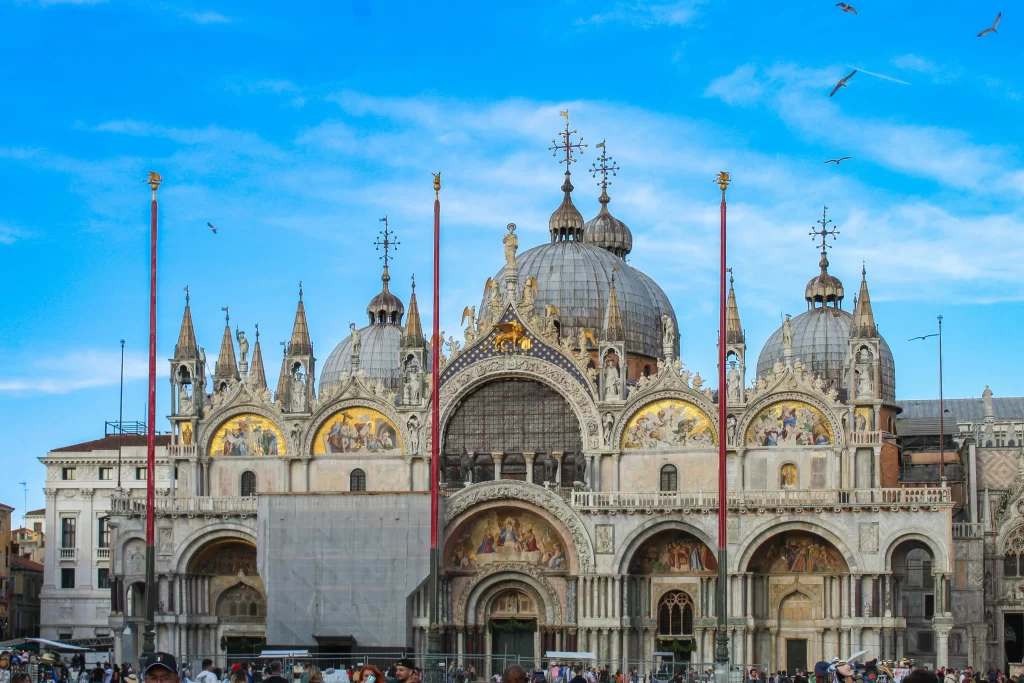
15th place. St. Mark’s Basilica (Venice, Italy)
If this ranking were of countries rather than landmarks, Italy would take first place by a large margin. Its number of highly photographed sites is truly unmatched. Fifteenth place goes to Venice’s St. Mark’s Basilica, founded in 828 and soon to celebrate its 1,200th anniversary. Inside is one of the masterpieces of Byzantine art — the golden altarpiece (10th–11th centuries), adorned with thousands of gemstones and enamels. On the façade stand four bronze horses dating back to the 4th century BC, brought from Constantinople in 1204 during the Fourth Crusade.
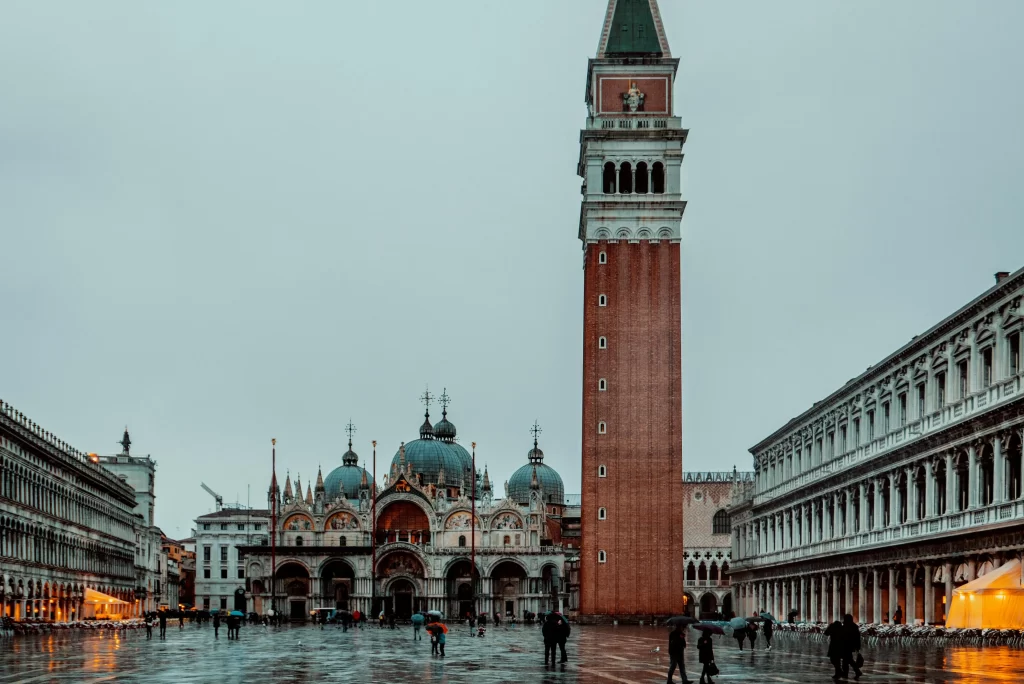
14th place. St. Mark’s Square (Venice, Italy)
Nearby is another site extremely popular with photographers and tourists: St. Mark’s Square, Venice’s main attraction. Beyond its majestic architecture and unique historical character, visitors are drawn to the unusual natural phenomenon known as acqua alta, a seasonal flood that temporarily covers the square with water, enabling photographers to capture truly unique shots.
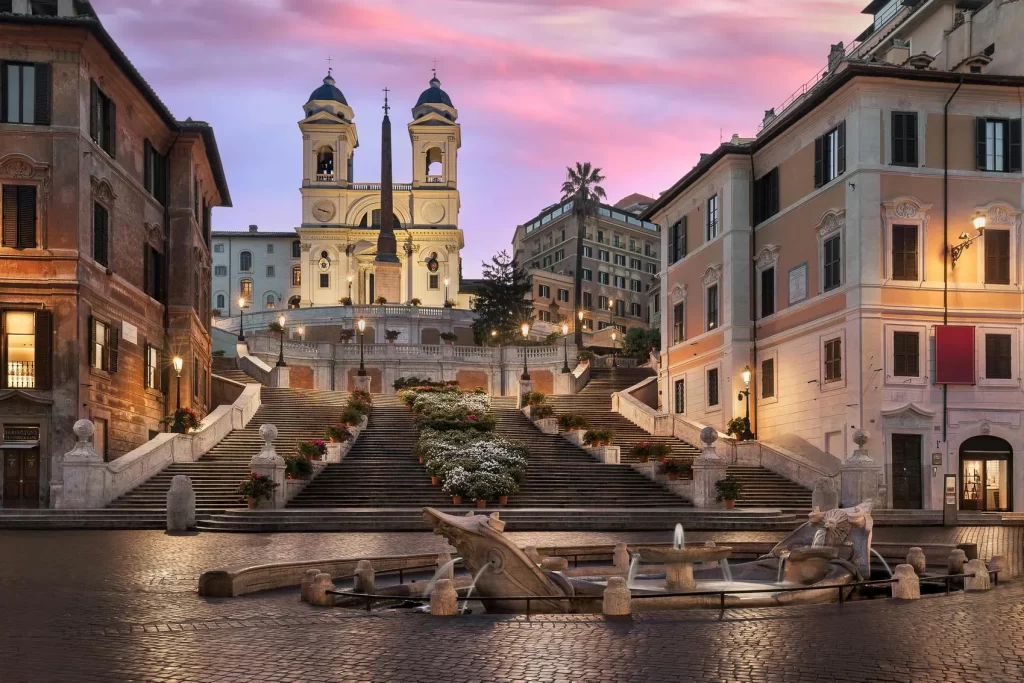
13th place. The Spanish Steps (Rome, Italy)
Thirteenth place is yet another Italian landmark — a country where one never parts with a camera. The famous Spanish Steps connect Piazza di Spagna with the church of Trinità dei Monti. They comprise 135 steps, and at their base lies the equally renowned Barcaccia Fountain. One nearby house was once home to the alchemist and esotericist Giuseppe Balsamo, who styled himself Count Cagliostro; he was arrested on these very steps and later sentenced to life imprisonment for heresy. Today, the Spanish Steps are a favourite location for photo shoots, cultural events, and even fashion shows.
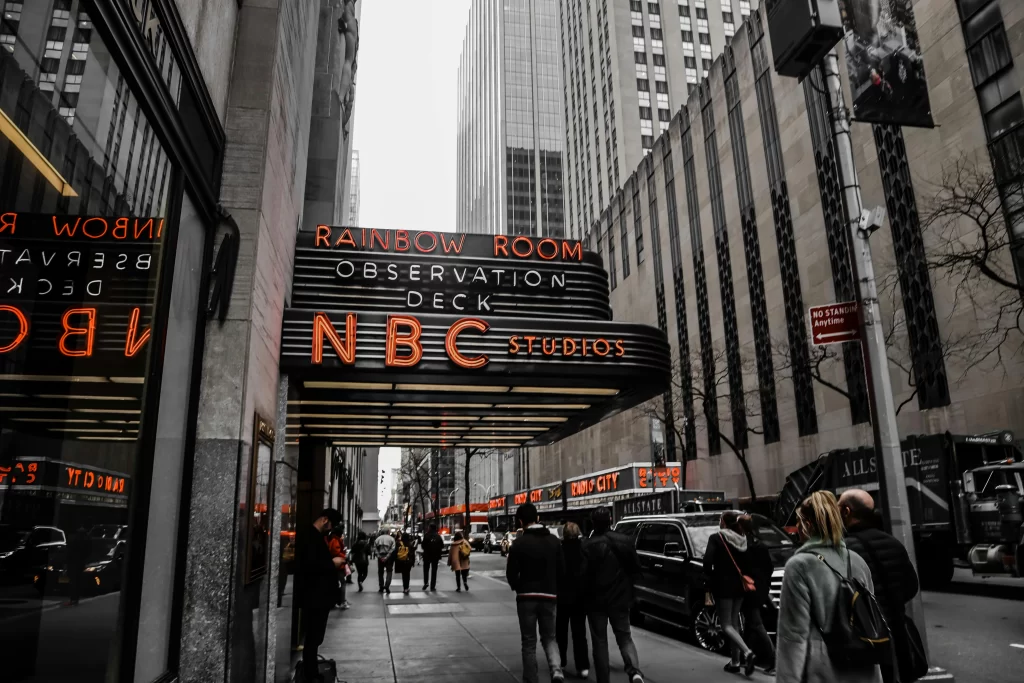
12th place. Rockefeller Center (New York, USA)
Twelfth place goes to Rockefeller Center in Manhattan. Built during the Great Depression, it later became a symbol of hope and economic recovery for the nation. The complex consists of 19 buildings with a total area of approximately 860,000 m², designed in the Art Deco style. It houses NBC headquarters and, since the 1930s, has been a centre for iconic radio and television productions, including Saturday Night Live. Rockefeller Center is also home to the world’s most profitable auction house, Christie’s.
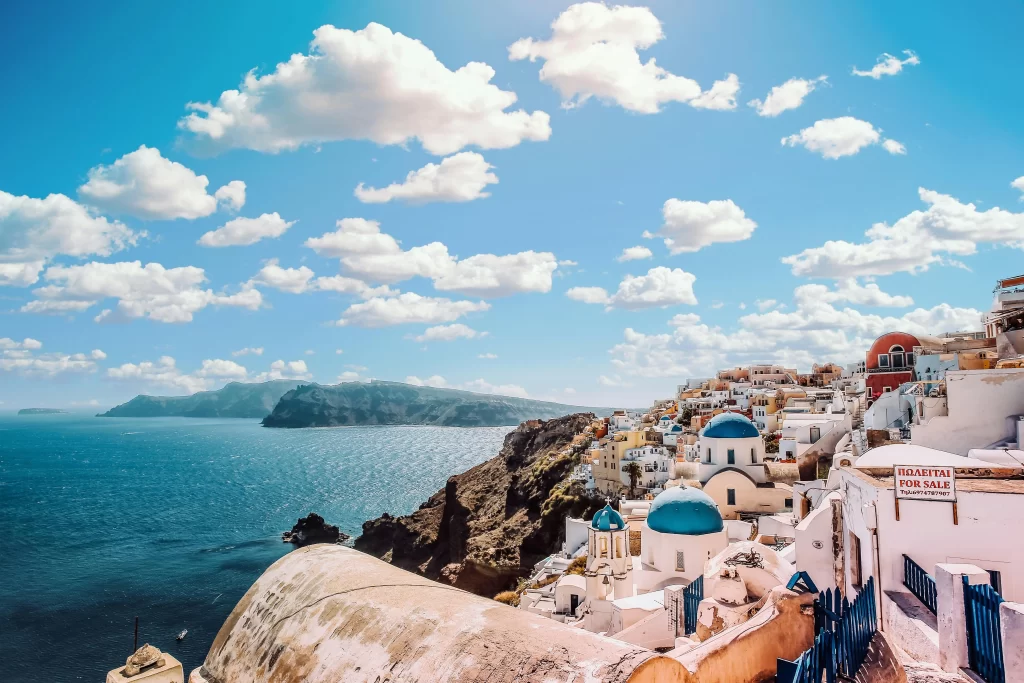
11th place. Oia (Santorini, Greece)
Eleventh place is Oia — one of the most picturesque and popular villages on the Greek island of Santorini. A favourite destination for romantic trips and weddings, Oia consistently ranks among the most photographed locations year after year. Sunset shots are particularly popular: in good weather, thousands of visitors gather at the village’s viewpoints to capture the spectacle. Interestingly, cars are prohibited on Oia’s narrow streets, so transportation is either on foot or by donkey-drawn cart.
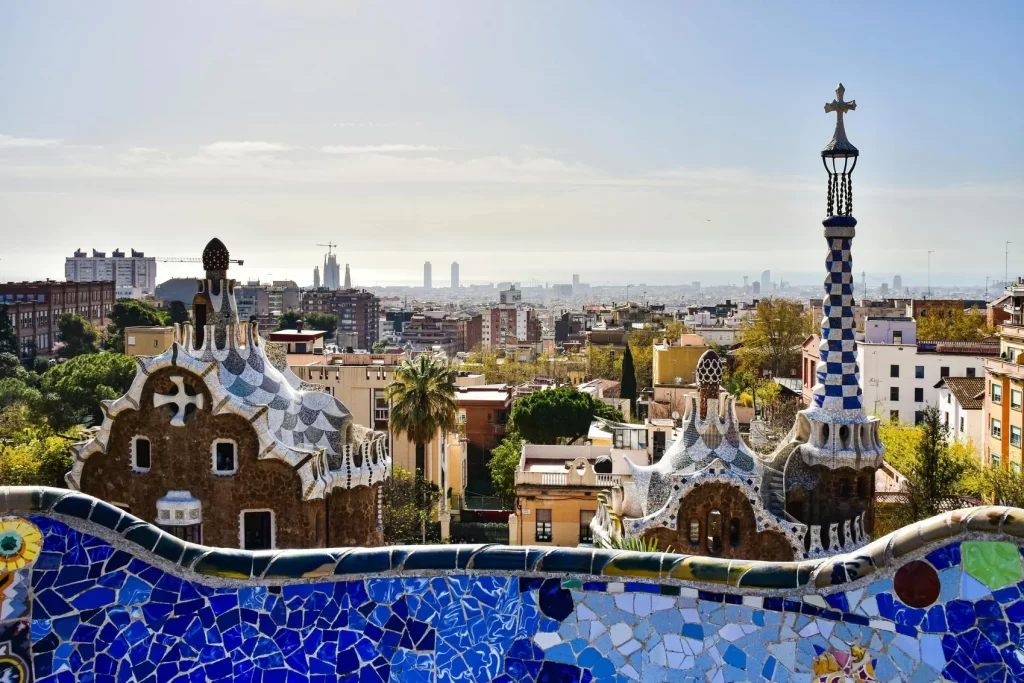
10th place. Park Güell (Barcelona, Spain)
Park Güell in Barcelona opens the top 10 of the world’s most photographed landmarks. Originally envisioned by architect Antoni Gaudí as an exclusive residential complex with expansive gardens, the project was never completed due to low buyer interest and eventually became a public park. One of its most recognizable symbols is the colourful mosaic lizard sculpture at the entrance. Situated on Carmel Hill, the park offers stunning views of the city and the sea, making it a very popular spot for walking, sightseeing, and photography.
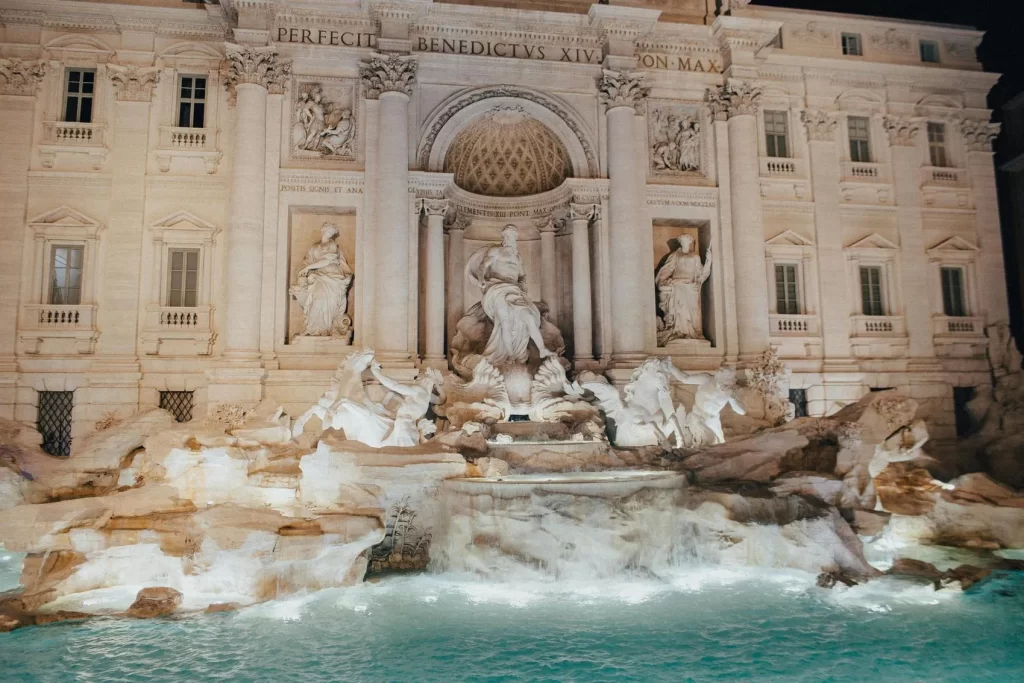
9th place. The Trevi Fountain (Rome, Italy)
Italy makes another appearance: ninth place goes to the Trevi Fountain in Rome. Located at the intersection of three streets, its central sculptural group features Neptune, the god of the sea, riding a chariot pulled by sea horses. Thanks to the popular tradition of tossing coins into the fountain over one’s shoulder, Rome collects approximately €1.5 million in coins annually, all of which are donated to charity.
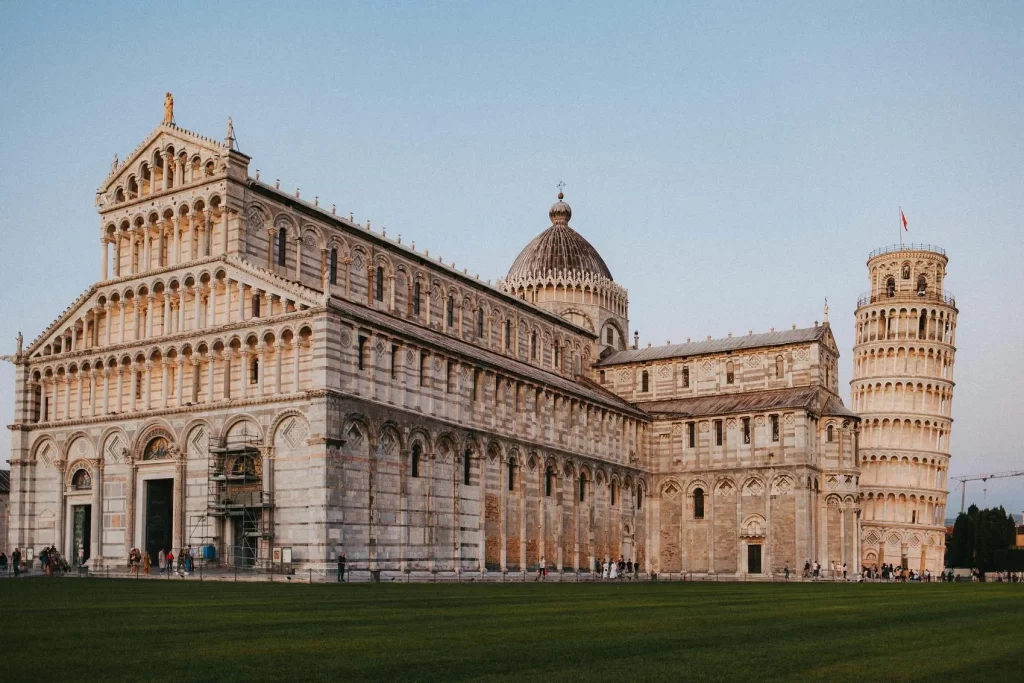
8th place. The Leaning Tower of Pisa (Pisa, Italy)
Eighth place is occupied by the Leaning Tower of Pisa, another Italian marvel. Construction began in 1173, and the tower started tilting during the building process due to weak soil and an insufficiently deep foundation. Its construction spanned over 200 years, and the 56-metre structure could never be fully straightened. This flaw, however, became its defining feature, attracting millions of tourists each year. According to legend, Galileo dropped spheres of different weights from the tower to demonstrate that they fall at the same rate.
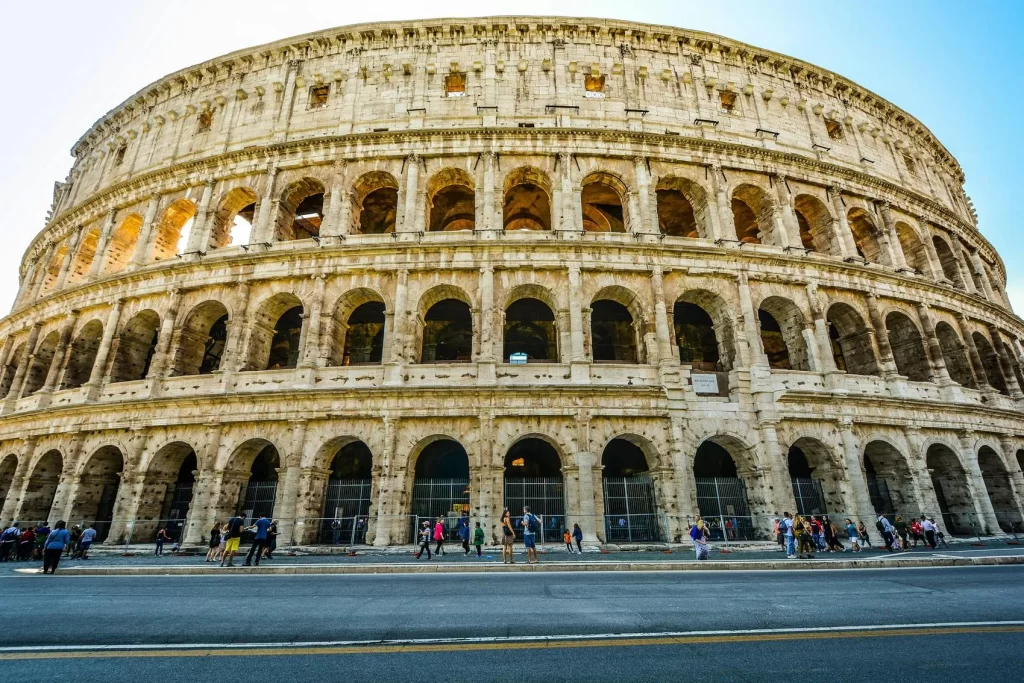
7th place. The Colosseum (Rome, Italy)
Seventh place belongs to the Roman Colosseum — the iconic symbol of Rome and Italy. This amphitheatre, built in the 1st century AD for gladiatorial combat, could accommodate up to 80,000 spectators. In 2080, this extraordinary monument will celebrate its 2,000th anniversary and is sure to take first place in rankings of the world’s most photographed landmarks.
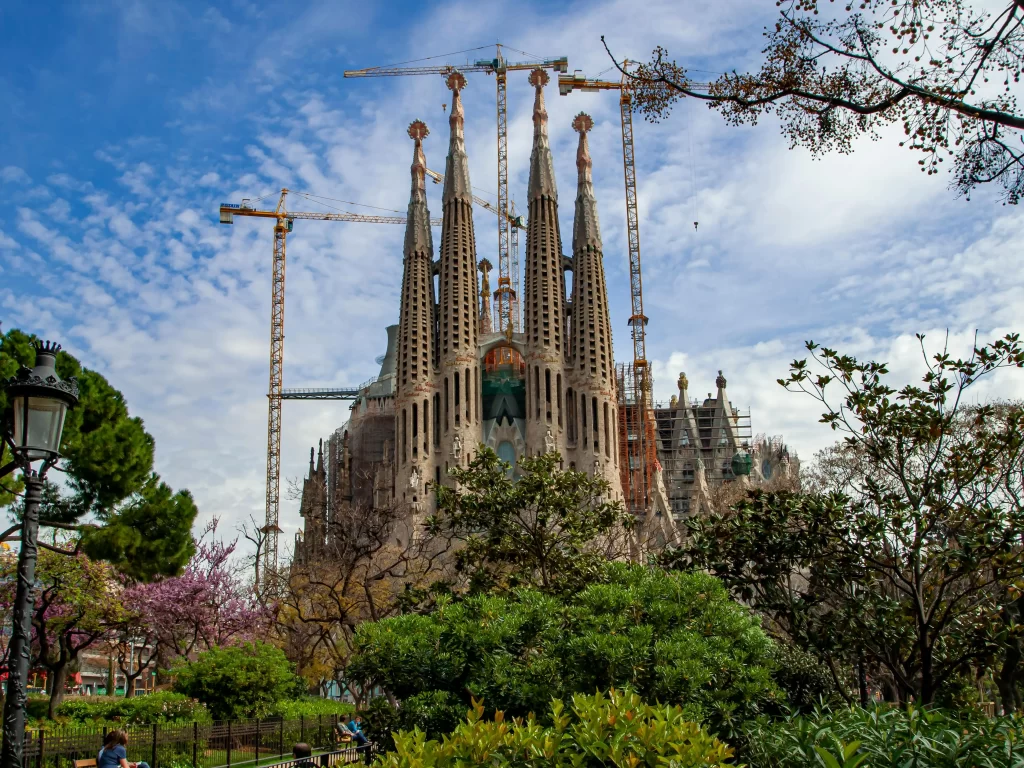
6th place. Sagrada Família (Barcelona, Spain)
Sixth place is held by one of the world’s most unique architectural landmarks — Barcelona’s Sagrada Família, dedicated to the Holy Family: Jesus, Mary, and Joseph. The famous architect Antoni Gaudí drew inspiration from natural forms and paid meticulous attention to every detail. The project proved so complex that, although construction began 140 years ago, it remains unfinished to this day. This ongoing work is also a factor that contributes to the site’s extraordinary popularity.
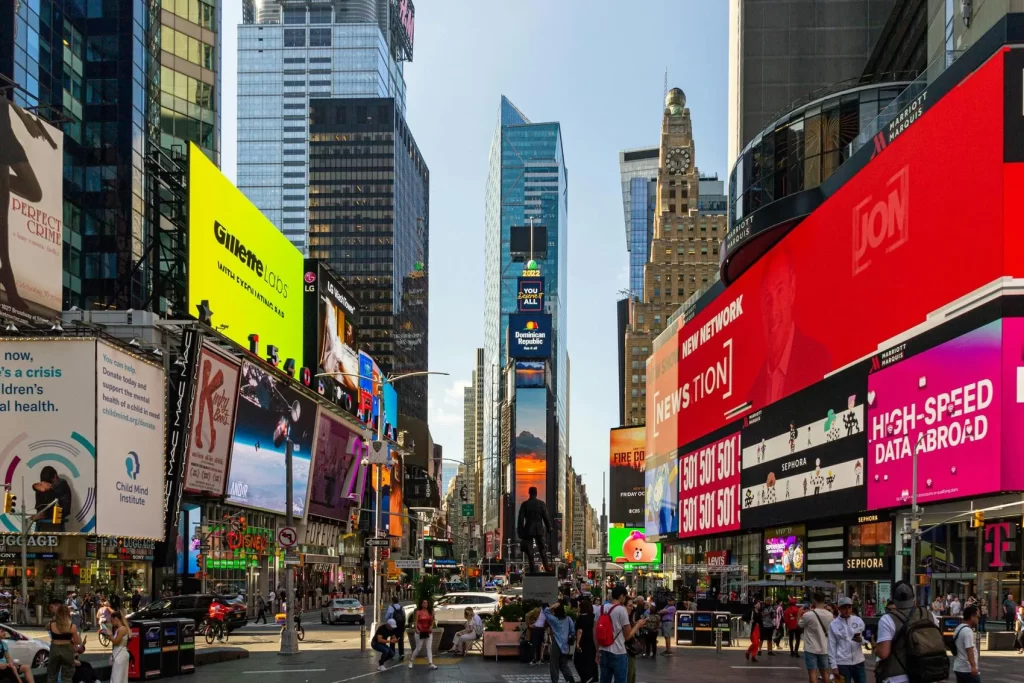
5th place. Times Square (New York, USA)
Opening the top five is the world’s most visited location — Times Square, at the intersection of Broadway and Seventh Avenue in Manhattan. It is named after The New York Times, whose headquarters once stood on the square. Due to immense pedestrian traffic — about 330,000 people daily — it is known as “the crossroads of the world.” The area is home to famous Broadway theatres, concert halls, restaurants, and shops, making Times Square the heart of New York and a true global tourism hub.
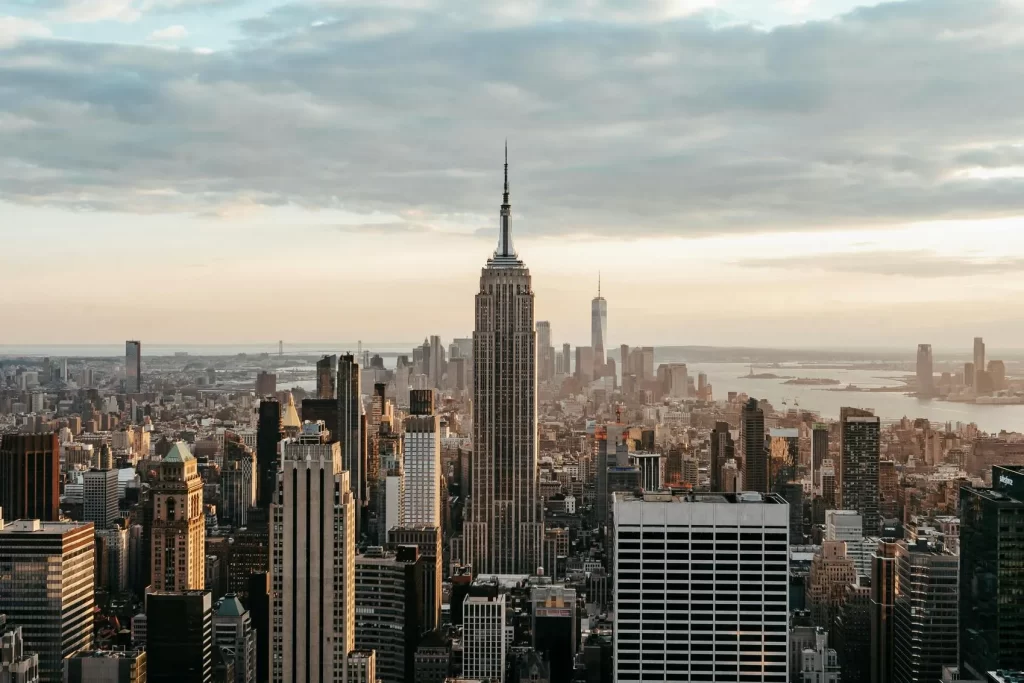
4th place. The Empire State Building (New York, USA)
Fourth place goes to the iconic Empire State Building in Manhattan, built in 1930–1931. Including its antenna, it reaches 443.2 metres in height. For 39 years, it remained the tallest building in the world, until the World Trade Center towers were completed in 1970. Despite its impressive scale, construction took just 410 days — a pace of 4.5 floors per week. To this day, the Empire State Building remains a symbol of the American dream, technological progress, and the engineering genius of the 20th century.
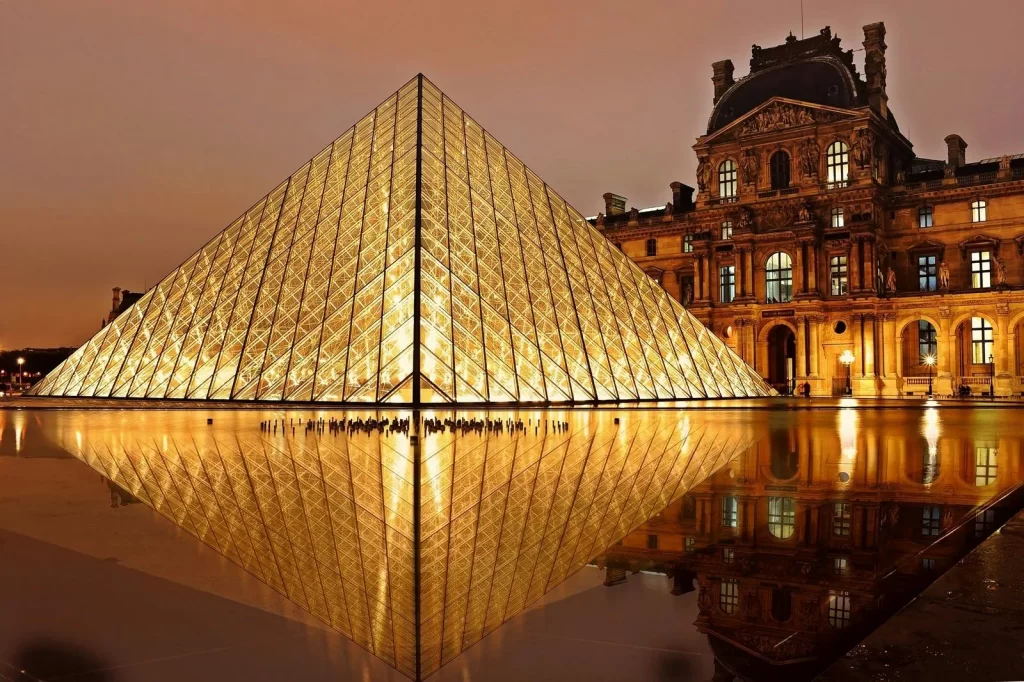
3rd place. The Louvre Pyramid (Paris, France)
The third most popular landmark for photographers and social-media enthusiasts is the glass pyramid built in 1989 as the main entrance to the Louvre Museum. It was designed to improve visitor flow and modernize the entrance area, which had previously been narrow and inconvenient. Despite its modern appearance, the pyramid blends harmoniously into the historic palace complex thanks to its transparent glass and minimalist stainless-steel framework.
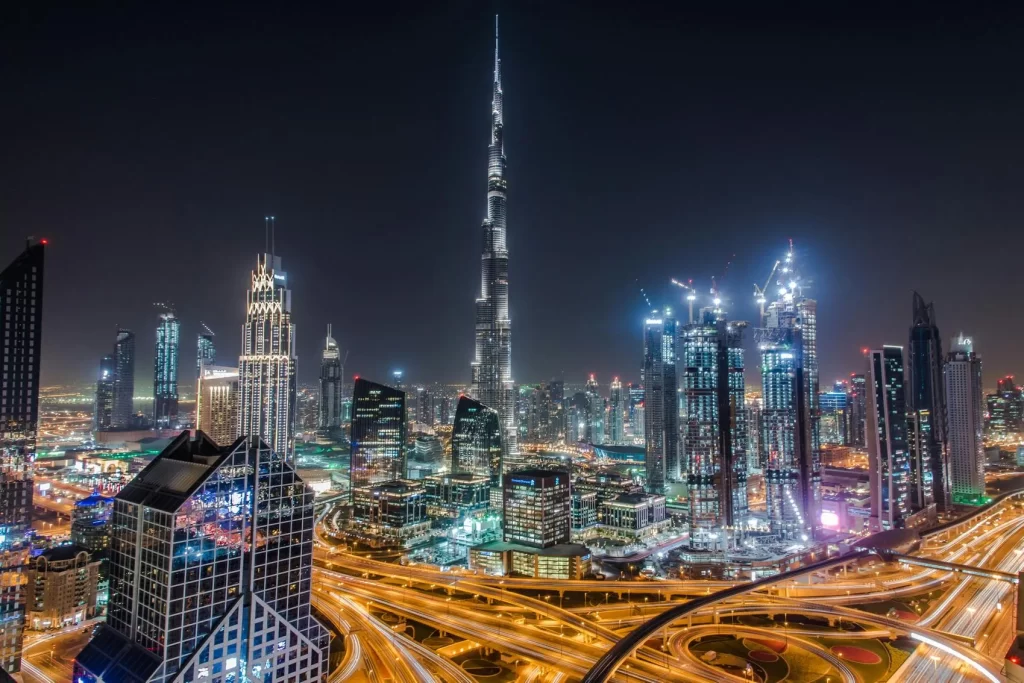
2nd place. Burj Khalifa (Dubai, UAE)
Second place is occupied by the world’s tallest building — the Burj Khalifa in Dubai, standing 828 metres tall. Designed by American architect Adrian Smith, the tower was built using a special type of concrete capable of withstanding extreme loads and the desert’s high temperatures. Its elevators reach speeds of up to 10 metres per second (36 km/h), allowing visitors to reach the 124th-floor observation deck in about one minute. With 163 floors in total, the Burj Khalifa is the tallest human-made structure in history.
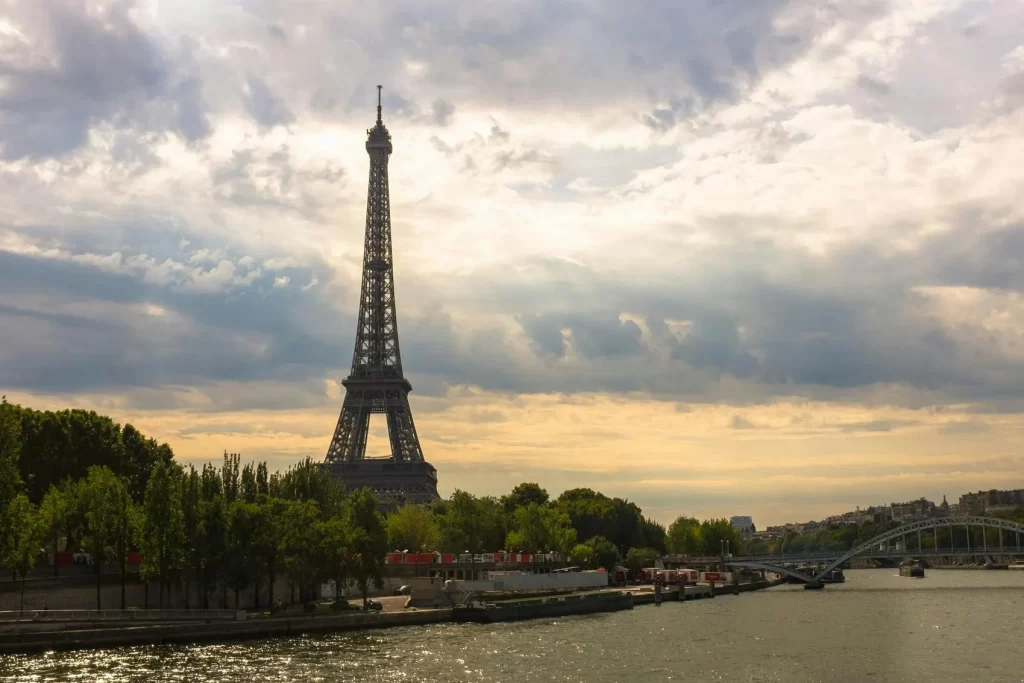
1st place. The Eiffel Tower (Paris, France)
Just ten years ago, the Empire State Building was the most photographed landmark, and Gustave Eiffel’s tower didn’t even make the top three. Today, it tops the list of the world’s 20 most photographed sites. Its history shows that nothing is more permanent than the temporary: originally built as the entrance arch for the 1889 World’s Fair and intended to be dismantled afterward, the Eiffel Tower instead became the principal symbol of France and one of the most visited landmarks in the world.
Text by Yulia Zemtsova
Translated from Russian by Sofia Zemtsova
Cover photo by Niklas Jeromin