A new methodology shows that 81% of the world’s population now lives in cities
For the first time in 35 years, Tokyo has lost its status as the largest city on Earth, falling all the way to third place. This change is not due to people leaving the city; it is the result of a completely new way of calculating global urban statistics.
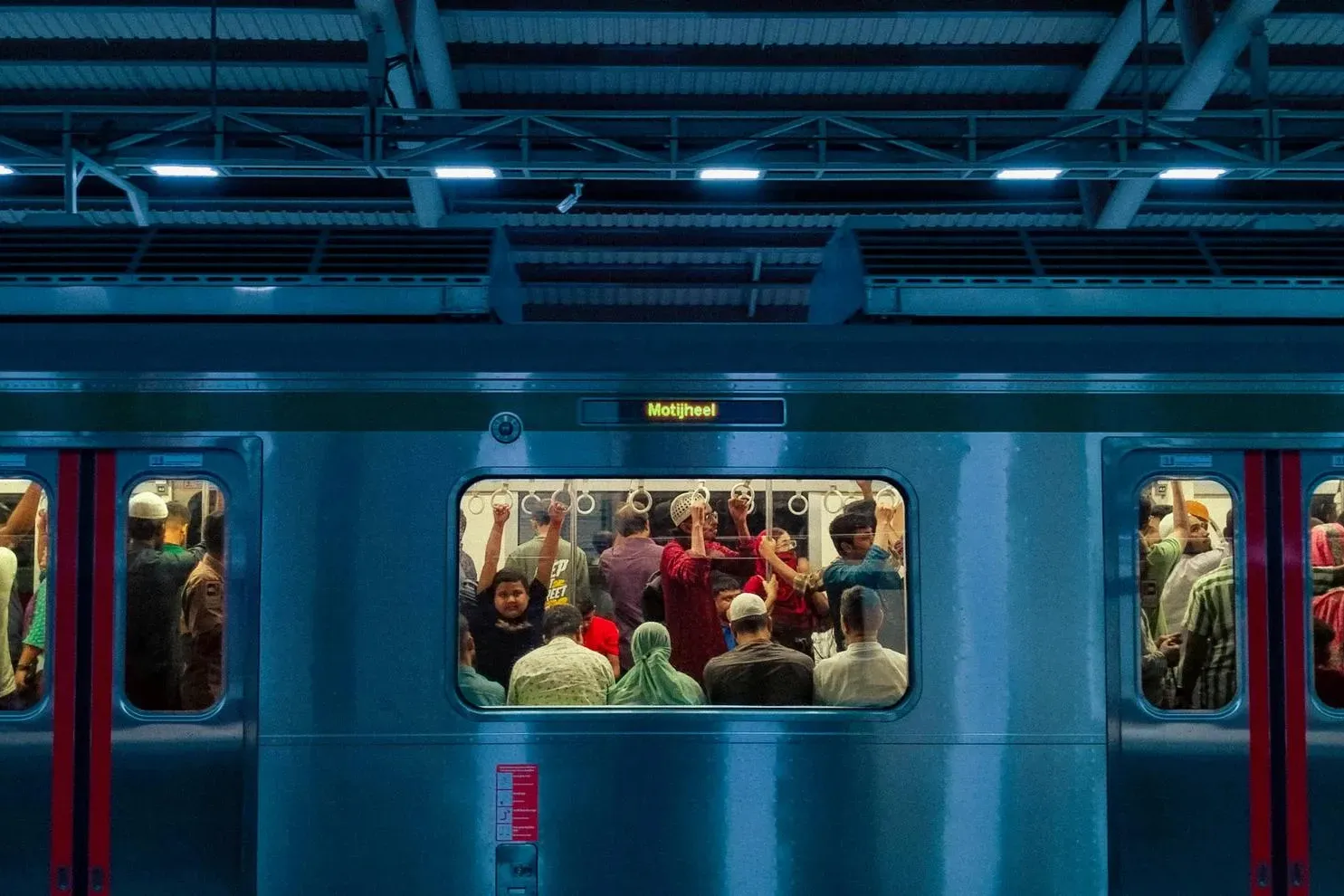
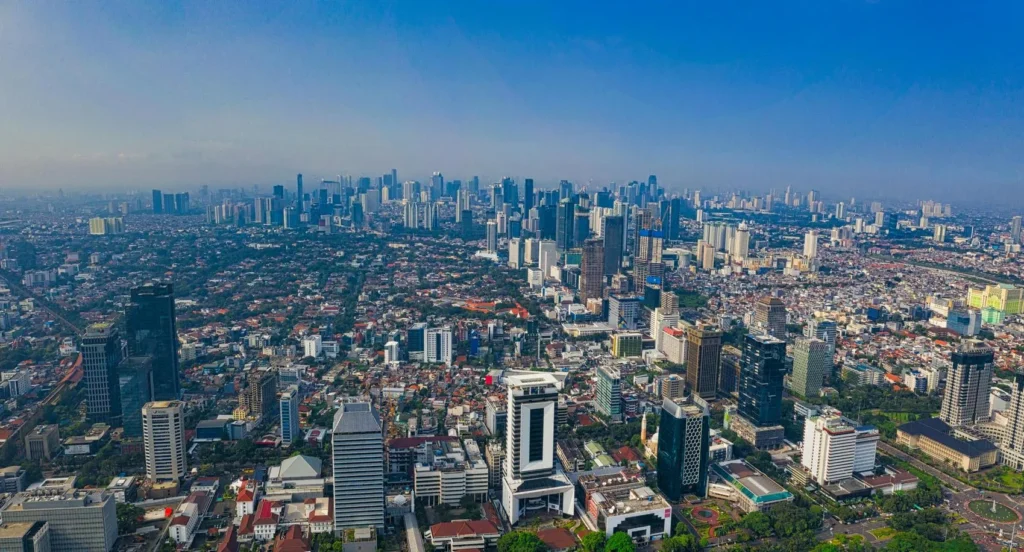
According to UN data for 2025, the world’s most populous city is now Jakarta, the capital of Indonesia, with 42 million residents. In second place is Dhaka, Bangladesh, with 37 million. Tokyo, by contrast, counts “only” 33 million inhabitants.
Rounding out the top ten are New Delhi (India, 30.2 million), Shanghai (China, 30 million), Guangzhou (China, 28 million), Cairo (Egypt, 26 million — the only non-Asian city in the top ten), Manila (Philippines, 25 million), Kolkata (India, 24 million), and Seoul (South Korea, 24 million).
Under the UN classification, only cities with populations exceeding 10 million are considered megacities. That is why, among former Soviet cities, only Moscow makes the list — ranked 20th with 17 million residents.
Until 2025, the main source for these figures was national statistics. Governments provided the numbers themselves, based on the administrative boundaries of their settlements and their own definitions of “urban population.”
Now, however, the count is conducted using a geospatial methodology, relying on satellite imagery and census data. Experts assess how closely neighboring settlements approach the administrative boundaries of a given city. If they are densely connected, they are treated as a single urban agglomeration — even if, according to national authorities, they remain legally separate municipalities.
Recalculating the data with this method produced striking results. First, Tokyo had held the top spot not for 70 years, as previously thought, but for only 35. Until 1990, New York had consistently been ahead.
Second, researchers found that Jakarta’s population is not 11 million, as previously estimated, but 42; Dhaka’s is not 20 million, but 39; and Tokyo’s is not 37 million, but 33.
Third — and most importantly — this new approach shows that the world’s urban population accounts for not 58%, but 81%. This is the most sensational finding in the UN report. It indicates that global urbanization is effectively complete; for decades, we simply looked at the world through the distorted lens of national definitions.

This leads to some intriguing conclusions. Many problems traditionally considered “rural” — lack of water and electricity, unemployment, transportation gaps, waste management, sewage systems — are in reality urban. The main phase of the global “flight to the cities” is long behind us. What is happening now is not so much urbanization as redistribution within an already urbanized system: migration from small towns to medium or large ones — and sometimes vice versa.
Furthermore, previous estimates suggested that only 36% of India’s and 60% of China’s settlements were urban, implying largely rural populations. The new methodology shows these figures are actually around 80% and 90%. This completely shatters the myth of “a billion peasants” and helps explain why the economies of these two countries are growing so rapidly: nearly all of their populations already live in urban conditions.

The UN report also contains other noteworthy findings. For instance, researchers found out that the physical growth of cities — the expansion of built-up areas — is now growing twice as fast as population. In other words, urbanization is not creating denser settlements, but spreading them out, inevitably leading to further loss of agricultural land.
It also turns out that there are 12,029 cities worldwide, and more than 3,000 of them — a full quarter — have seen significant population decline over the past decade. Thirty percent of these shrinking cities are in China, and 17% in India. This highlights the “shadow side” of urbanization: as people migrate to megacities, small cities are emptying, losing their urban status, and reverting to towns or semi-urban settlements.
These new insights may eventually lead to major revisions in urban planning policies in developed countries. Traditionally, governments have focused on promoting city growth, but it may now be time to shift priorities. Cities no longer necessarily need to expand — but they do require optimization.
Text by Yulia Zemtsova
Cover photo by Zunaid hasan
Translated from Russian by Sofia Zemtsova