
In southern Russia, on the border of Kalmykia, the Rostov Region, and the Stavropol Territory, lies the unique Lake Manych-Gudilo. Every year, migratory birds from all over the world flock here to make a temporary stop or settle for the summer until their chicks learn to fly.
Several thousand years ago, this area was a strait connecting the Black and Caspian Seas. Over time, it shallowed, leaving behind several interconnected steppe lakes. Manych-Gudilo is the largest of them.
“Manych” means “salty” in Tatar. Indeed, the lake’s water is saltier than seawater. Almost no shrubs or reeds grow along its shores. Sharp steppe winds blow here year-round, raising high waves across the water’s surface. From the howling of the wind and the roar of restless water came the lake’s second name — Gudilo (“the Howler”).
The beauty of Manych is described as harsh, yet every spring the lake comes alive, turning into a true bird marketplace. Hundreds of thousands of birds, returning from wintering grounds, stop here as if at a busy crossroads — some for a few days, others for the entire summer. Since a reservoir was created here in the mid-20th century, Lake Manych has become one of the region’s most important bird habitats.
Water levels in steppe lakes typically fluctuate greatly from year to year, making them unreliable sites for nesting. In Manych-Gudilo, however, the level is artificially maintained, so birds return every year.
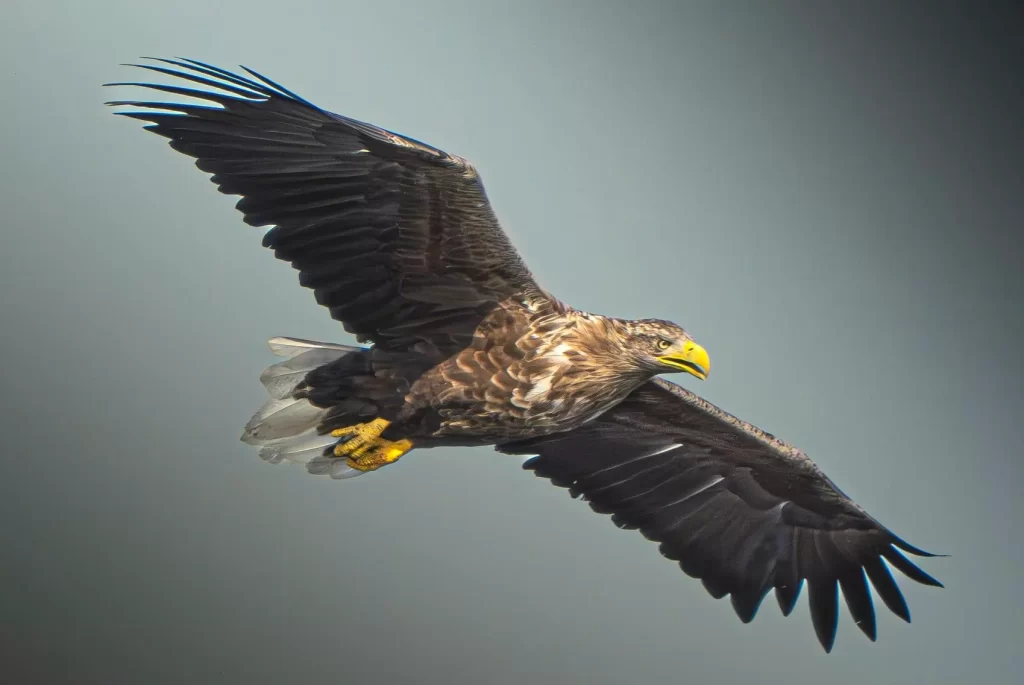
Birds on Manych have almost no natural enemies. Waterfowl — pelicans, gulls, terns — which arrive here for the summer, nest on remote islands inaccessible to wolves and foxes from the shore. Birds of prey such as hawks and harriers hunt small songbirds, while the white-tailed eagle searches flocks for sick or weakened birds. Sometimes gulls cause trouble — they are the main opportunists, preying on unattended eggs or newly hatched chicks.
But the greatest threat to birds on Manych is humans. Local residents often raid nests, collecting eggs — even of rare, protected species — to feed livestock.
For great white and Dalmatian pelicans, secluded islands are essential for nesting. On one such island, a small cabin was built for photographers who come in summer to photograph the birds. It contained everything needed: seating for two, a small table, and a portable toilet. Shooting “embrasures” were cut into the walls at different heights.
Visitors may approach only at night — pelicans are afraid of people. If they see a human nearby, they immediately take to the air and circle the island for a long time, too afraid to land. This is a death sentence for their chicks, which cannot yet fly or may not even have hatched. Gulls or cormorants will instantly swoop in, destroy the pelicans’ nests, and kill their young.
In daily life, these birds are remarkably disciplined. Their colony resembles a well-organized campsite where no one sits idle. Some teach the chicks, others go out for food, and others patrol overhead to make sure everything is in order. If something goes wrong, every bird seems to know its role.
During the heat of the day, pelicans sleep. Toward evening, as the heat gradually fades, the most interesting activity begins.
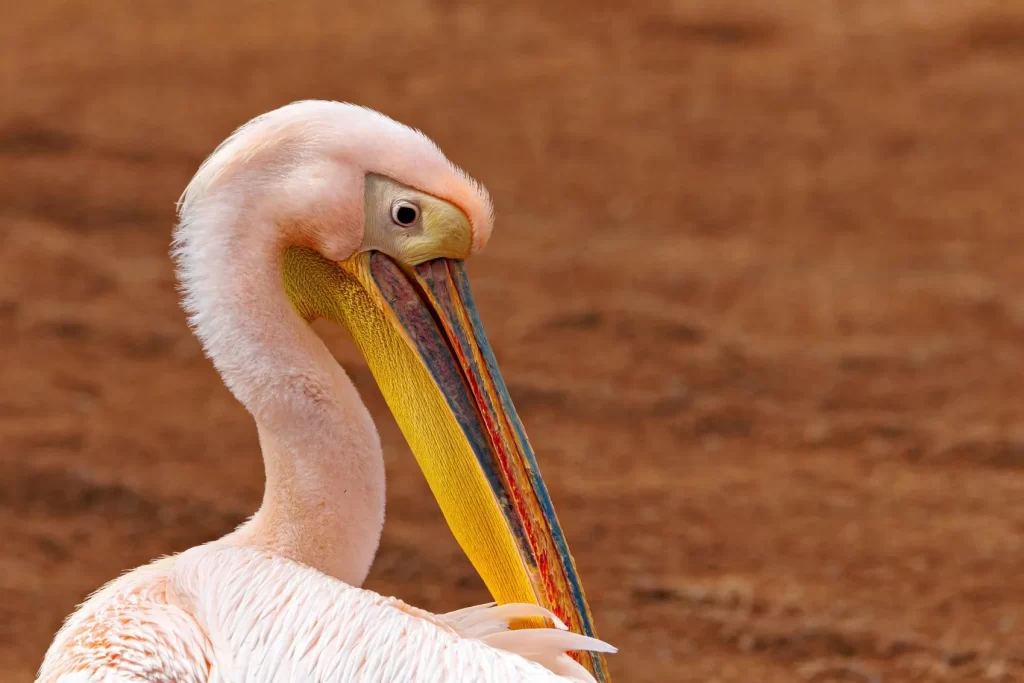
Along the shore, an adult pelican runs, flapping its wings loudly. A focused chick hurries after it, trying to imitate every movement. It cannot take off yet: the young pelican is less than two months old, its wings are weak, and its first independent flight is still some time away. But it does not get discouraged — watching its parent soar inspires it. Reaching the “finish line,” the chick turns around and runs back to the start. Flight lessons occur several times a day. Often, training is combined with feeding: the adult runs while holding a fish in its beak — a reward for the diligent, hungry student.
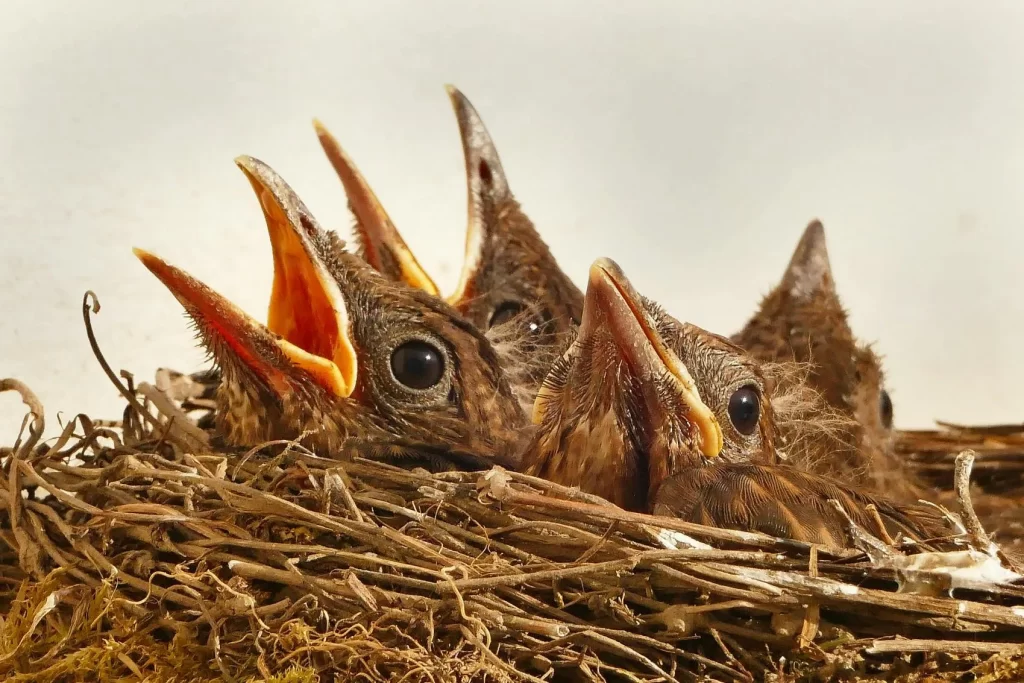
Watching the feeding of pelican chicks is a delight. The young gather in small groups, playing with each other and waiting for food. A parent arrives. One chick immediately jumps up, runs to it, stumbling and hopping in excitement, diving headfirst into the adult’s beak to get the long-awaited fish. The others wait patiently. If an entire flock returns with food at once, chaos erupts: all the chicks crowd all the adults, pushing, shouting, and begging for more. Yet, at the first call, feeding stops instantly, and all pelicans settle back into place.
At the next call, the chicks obediently gather into a single fluffy group: night is coming, and it is time to move to another island to roost. Chicks that cannot yet fly cross the water by swimming. Adults form a tight protective circle around them, escorting them to the far shore. Only late at night may the photographer leave the hide and return home. The pelicans must suspect nothing.

Regular bird counts are conducted on Manych to monitor species stopping temporarily. For example, the red-breasted goose — listed in the Red Book — rests here during migration. It nests in northern Russia, on the Taimyr Peninsula. The entire population of red-breasted geese passes through Manych.
Where do birds go after stopping here? To winter along the coasts of the Black, Caspian, and Mediterranean Seas, and the Nile Delta. Birds migrating to equatorial Africa or even India, such as some reed warblers, also pass through. On return from wintering, some fly to nest in the tundra and taiga, while others stay and breed here. Manych is an ideal place to study colonial waterbirds such as pelicans and gulls. The world’s largest gull — the great black-headed gull — and the rare Caspian tern live here.
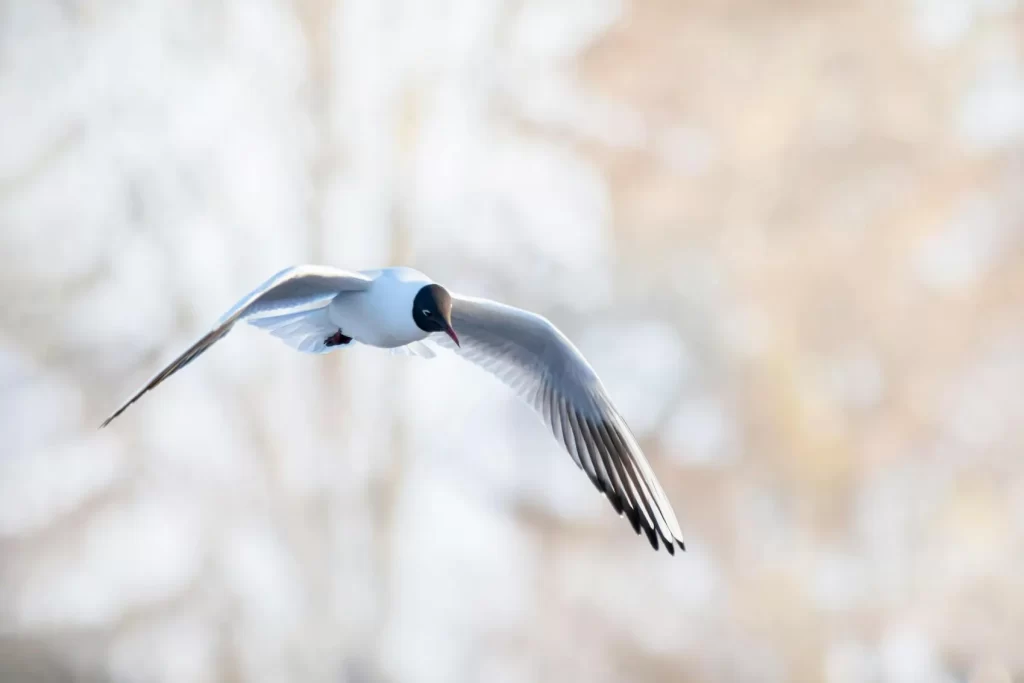
It is said that Manych is not rich in fish. But that is a human perspective. There is plenty of food for all birds — both temporary visitors and those who live here from early spring to late autumn. Even in years with unusually high bird numbers, none go hungry. Many small nearby lakes rich in fish are just minutes away by flight. Some species, such as the great black-headed gull, also feed on terrestrial prey like mice and ground squirrels. Geese and geese-like birds, which do not eat fish at all, feed in nearby agricultural fields.
The busiest months on Manych are March–April and October–November — the peak migration periods. Nesting of permanent residents lasts from May to August or September.
Pelicans are among the first nesting birds to depart. Their young have grown strong and will return next year as parents themselves. The photographer’s cabin did not survive to the next season: at the end of summer, someone from the local area took a boat to the island, destroyed it, and stole everything possible.
In winter, Manych freezes over. The chorus of birds falls silent, and they scatter across the world. But by April, the steppe comes alive again, painted with the vivid, intoxicating colors of blooming tulips. The shores of the lake fill once more with traveling birds, ready to share fresh news and immerse themselves in this wild beauty.
Text by Yulia Zemtsova
Cover photo by throughmylife_in_ INDIA
Translated from Russian by Sofia Zemtsova