
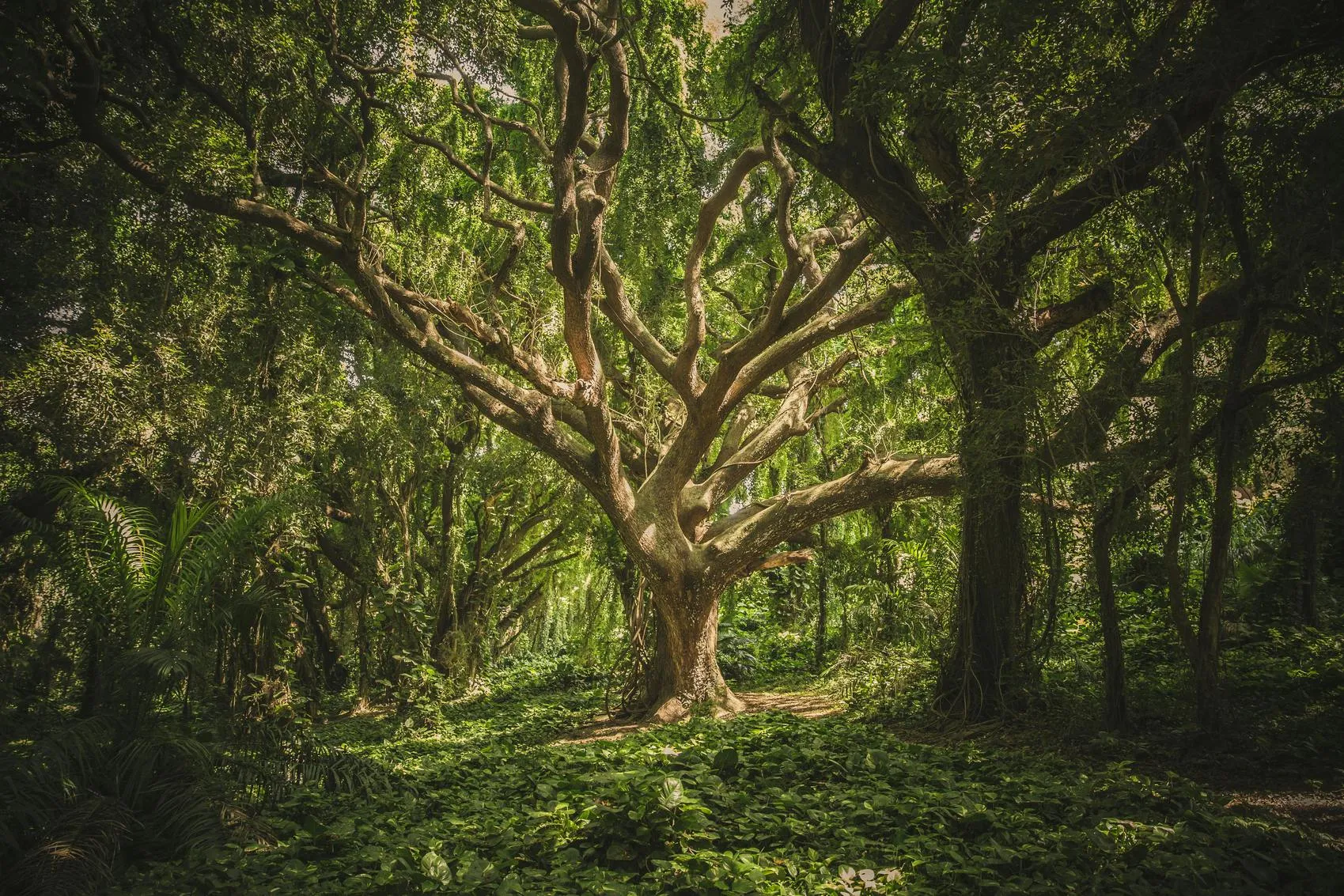
European red deer found in central Russia carry a rare, heritage gene pool
Deer appeared in the Voronezh forests not so long ago — and almost by accident. At the end of the nineteenth century, in these parts, in the settlement of Ramon, the niece of Emperor Alexander II and the great-granddaughter of Napoleon Bonaparte’s first wife, Princess Eugenie of Oldenburg, built her estate. She ordered that several European red deer be brought here for her private menagerie. The order was carried out: purebred animals arrived in the Voronezh Province from Germany. These were the first deer to appear in the Black Earth Region.
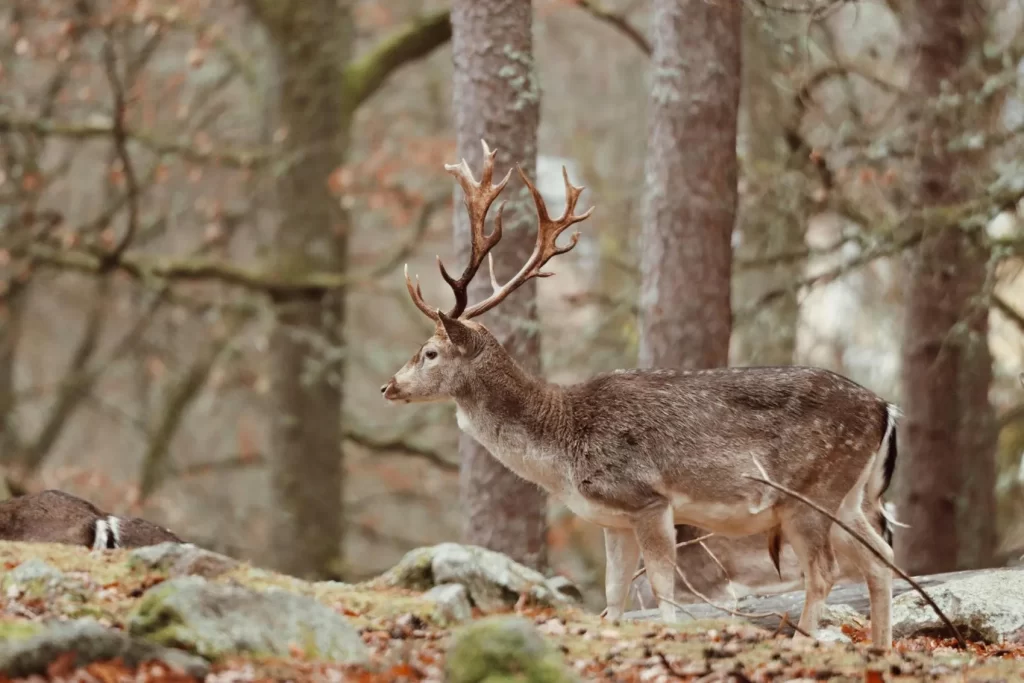
They were placed in the park near the princess’s palace so that the mistress of the estate and her distinguished guests could hold hunting marathons, chasing these graceful animals. In 1898, the Report of the Voronezh Imperial Hunting Society even published a note stating that deer hunts were held in the Oldenburgs’ park-menagerie.
Exactly how many animals were brought to Russia at that time, and how they adapted to the unfamiliar climate, is not known for certain. Soon, however, people had more pressing concerns. Troubled times began in the country, the princess and her family emigrated, the park was destroyed, and the deer scattered throughout the Usman Forest.
Nothing contributed to the survival of the population under such harsh conditions. Cold, snowy winters and the lack of sufficient winter forage were the main natural enemies of red deer in central Russia. At that time, these factors were compounded by starving locals, who sometimes hunted large animals. But people managed to maintain a balance: most of the animals survived, and by the early 1920s biologists began restoring their population. Local archives preserve a note confirming that a certain forester, Spitsyn, recorded eleven red deer in the Voronezh forests in 1923.
In 1927, part of the Usman Forest was declared a state nature reserve, and the deer population gradually began to grow. By the end of 1940, the reserve counted 180 animals; in 1955 — 743; and in 1973 — more than fifteen hundred. In total, by the mid-1970s there were about three thousand red deer in the Usman Forest.
The population peaked in the 1970s, but then politics intervened again. New historical events that shook the country directly affected the deer. In the 1980s and 1990s, when food shortages were severe, poachers began shooting wild animals, and this time the deer were far less fortunate than during the years of the Civil War. The true scale of the losses is evident from the fact that even now — twenty to twenty-five years later — the total number of European red deer in the Voronezh Region does not reach even five hundred individuals.
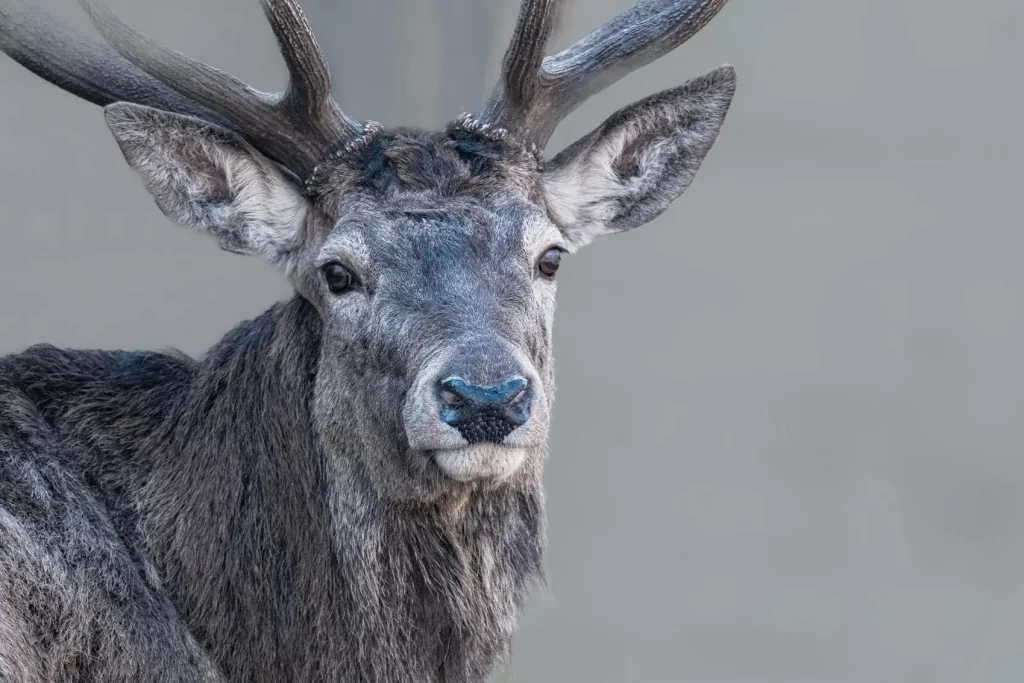
The red deer is a very timid and cautious animal. It has an excellent sense of smell, sharp eyesight, and an exceptional memory. Whatever a photographer might try to do to capture it, the animal will always outsmart the human. You can “pretend to be a tree,” dress in all black and stand motionless for a long time, but the deer still won’t approach. It remembers perfectly what belongs in the forest and instantly notices anything unusual — but won’t come closer, because unlike fallow deer or roe deer, it is not curious. Luring it with anything is extremely difficult. Most importantly, a deer has a highly developed sense of smell. If the wind blows toward the animal, it immediately detects the human scent and disappears into the forest. Wildlife photographers admit that the red deer is one of the most difficult animals to photograph.
Red-deer fawns are almost invisible in the grass. At the slightest danger, the mother lets out a loud cry and runs off, drawing attention away from predators or humans, while the fawns tuck in their legs, lie down, and disappear completely. Nature arranged it so that in the first days of life the fawns have no scent at all — so even dogs or wolves cannot track them.
Several years ago, biologists studying this species decided to conduct DNA research on the Voronezh red deer. It turned out that these animals carry a rare, reference gene pool. In their homeland, Europe, animals of such pure lineage have almost disappeared. Over the past hundred years, European farmers have actively domesticated these animals and later developed deer farming for dietary venison. In the process, they crossed different species, including using artificial insemination, and in the end little of the original breed remained besides the name. European red deer have, in essence, become domestic animals.
In Russia, however, everything happened the opposite way. The lives of these foreign animals were once left entirely to chance, but in the end this allowed them to preserve their gene pool in its pristine, unchanged state. Still, the Voronezh deer have never fully adapted to the local climate. Without supplemental feeding, they often die in winter, so forest rangers must place hay and salt in the areas where the animals live.
European red deer in the Black Earth Region have no natural predators. Locals say that long ago the famous Tambov wolves would sometimes wander into the Voronezh and Lipetsk forests, but now these wolves are themselves on the brink of extinction, so no wild animals threaten the deer anymore.
The main danger comes only from humans. The red deer is a valuable game trophy. Adult males can be hunted from late August to January, and females and young animals from early October to January. However, poachers continue to break the rules. Discussions about the need to increase the deer population in the region have been ongoing for many years, so there is hope that one day deer hunting will be completely banned.
Text by Yulia Zemtsova
Cover photo by vee terzy
Translated from Russian by Sofia Zemtsova