Humanity continues to destroy the planet’s forests faster than they can recover
Every five years, the United Nations releases a global report on the state of the world’s forests. Each time, it’s met with cautious hope.
We already know that Earth is rapidly losing its forest cover due to human activity. We know the consequences too: environmental decline, climate change, collapsing ecosystems, shrinking biodiversity.
But have we actually stopped harming ourselves? Have we come to our senses? Have we done anything meaningful to save the forests?
Officials claim things are improving.
The facts suggest otherwise — the situation is still drifting toward disaster.

According to the latest data published at the end of 2025, the overall pace of deforestation has slowed. Between 1990 and 2000, the world lost 17.6 million hectares of forest each year. Between 2015 and 2025, that figure dropped to 10.9 million annually.
At first glance, this sounds encouraging. But behind the dry numbers and bureaucratic language lies an unsettling reality: the planet is still being stripped bare. A slower pace of loss doesn’t mean recovery.
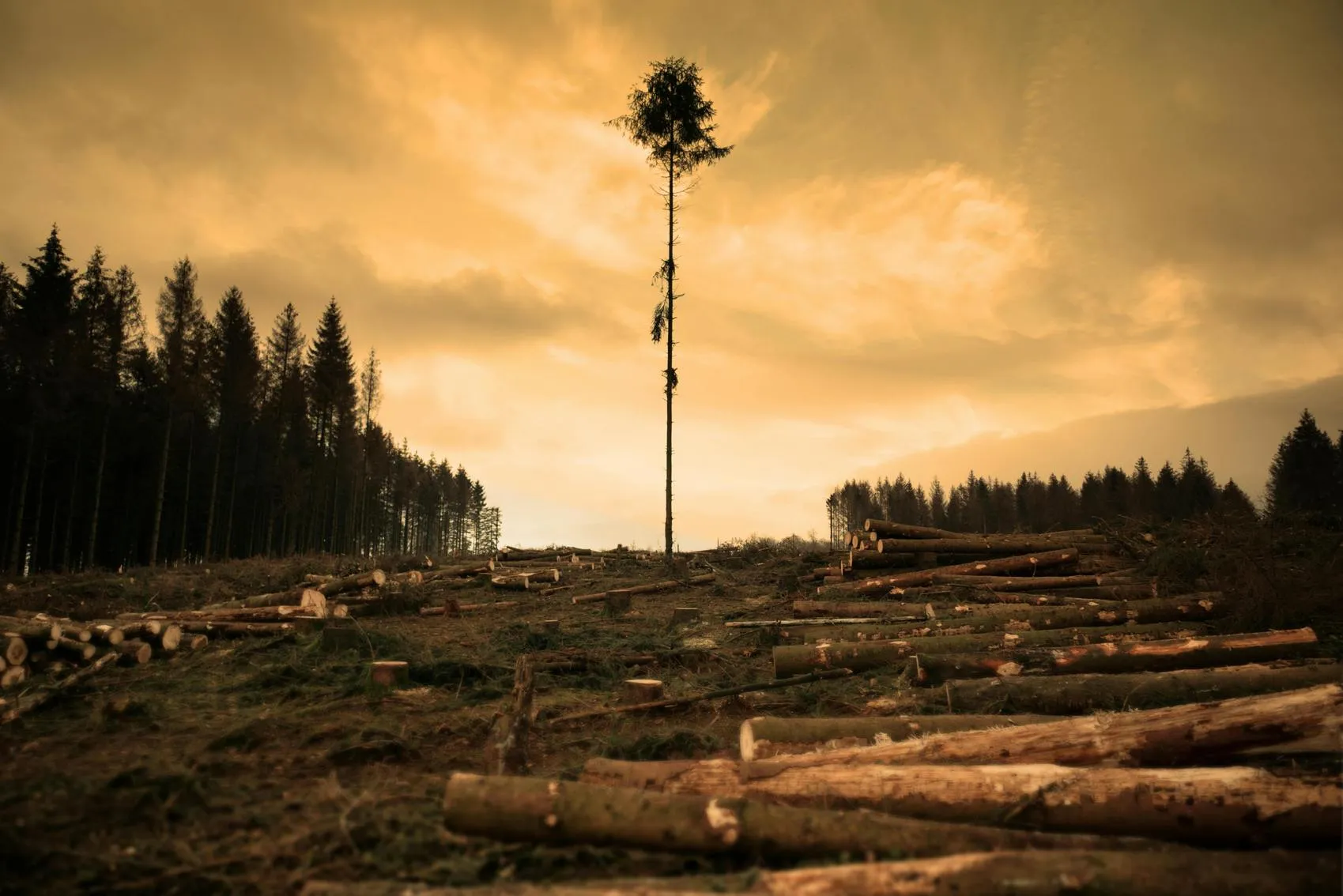
Since 1990, the world has lost 489 million hectares of forest — an area nearly equal to the combined size of India and Argentina. Yet the process continues: every year, another 10.9 million hectares disappear, roughly the territory of a country like Bulgaria.
Unfortunately, the UN report shows no real reversal of this trend. Forests are still vanishing at an alarming rate, and the losses are uneven. The most aggressive destruction is happening in the tropics — in Africa and South America — the very forests that play the greatest role in stabilizing the climate. Meanwhile, most new growth is occurring in northern regions, which cannot truly replace what’s being lost.
This leaves the planet increasingly vulnerable to climate instability and more frequent extreme weather. From an ecological standpoint, we are losing mature, complex ecosystems — the most valuable ones — and these simply cannot be recreated artificially.


There is some good news: the area of planted forests has increased by 120 million hectares since 1990. According to the UN, plantation forests expanded from 192 million hectares to 312 million by 2025.
But planting trees is not the same as restoring a forest.
In many cases, these so-called forests are industrial timber plantations — essentially tree farms. They do little to rebuild lost ecosystems, support biodiversity, or have any real impact on the climate.
Today, nearly a third of the world’s forests (29%) are used for timber production. Only 12% are dedicated to biodiversity conservation, and just 9% to protecting soil and water. Legally protected areas account for only about 20% of all forests worldwide.
So despite impressive technological progress, humanity still hasn’t learned how to care for its own planet. For years, we’ve celebrated slower decline as success — yet we still can’t stop the damage.
We’re not restoring ecosystems or saving forests.
We’re simply learning to live with their loss — making it easier not to notice.


Text by Yulia Zemtsova
Cover photo by Matthias Behr