
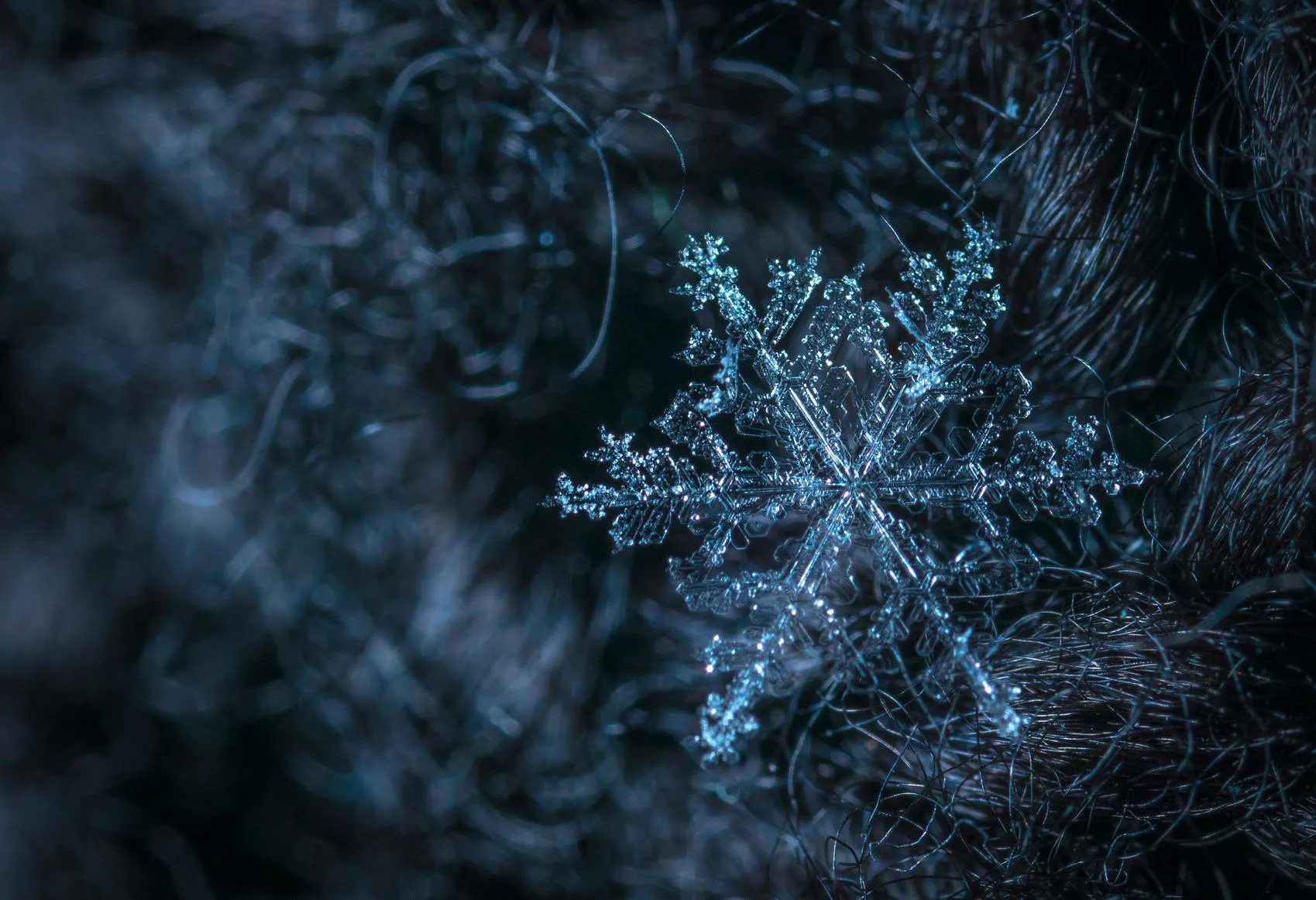
Hidden Geometry and Secret Life
Finally, the snow is here! With every snowfall, millions of unique snowflakes tumble from the sky every minute, each carrying its own story
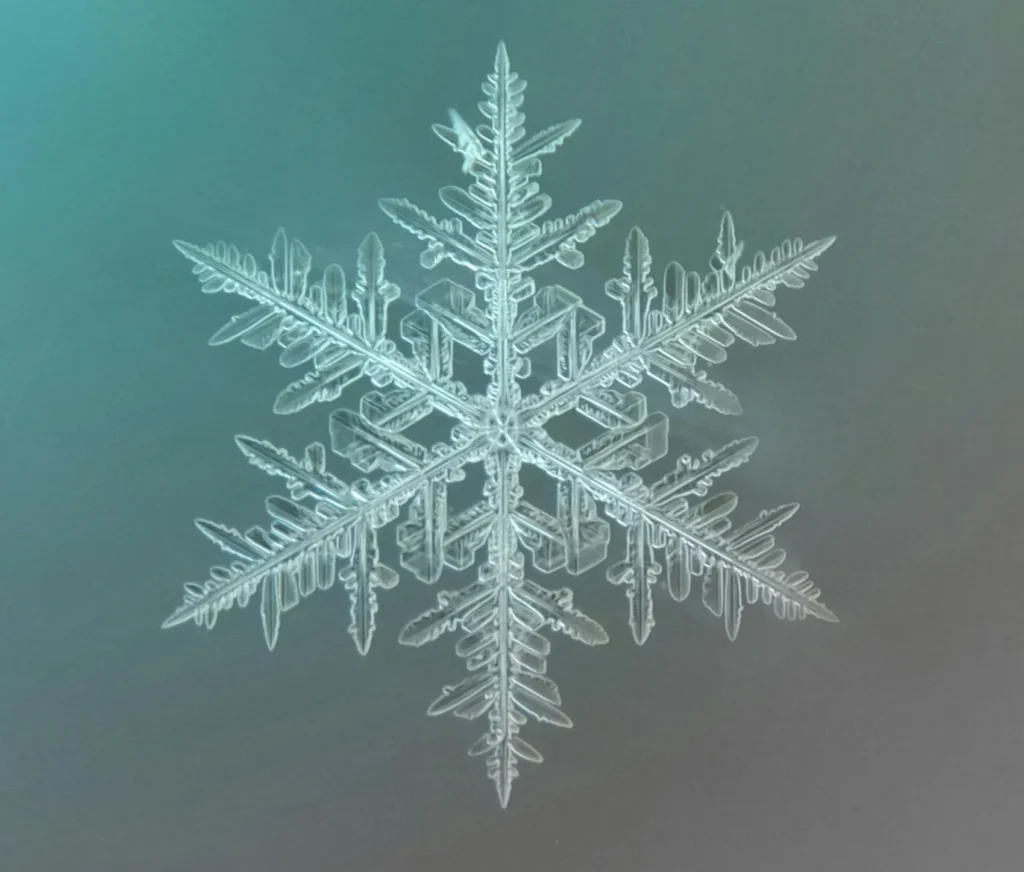
Hexagonal symmetry — the geometry of water itself
Every snowflake is a crystal that grows according to the rules of hydrogen bonding. Its six-fold symmetry is neither random nor decorative: water molecules naturally adopt this shape. Here, nature acts as a mathematician rather than an artist, giving each snowflake its delicate precision.
Temperature “paints” their patterns
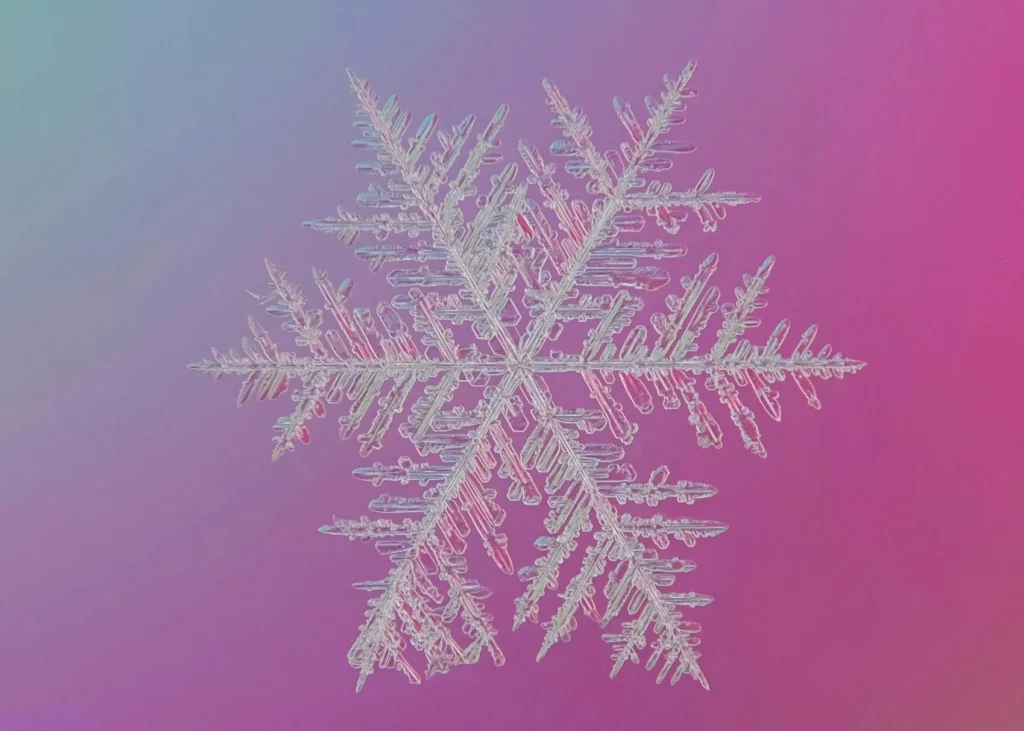
As a snowflake forms, temperature influences its growth pattern. Around –5 °C, needle-like shapes are more common; at –10 °C, columnar forms tend to appear; and at –15 °C, the most intricate dendrites can develop. Yet the key factor in shaping the pattern is always humidity. Each design reflects the exact conditions in which the crystal grew inside the cloud.
Some snowflakes start with a particle of life
At the center of a snowflake, there may be a tiny speck of dust, a bacterium, or a fungal spore — the nucleus on which the first layer of ice forms. This isn’t poetry; it’s a scientific fact. Some microorganisms truly serve as natural “crystallizers,” meaning that a portion of snowflakes has a biological origin.
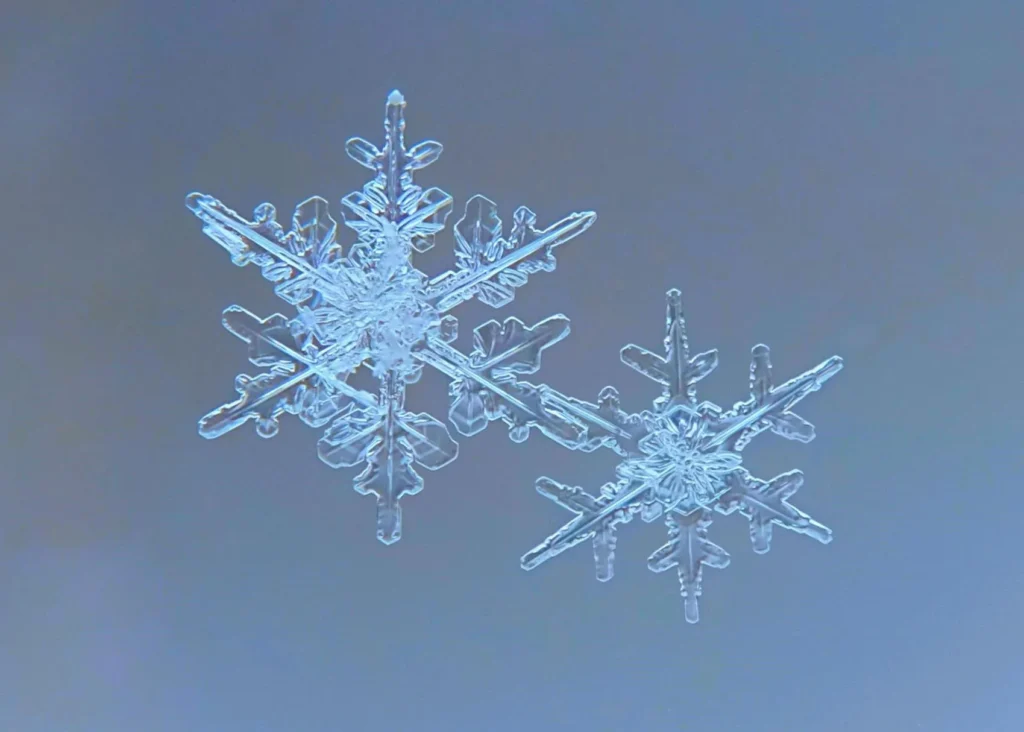
They’re transparent, yet the world sees them as white
A single snowflake is almost entirely transparent. Snow appears white because thousands of ice facets scatter light in every direction, like an infinite network of tiny mirrors. Its whiteness is not a color but the result of light endlessly bouncing through the labyrinth of ice.
Snow has hundreds of faces but one rule
Science recognizes more than 40 official types of snowflakes — from simple columns to elaborate dendrites. Within these categories, variations are virtually endless, which is why we almost never see two identical crystals. Yet nature never breaks its six-fold rule.
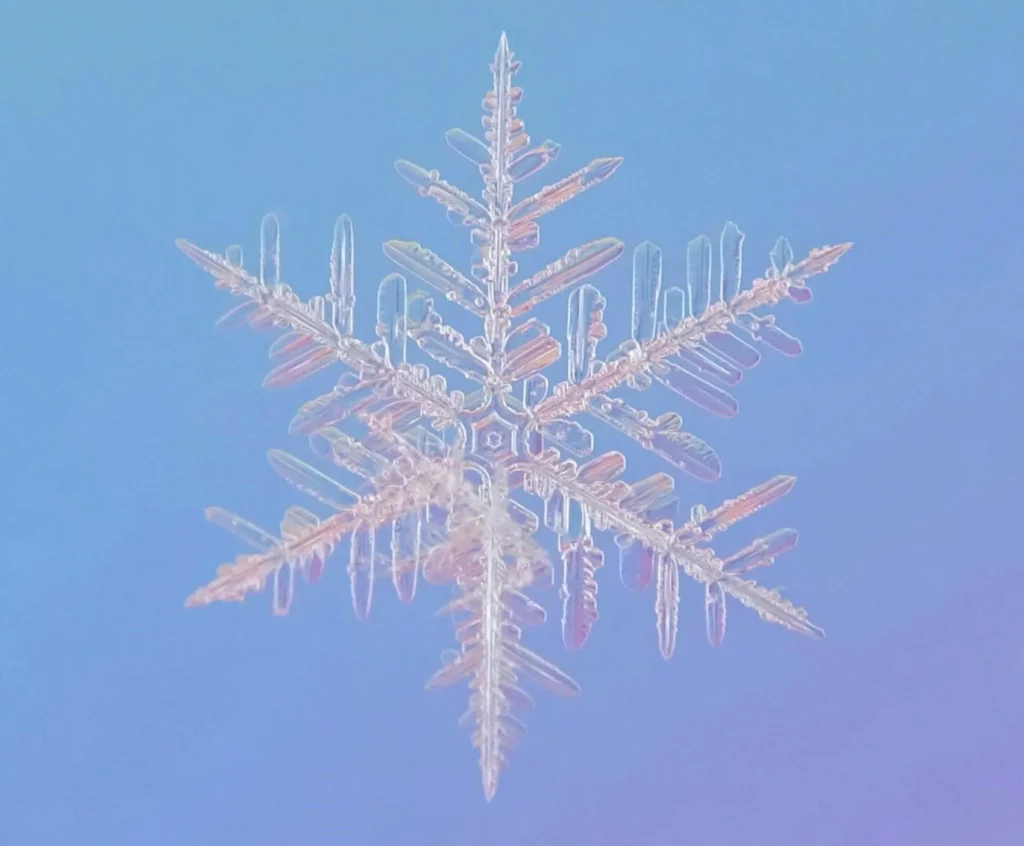
Photos by Kristin Morgan
Cover photo by Egor Kamelev