In 2026, the United Nations Will Choose Its New Leader
April 25, 1945, in San Francisco was a sunny, hopeful day — like all the days of that long-awaited spring. From early morning, people began gathering in the square in front of the Opera House. Newspaper boys could barely keep up with making change before pushing back through the crowd toward the next shout. The whole world was waiting for news, and all attention was focused on this modest building with seven semicircular windows. In just a few hours, a conference to establish the United Nations — a “world government” that would assume responsibility for the future security of the planet — would open here.
In recent years, the world had changed dramatically. The exhausting war that had scorched life with unprecedented brutality for five and a half years was finally ending, and a heavy, invisible burden fell on humanity: to create new rules for global coexistence, where the law of “every man for himself” would no longer prevail. “Each country will be accountable to the entire world for its decisions; no one will be able to run the world alone; people will learn to negotiate — and perhaps then there will never again be war.” These words, filled with desperate hope, were spoken by passersby, read between the lines of newspaper columns, echoed from podiums, and drifted through the quiet offices of the powerful. The world was tired of fighting. The deep wounds that had carved up Europe were still fresh, but the lesson taught by the Second World War had to be fully learned. Whatever happened, the nations needed to unite and move forward together, defending their shared interests.
After noon, the first cars began arriving at the theater. From time to time, a police whistle sounded, urging the crowd to make way for another motorcade. Men in formal suits stepped out of gleaming automobiles — some lowering their hats over their eyes, others greeting the crowd with a wave. Diplomats, advisers, aides, attachés — they had flown to San Francisco from all corners of the world, and to onlookers each of them seemed like a kind of demigod on whom the fragile future depended.
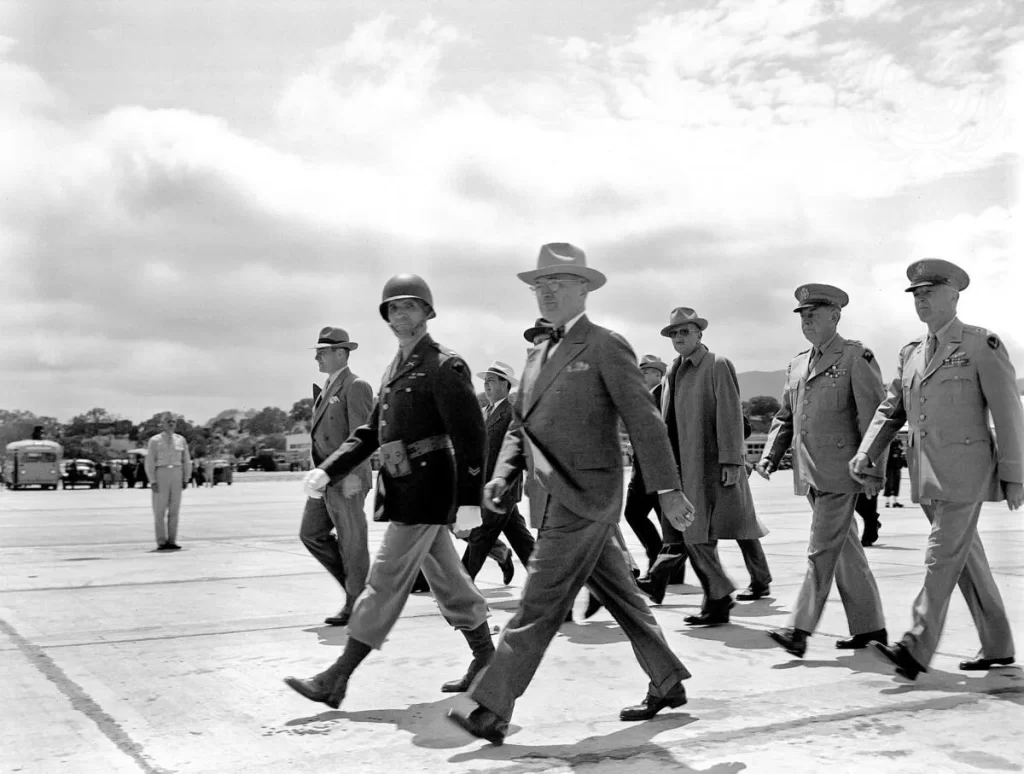
The opening of the global forum was scheduled for 4:30 p.m. Just before five, the car of U.S. Secretary of State Edward Stettinius Jr. pulled up. At forty-four, Stettinius had already reached every imaginable height in both business and politics. At thirty-one, he became vice president of General Motors; at thirty-eight, he headed the steel corporation U.S. Steel; and at the peak of his career, he entered government. Contemporaries called him “the emissary of big business” in Washington and believed he had strong grounds to take control of U.S. foreign policy. Short, youthful-looking, but already completely gray, Stettinius was to open the historic meeting that day.
Almost at the last moment, the Soviet delegation arrived. It was led by Foreign Minister Vyacheslav Molotov, with young diplomat Andrei Gromyko beside him. The vast hall of the opera house was filled to capacity. There were 850 delegates alone, each accompanied by advisers, assistants, and secretaries. In total, 3,500 people took part in the conference that day, representing 80% of the world’s population. And, of course, there was the press — more than 2,500 chroniclers, reporters, photographers, and observers. At the time, the San Francisco Conference became the largest, most populous, and unquestionably the most important international event in human history.
The Soviet delegation looked very pleased: for the first time, Russian had been designated as one of the official languages of the international assembly, alongside English, French, Spanish, and Chinese. For the USSR, this was a major diplomatic victory — it elevated the country’s status to that of a leading world power.
Exactly at 4:30, Edward Stettinius stepped onto the stage. He proposed opening the meeting with a minute of silence — “for solemn reflection” and in memory of those who had died in the brutal battles for peace. The hall rose, and the hum of voices faded. The heavy stillness beneath the opera house ceiling reminded everyone once again of the weight of the mission before them and how difficult the path toward a new world order would be.
Stettinius then invited the delegates to listen to an audio message from Harry Truman, the new U.S. president. Truman had taken office only thirteen days earlier, after the sudden death of Franklin Roosevelt, and his appointment had not been welcomed by everyone in Washington. His absence from such a crucial event as the founding of the UN was seen as a major diplomatic misstep: attendees were displeased that the American president had not considered it necessary to greet the assembled world leaders in person.
The delegates began their work. It was not enough to simply create a new structure to regulate relations between nations — they also had to balance competing political interests, establish laws applicable to all states, and, above all, ensure their enforcement. The most heated debate centered on the issue of potential power monopolization within the UN: no country should be able to unilaterally shape the course of history, yet decision-making had to remain effective.
Initially, three major powers dominated the structure: the United States, the United Kingdom, and the USSR. Only their representatives were to sit on the UN Security Council — the body to which all UN members would be subject, bearing primary responsibility for maintaining peace. The Security Council would have the authority to authorize the participation of UN forces in military operations and to impose or lift international sanctions.
Soon, the British insisted that France be added to the group of “chosen” states, and the Americans demanded the inclusion of China. This arrangement has remained unchanged to this day: only these five countries are permanent members of the Security Council and hold veto power — the ability to block any resolution.
The proposal was not unanimously approved. One of its harshest critics was Australia’s foreign minister, Herbert Evatt. He argued that other countries should not be so severely restricted in influencing important decisions and demanded that the powers of the Security Council be limited, including removing its ability to intervene unilaterally in regional conflicts. Evatt was supported by several Latin American states, which proposed eliminating the veto altogether and establishing equal rights for all UN members on the Security Council.
Tensions peaked. It seemed that the epoch-making conference — on which the world had pinned such hopes — might collapse simply because nations could not reach agreement.
“In San Francisco, it was impossible to agree on a common position. The issue concerned the very nature of the Organization — its ability to act without provoking another world war. The matter was moved to Moscow. While in Moscow, U.S. presidential adviser Harry Hopkins raised the issue of voting procedures in the Security Council during his meeting with Stalin,” wrote Soviet diplomat Nikolai Roshchin, who had been part of the San Francisco delegation.
Andrei Gromyko, the future Soviet foreign minister, also recalled how difficult it had been to untangle the knot of global contradictions: “At the San Francisco conference, where the UN was created, France was no longer distancing itself from the United States, although it cooperated well with the Soviet Union on key issues. The political balance ultimately shifted in a way that was more favorable to the USSR than to the U.S., for the key issue was affirming the principle of unanimity among the five permanent members of the Security Council.”
Day after day, diplomats and advisers met in the assembly hall, continuing their debates. All deadlines for the conference were missed — no one had expected the process to be so long and so difficult. The leading countries managed to push through their structure only after two months. On June 22, thirty-three delegates voted in favor of the Security Council voting formula; Colombia and Cuba voted against, while fifteen countries abstained.
Three days later, on June 25, 1945, delegates from fifty countries finally adopted the Charter of the United Nations, voting unanimously. The vast audience gathered once again in the opera house erupted in applause. The next day, the document was signed by all participants.
But the work was not yet done. The signatory states then had to ratify the Charter — a process that took another four months. As a result, the official founding date of the UN is considered to be October 24, 1945. In the following decades, the number of member states continued to increase, and today the UN includes 192 countries.
Despite its declared principles of openness and transparency, the UN has always had its closely guarded secrets. Chief among them is the selection of the Secretary-General — the head of the organization.
Foreign media have often compared the process of choosing the UN’s leader to the election of the Pope: both occur out of public view, with all discussions held behind closed doors. Moreover, deliberations about the new head of the “world government” are often not even recorded, leaving the public with no way of knowing why a particular candidate was chosen.
In 1945, the acting Secretary-General was Gladwyn Jebb — the first and last Briton ever to lead the “world government.” An aristocrat with an excellent education, Jebb began his diplomatic career at twenty-four, when he was sent on a mission to Tehran. Rising through the ranks, he became an adviser at the British Foreign Office by forty-three and took part in major international conferences, including those in Tehran, Yalta, and Potsdam. At the end of the war, he was appointed Executive Secretary of the UN Preparatory Commission and served as the organization’s head for five months — from its official founding until the first elections. On February 1, 1946, Norwegian foreign minister Trygve Halvdan Lie was elected the UN’s first official Secretary-General.
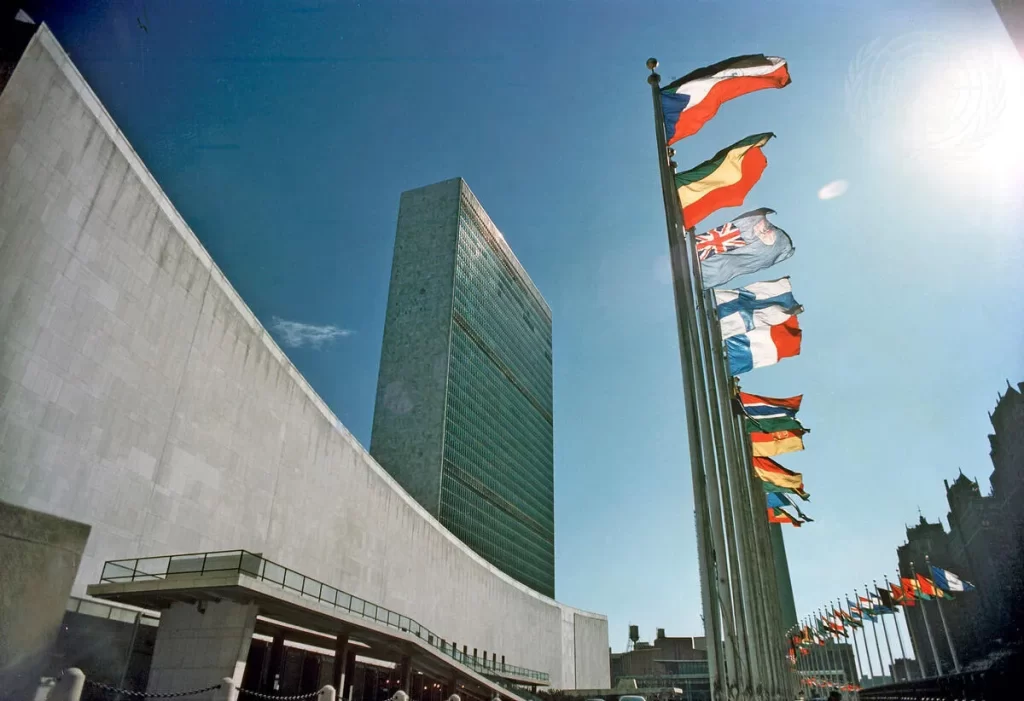
We will never see a Russian at the helm of the UN. Under established rules, the Secretary-General cannot be a citizen of a permanent member of the Security Council — a measure designed to prevent any concentration of power. By informal agreement, the role should also rotate among the world’s regions. Since the UN’s founding, the position has been held by three Western Europeans, two Asians, two Africans, and one South American. Observers closely following the discussions are convinced that the next Secretary-General should come from Eastern Europe.
Legally, there is no limit to the number of five-year terms a Secretary-General may serve, but in practice, no one has ever remained in office for more than two consecutive terms. The current leader, former Portuguese prime minister António Guterres, has served since 2017 — which means that in December 2026, the world is expected to learn the name of his successor.
For the first time in history, the post may go to a woman. Most of the names currently being discussed are female. According to analysts, the strongest candidate is Amina Mohammed, who has served as UN Deputy Secretary-General since 2017. The final list of candidates is expected this spring — and so far, men remain in a clear minority.
Text by Yulia Zemtsova
Cover photo: UN Photo/Manuel Elias
Translated from Russian by Sofia Zemtsova