
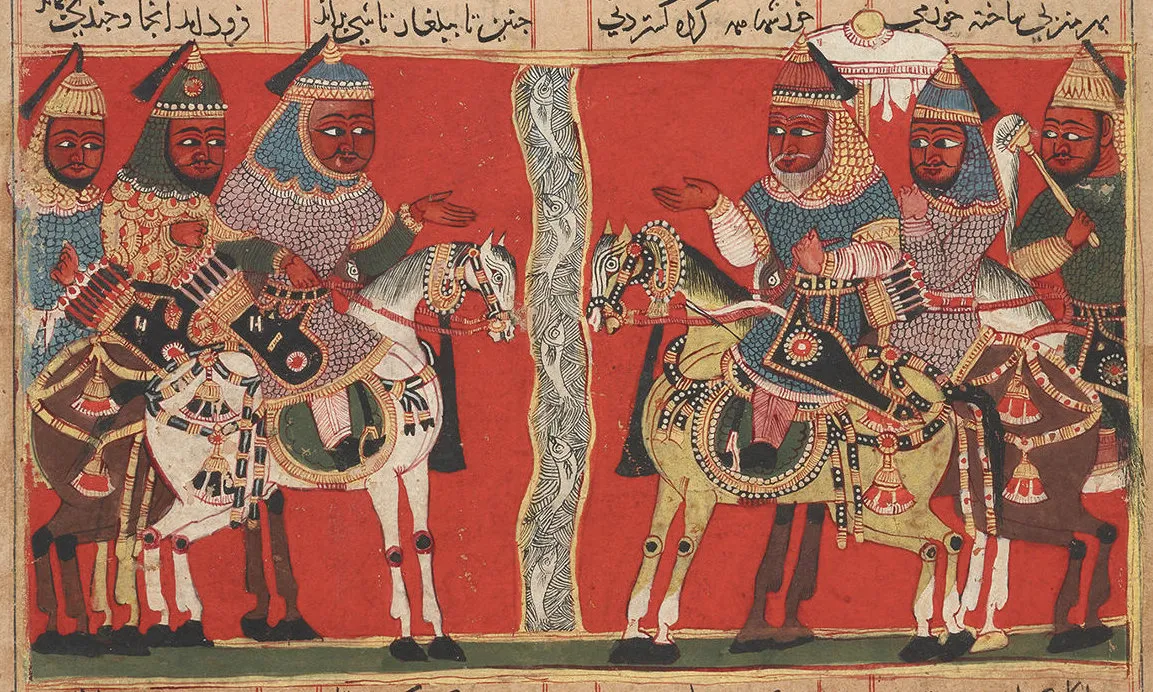
In whose honor did the red tulips and poppies of Central Asia get such a strange name?
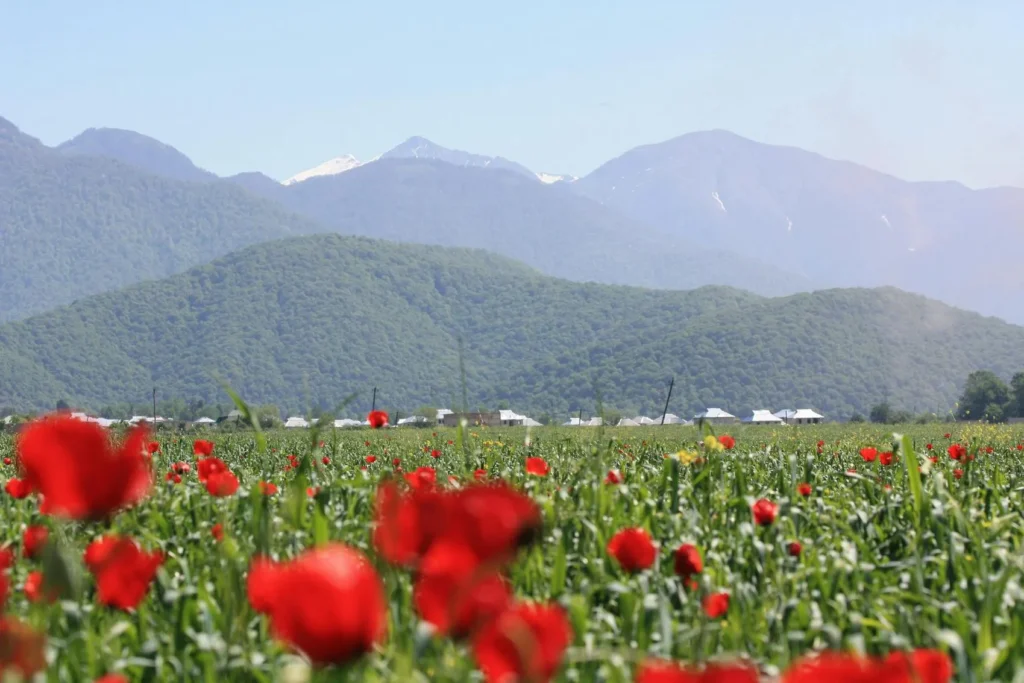
In April, thousands of wild red tulips and poppies bloom across the meadows and mountain slopes of the Tian Shan and the Pamir-Alay. In folk tradition, they are called “the blood of Siyavush.” But who was Siyavush?

He is a dying and returning hero whose cult was widespread across Central Asia since ancient times. Even after the arrival of Islam, people continued to revere him. Siyavush remains one of the most popular figures in Asian mythology to this day.
At first, he was not a god, but over time he took on divine traits. In many regions of pre-Islamic Central Asia, people brought him offerings and sacrifices, prayed to him, and asked for harvest, fertility, as well as justice and protection.
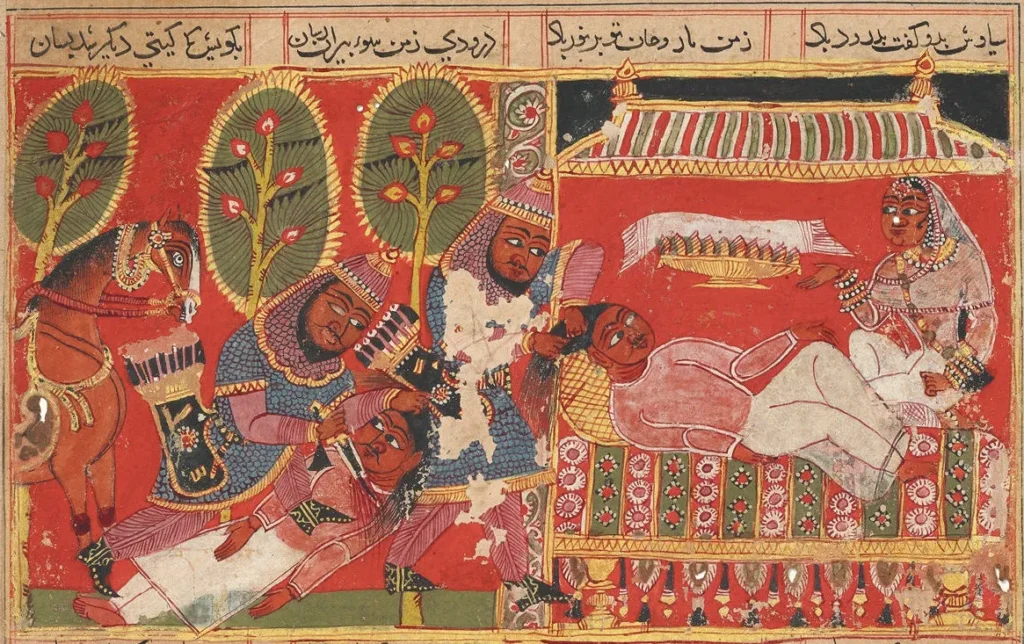
The veneration of Siyavush was a form of true agrarian magic. People did not turn to him as to a distant god, but as to a “master of the land,” on whom it depended whether there would be food and water that year. It was a cult of hope – that after a long winter (death), spring (life) would inevitably come.
The image of Siyavush closely echoes figures like Osiris and Adonis. He is one of the heroes of the ancient Persian epic Shahnameh, and his story is also mentioned in the Avesta – one of the oldest books in the world, dating back to around 1500 BCE.
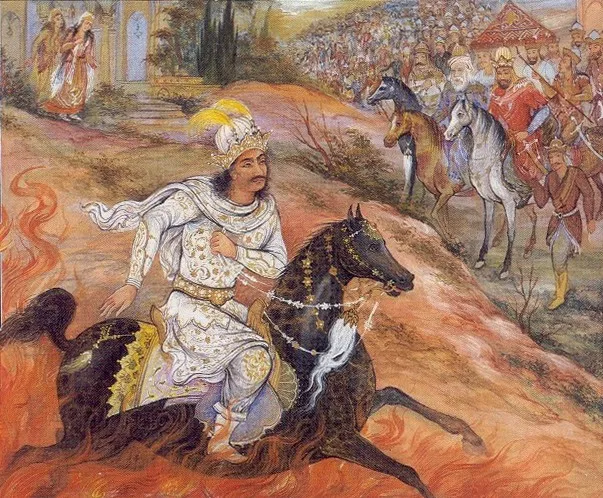
Siyavush is a noble prince who founded Bukhara and accomplished many great deeds. Even during his lifetime, he became known for his virtues, exceptional moral purity, and extraordinary physical beauty. More than once he was slandered and falsely accused, but he managed to prove his innocence – even in extraordinary ways, such as passing through fire and remaining unharmed.
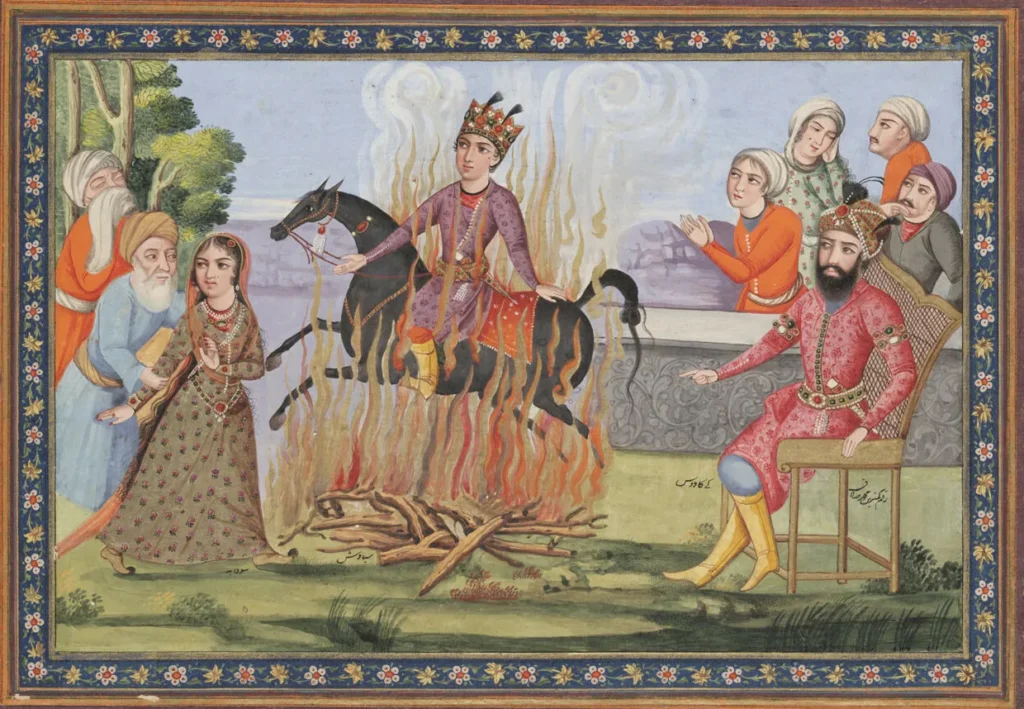
In the end, however, he was executed by King Afrasiab after yet another false accusation. According to legend, from the drops of his blood that fell to the ground, red tulips grew – meaning that his death became the beginning and symbol of new life. At that moment, Siyavush’s wife was pregnant with a son who, when he grew up, avenged his father and restored justice. This story also reflects the ancient archetype of the innocent hero who is killed and symbolically returns.
According to tradition, Siyavush was executed around the time of the spring equinox and buried at the gates of Bukhara. And that is why, since ancient times, rituals and rites have been performed in spring in memory of the legendary hero – whose death became not the end of life, but its transformation into a new form: a return, a continuation, and a triumph.
Text by Yulia Zemtsova
Cover photo from Wikipedia







#/media/File:The_fire_ordeal_of_Siyavush._By_Muhammad_Sadiq,_late_18th_-_early_19th_c.(more_likely_the_former).jpg)

