
In the Muslim countries of Central Asia, Tengrism is still alive and is even experiencing a kind of renaissance
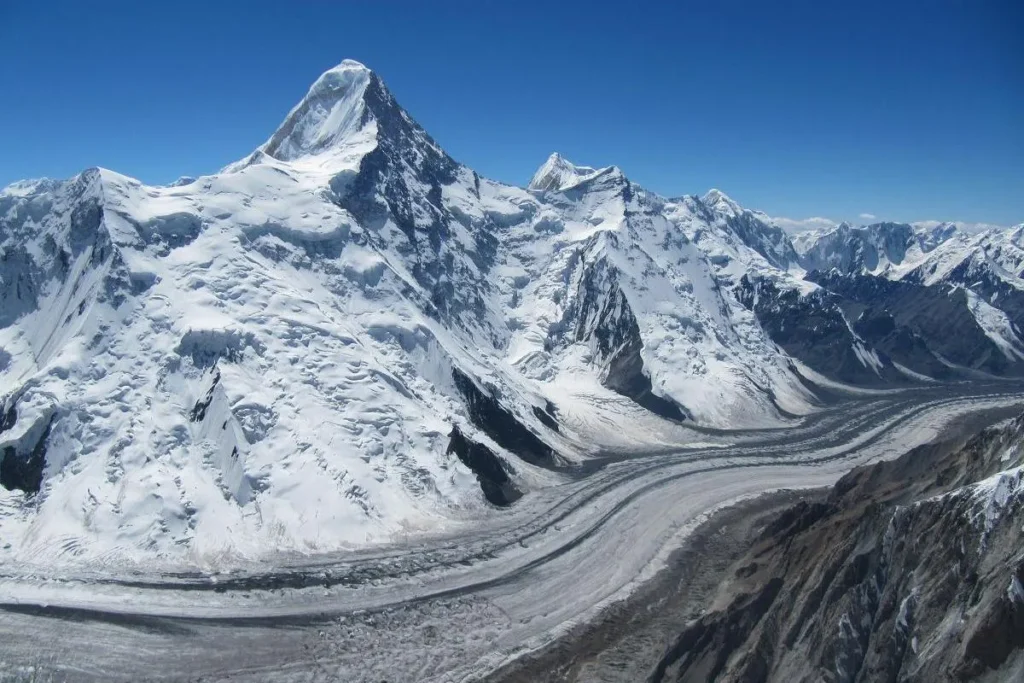
Mountain peaks have always been the abode of gods. Sacred mountains exist on every continent and, most likely, in every country. In Greece, it is the famous Olympus; in India, Mount Meru; in Japan, Mount Fuji; in Turkey and Armenia, Ararat; in Australia, Uluru. In Russia, it is Belukha in the Altai Mountains, which, according to some beliefs, contains the entrance to Shambhala. Among Turkic peoples, the same peak is considered the dwelling place of the goddess Umay — the supreme female deity in their traditional religion, Tengrism. The supreme god Tengri himself resides in the Tien Shan, on a peak named in his honor — Khan Tengri, which literally means “Lord of the Sky.”
The name Tien Shan translates from Chinese as “Heavenly Mountains” or “Divine Mountains.” In ancient Turkic sources, they were called Tengri-Tag, which means practically the same — “Mountain of the God.” This name is still preserved in the Uyghur language.
Khan Tengri is the most majestic and beautiful peak of the Tien Shan. Its marble summit forms a pyramid. In the rays of the setting sun, it turns a deep orange-crimson, which is why in local folklore the mountain is also called the “Bloody Mountain.” Yet an old legend says that the unusual color comes not from blood but from the fire that the gods kindle in the skies above it.
But Tengri is not merely a deity. He is the universe itself — the celestial spirit who created everything and is everything, bringing the world into being within himself and from himself. The sky is at once his dwelling and his manifestation.
The process of creation is described in detail in ancient Turkic myths, and when we hear them, many familiar elements emerge: “There was neither earth nor sky, only a boundless ocean. One day, within this ocean, a White Light appeared, from which a shining golden egg was formed. Inside it slept the god Tengri — the forefather of the entire World. He slept for millions upon millions of years until one day he awoke, broke the shell, and emerged. From the upper half of the egg Tengri created the Sky, and from the lower half, the Earth.”
In some myths, the egg was laid by the goddess Umay, who floated across the great ocean in the form of a swan. Umay is never described as Tengri’s creation. She is his equal and symbolizes the Earth with its fertility and abundance. Among Siberian peoples, every woman was regarded as the earthly embodiment of Umay.
At first, the world created by Tengri was chaos and disorder. The celestial bodies did not know where to move; strong winds blew from every direction; storms raged everywhere, and thunder roared. Then Tengri placed his staff between the sky and the earth, and immediately time and space began their orderly movement around it. Thus the world order was established. The point where the staff enters the sky is the North Star — the only fixed star in our hemisphere’s sky. In Turkic languages, it still bears its meaningful name: the Heavenly Stake, or Golden Stake.
The Tengrian Universe consists of three worlds. In the upper world dwell Tengri, Umay, other gods, and benevolent spirits. The middle world is home to humans, animals, and the spirits of nature. The lower world, where the dead go, is inhabited by dark spirits and demons. All three worlds are held together by the World Axis — a sacred golden tree growing atop Mount Khan Tengri. Its crown extends into the sky, its trunk forms the axis of the earthly world, and its roots sink deep into the lower world.
Every day, the beautiful bird Simurgh, king of all birds, descends onto its branches. There she lays a golden egg — the sun — which rolls across the sky, illuminating the earth and giving life. But then a terrifying dragon rises from the lower world and swallows it. Thus, in an endless rhythm of creation and destruction, day and night, light and darkness alternate.
The theme of the sacred tree and mountain symbolizing the world axis is central in Tengriism. Most Tengrian rituals were performed either at the foot of mountains or, more often, beside a solitary tall tree adorned with multicolored ribbons. Traveling through Central Asia or Siberia, you have likely seen such bright ribbon-covered trees along roadsides. These are sacred spaces where someone called upon spirits — most likely asking for their protection and assistance on the journey.
Shamans, known in Turkic languages as bakshy or kamy, played a truly pivotal role in Tengriism. They served as intermediaries between the three worlds, helping people communicate with spirits of the upper world and descending into the lower world to accompany the souls of the dead. However, one cannot choose to become a shaman. Such a fate is always the decision of higher forces. A chosen person can hardly refuse the role. Spirits will pursue them, inflicting shamanic illness and forcing them to become a divine conduit, demanding service to both gods and people. If a person resists and refuses the destined path, their life becomes difficult and joyless.

Tengrians also had a distinct concept of predestination. They believed that when a person is born, Tengri grants them both a soul and a destiny. Interestingly, the word kut, which means destiny, also means “vital force,” “blessing,” and “good.” One ancient source says that Tengri “hands a person their destiny” at birth. This can be interpreted in two ways: either everyone receives a certain predetermination, or their destiny is now given into their hands, and further choices are theirs to make.
In either case, Tengrians were not fatalists. They believed that each person creates their own happiness. But there are laws established by Tengri that require people to be honest, brave, kind, and merciful — and those who violate them face a grim fate after death: they will descend into the lower world. The “heavier” a soul becomes over a lifetime, the less chance it has to rise upward, closer to Tengri.
Tengrians believed in reincarnation — the rebirth of souls. They were convinced that the human soul is immortal and that its journey does not end with the completion of an earthly life. Misdeeds such as murder, perjury, or theft leave an indelible mark on the soul, affecting not only future incarnations but also one’s present descendants.
Punishment for sins — violations of Tengri’s commandments — could occur during one’s lifetime. The wrongdoing of one person was considered the flaw of the entire family, and the god could punish not only the sinner but also their children or grandchildren, destroying their livestock or property. Even the misdeeds of a ruler could bring Tengri’s wrath upon the whole people — for submitting to an unworthy leader.
Reverence for ancestors and veneration of their spirits is one of the fundamental principles of Tengrism. People remembered everything about their forebears — not only their noble deeds but also the stories that brought shame to the family. This compelled them to live honorably. Every Tengrian knew that their own disgraceful acts would also be remembered for centuries and would stain the family’s reputation.
Respect for lineage and earlier generations remains a distinctive trait of many Turkic peoples. An honorable person is expected to know at least seven generations of their ancestors and regularly hold memorial rites in their honor — praying for them and visiting their graves. In Central Asia, this tradition long ago transcended Tengrism and is now practiced by Muslims and Buddhists alike. In modern Kazakhstan — where the cult of Tengri was widespread — young people’s interest in their roots has grown dramatically in recent years. Perhaps this, too, reflects the revival of the ancient religion.
Tengrians believed — and still believe — that the spirits of ancestors are the chief protectors and helpers, not only for their descendants but for anyone who treats them with reverence. For example, if a traveler could find no shelter for the night, the best option was to sleep in a cemetery or near a grave. After performing a simple memorial rite for the unknown dead and praying for them, the traveler could sleep peacefully, under their protection.
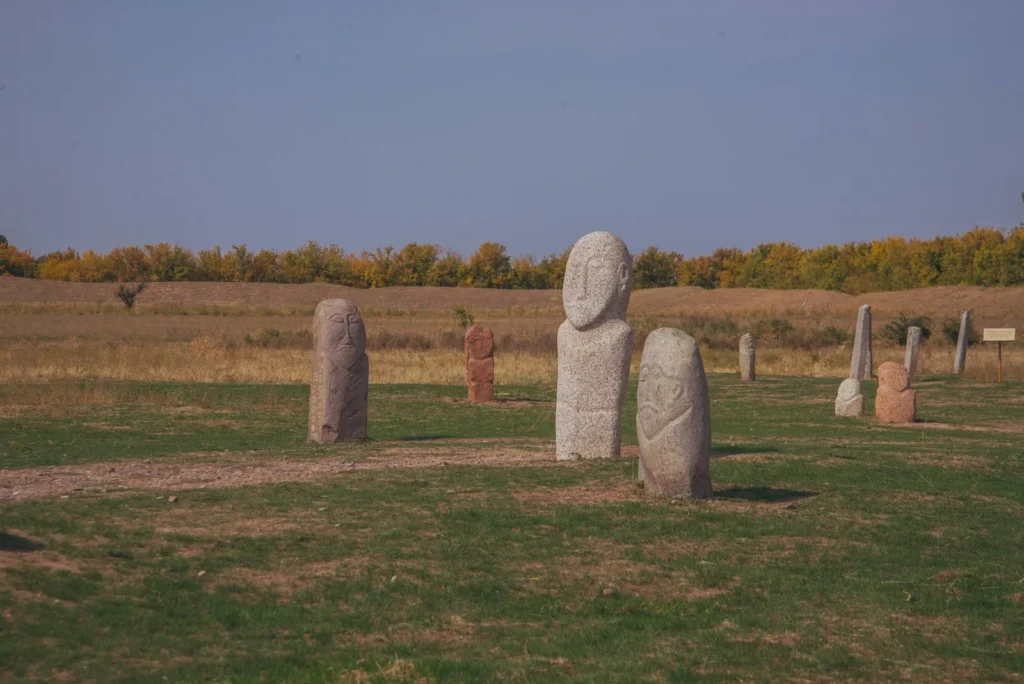
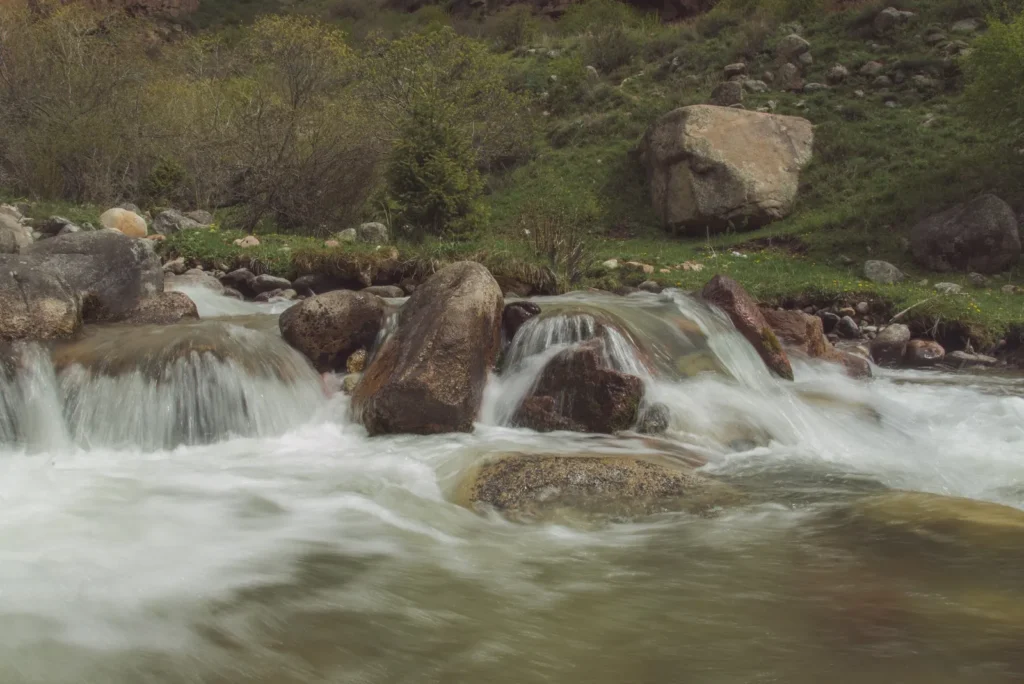

Another essential principle of Tengrism is the cult of Mother Nature, embodied by the goddess Umay. Nature is a living world inhabited by both dark and light spirits — guardians of mountains, gorges, forests, lakes, rivers, and even individual trees, stones, and springs. Each spirit protects its abode, which always contains a hidden entrance into another, otherworldly realm. These places — when known — become sites for rituals and offerings.
The powers of these spirits are unequal. Some can unleash deadly rockfalls or hurricanes, while others would not harm even an ant. Yet all must be honored and respected — only then can one negotiate cooperation or non-aggression.
In general, an active stance in life and the ability to interact skilfully with both people and the external world were regarded in Tengrism as vital virtues. Tengri encourages purposefulness and action. Mere adherence to rules is not enough. Piety and integrity must be combined with persistence, courage, cleverness, initiative, and the ability to work as part of a team — and then the supreme god will surely show favor and offer support.
Text by Yulia Zemtsova
Cover photo by Igor Haritanovich
Translated from Russian by Sofia Zemtsova